.svg&w=384&q=75 "logo")
Carlos Alcaraz Advances Despite Slow Start at US Open
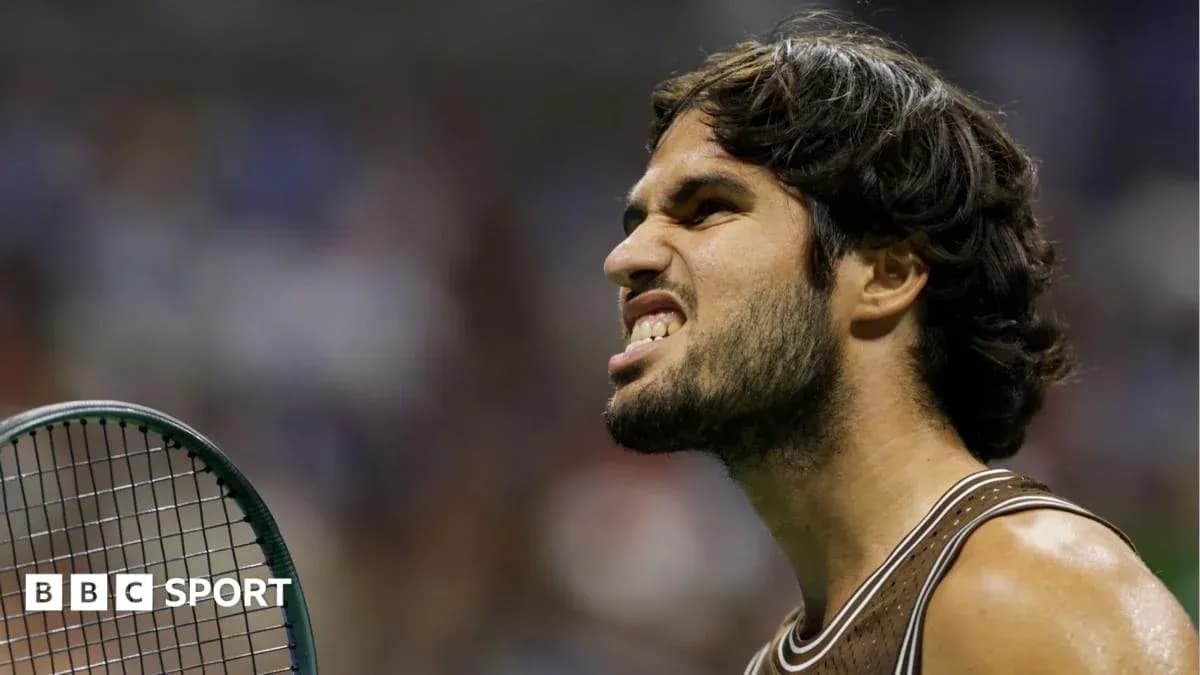
Carlos Alcaraz bends but does not break. Under the New York lights, that was enough.
The defending US Open champion flirted with trouble on Thursday night, dropping the opening set to Portugal’s Jaime Faria before ripping through the gears to win 4-6 6-0 6-3 6-2 and reach the last 32.
It was not smooth. It did not need to be.
A slow start, a sharp reminder
Back on Arthur Ashe in only his second match since mid-April, Alcaraz looked exactly like a man still negotiating a truce with his body. The timing on the forehand, the movement into the corners, the instinctive aggression – all a half-step off in the early going.
World number 72 Faria sensed it. The 23-year-old Portuguese played bold, uncomplicated tennis, took the ball early, and pounced on short replies. When Alcaraz failed to impose himself in the key moments, the underdog stole the first set 6-4 and the crowd felt the jolt.
Alcaraz did too.
"It was a tough match for me. I felt great in the first set, but I didn't take time and that cost me," he admitted afterwards.
The warning had landed.
One game that flipped everything
The match turned in the opening game of the second set. Alcaraz, serving, faced two break points. Lose that game, and the night could have tilted into something darker.
Instead, he dug in. First serve found its mark, the forehand bit, and the Spaniard wriggled free.
The effect was immediate. The tension in his shoulders dropped. The feet started to dance. The defending champion rattled through the next six games, blanking Faria 6-0 and reasserting the familiar order.
From there, the contest felt less like a knife-edge and more like a test run.
Alcaraz tightened his patterns, dominated from the baseline and began to hit through the ball with the old swagger. Faria, who had looked dangerous early, found himself shoved further and further behind the baseline, his early-strike aggression blunted by the weight of shot coming at him.
The third set went 6-3, the fourth 6-2. The scare had been real, but it was short-lived.
Wrist questions, louder answers
Coming into New York, the story around Alcaraz was not about his ranking or his résumé. It was about his right wrist.
This is his first tournament since mid-April, and every heavy forehand is being watched, measured, judged. After a straightforward straight-sets win over Roman Safiullin in round one, he insisted he was playing "normal." Against Faria, the message did not change.
"I know once I step on the court, I've just got to go for it every time. I've got to feel normal," he said. "I have to hit like I was hitting before the injury. I'm feeling great. There is no reason to be afraid and not hitting normal."
The scoreboard backed him up. The longer the match went, the more he leaned into that forehand, not away from it.
Interestingly, he did not lament the extra mileage.
"At the end, I realised that playing four sets was really good for me to test everything physically, to test my body, how I feel, and how I'm going to feel tomorrow after this match," he said.
For a player returning from a long lay-off, three quick rounds can sometimes be less useful than one demanding night. This felt like the latter: a controlled stress test that he passed.
A wide-open draw, a growing opportunity
The broader picture in New York is shifting in his favour.
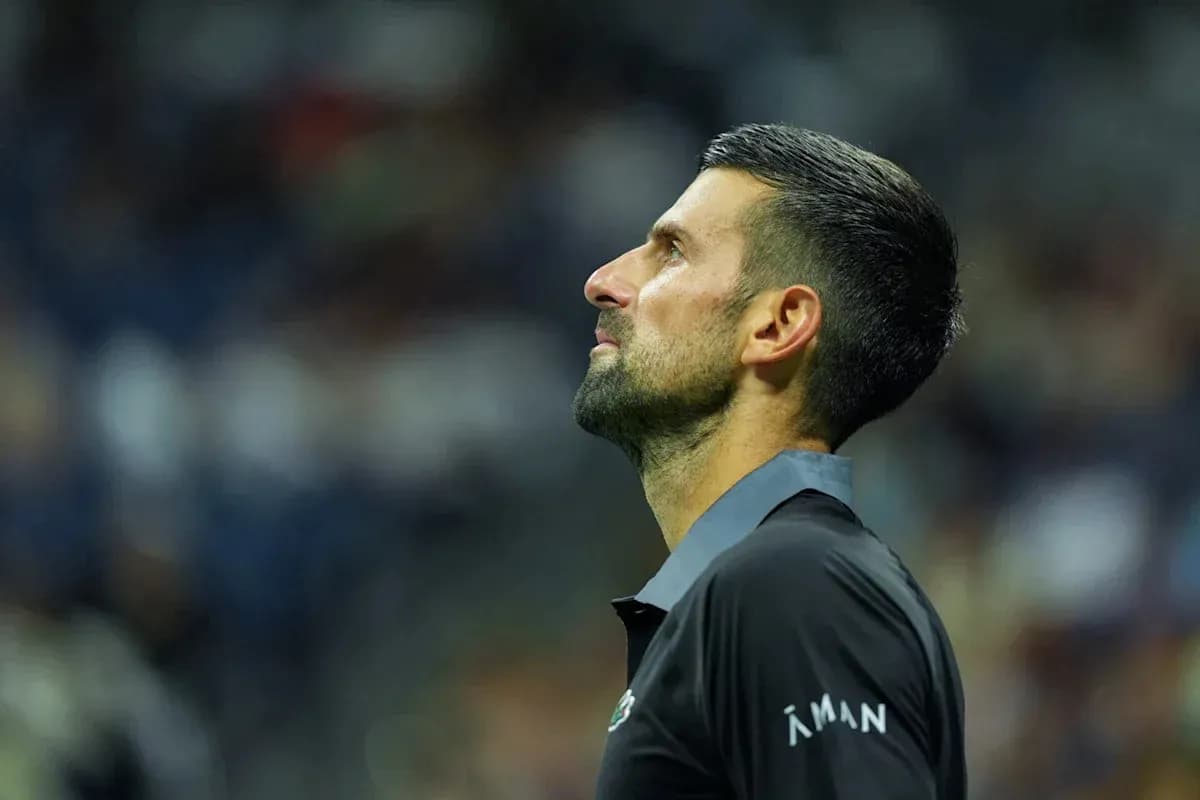
Jannik Sinner is not here. Novak Djokovic is already out. Two of the sport’s most imposing obstacles are absent from his half of the mental draw, if not the actual bracket. For a two-time US Open champion who knows how to own this stage, the path suddenly looks far less crowded.
Alcaraz, though, is still in the early stages of this comeback. The questions now are not about whether he can beat a world number 72 under the lights, but how his body will respond to a string of best-of-five matches in a compressed fortnight.
The next checkpoint comes against Wu Yibing, the Chinese world number 113, in the last 32. The ranking says Alcaraz should control it. The wrist, the legs and the recovery clock will have their own say.
If he advances, American 20th seed Tommy Paul lurks as a possible fourth-round opponent. Paul moved through with a 6-2 6-3 5-7 6-4 win over Croatia’s Dino Prizmic and now meets 15th seed Alexander Bublik, who demolished Adrian Mannarino 6-3 6-1 6-1.
On the American side of the ledger, the hope keeps building. Eighth seed Ben Shelton continued his push to become the first home men’s champion since Andy Roddick in 2003, edging Poland’s Hubert Hurkacz 6-3 5-7 7-6 (7-3) 7-5 in a bruising encounter. Frances Tiafoe, twice a semi-finalist in New York, looked sharp as he dismissed Rei Sakamoto 6-3 7-6 (7-2) 7-5.
Not everyone survived. Spanish 12th seed Rafael Jodar suffered a brutal exit, crushed 6-2 6-1 6-1 by Chinese world number 124 Bu Yunchaokete in one of the day’s biggest shocks.
The men’s draw, once top-heavy, now feels volatile. Names are falling. Gaps are opening.
In that chaos, Alcaraz’s presence – even at less than full rhythm – carries weight. He knows this court, this city, these nights. He knows what it takes to go the distance here.
On Thursday, he proved he can still take a punch. The real question now is how many more this wrist, and this campaign, are ready to absorb.