.svg&w=384&q=75 "logo")
Brighton & Hove Albion's Journey from Crisis to European Contender
There was a time when Brighton & Hove Albion were not dreaming of Europe. They were wondering if they would exist at all.
Around the turn of the century, the club drifted close to the edge. The Goldstone Ground was gone, the money was thin, and Brighton were living out of a suitcase. First came the long trek to Gillingham, then the makeshift home at the Withdean Stadium – an athletics track dressed up as a football ground, functional rather than fitting. It kept the club alive, but it never felt like a destination.
From that uncertainty grew one of English football’s most striking rebuilds.
From nomads to a new home
The first foundations were political and emotional rather than concrete. Dick Knight’s campaign, the marches along the seafront, the pleas for permission simply to build a stadium – those years hardened the club and its support. Former manager Mark McGhee remembers that fight vividly.
“We got the permission,” he recalls, crediting Knight and the public push behind him. “I was talking at lectures and preaching that we should have a stadium and they should give us permission.
“We got the permission, but then had no prospect of building it.”
The dream existed on paper. The money did not. That is where Tony Bloom stepped in.
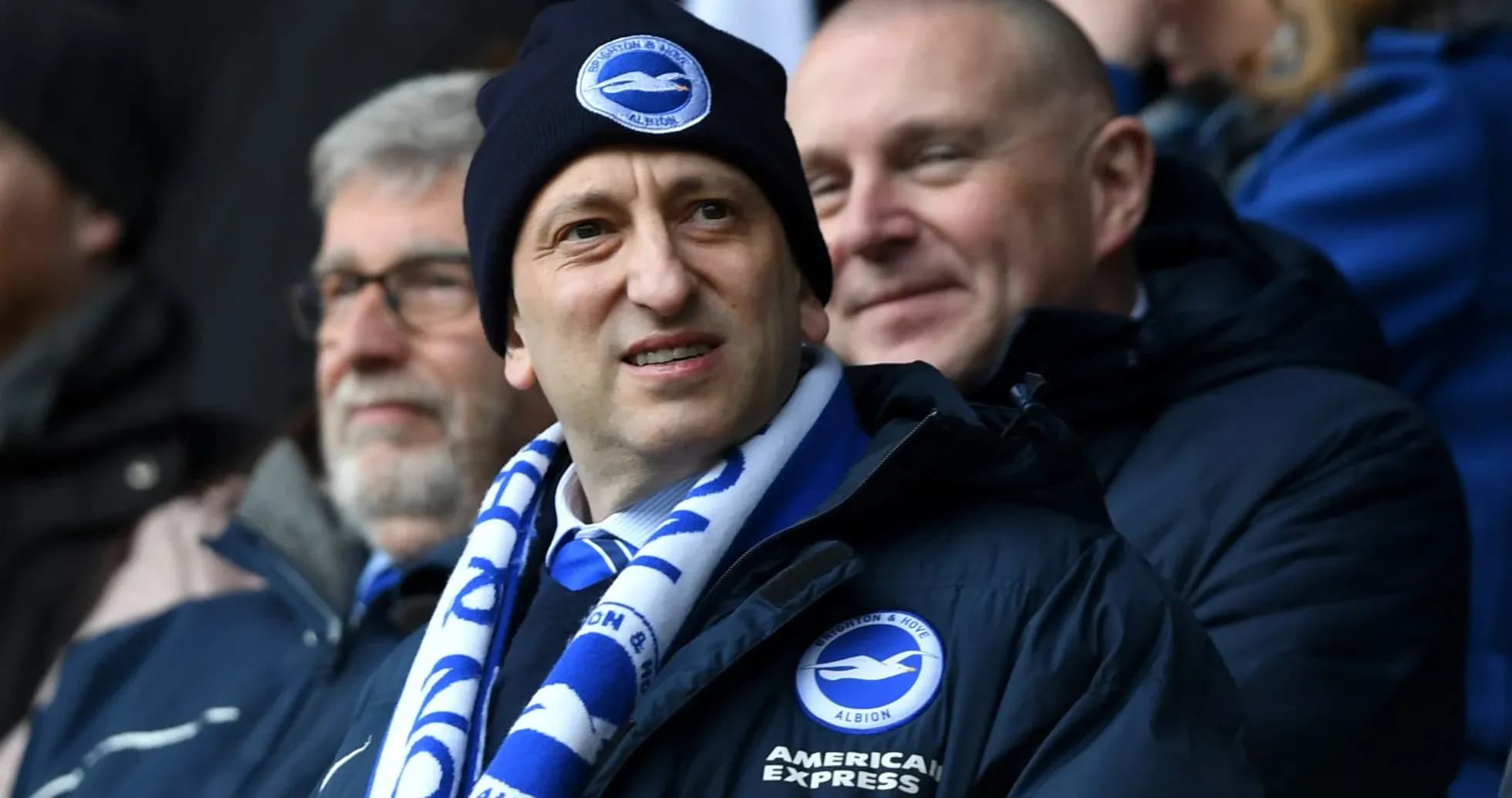
Bloom, a lifelong fan with a sharp mathematical mind and a background in sports gambling and poker, arrived in 2009. At first, many saw him as the man who would simply pay for a new ground. A benefactor to turn blueprints into steel and glass.
McGhee is clear: even those inside the club underestimated what that really meant.
“At that point, I think that people only thought that Tony – I say only – would only pay for the building of a stadium,” he says. “They didn't realise what he was bringing with him, in terms of his ambition and his vision, that was beyond a new stadium, was the training ground and the infrastructure and the level he's taken it to now.”
The Amex Stadium rose from that vision, but it was only the start. With Bloom in charge, Brighton climbed from League One to the Premier League in seven seasons. The last nine years have been spent in the top flight, a sentence that would have sounded like fantasy when the club were scratching around for transfer funds and lobbying for planning permission.
The Bloom family’s club
Bloom’s relationship with Brighton is not a cold investment. It is generational.
McGhee talks warmly about Ray Bloom, Tony’s uncle, who sat on the board during his time as manager and would meet him and Knight for Friday lunches at Topolino's in Brighton. Those meals often came with a story.
“He was always telling me about this genius young nephew of his who was a mathematical wizard,” McGhee says. “So I'd heard of Tony as a kid, long before I realised what he'd become. So, they've got a great association.”
The family name runs through the club. McGhee was at the recent game against Aston Villa in the Harry Bloom lounge, named after Tony’s grandfather, another link in a long chain of directors and supporters.
“So, he's as much, I'm sure, done this for his family as he has for the Brighton public,” McGhee adds.
That blend of personal pride and professional ambition has reshaped Brighton. The training ground, the recruitment structure, the calm churn of players and coaches – all of it points to a club built to last rather than one enjoying a brief, wild ride.
From survival to silverware
Brighton’s honours board remains modest: titles in the third and fourth tiers, a Community Shield, and that famous near-miss in the 1983 FA Cup final. For a club that once fought just to stay on the map, those achievements mattered.
Now the bar has moved.
The Seagulls are back in Europe, this time in the Conference League, having earned the right to test themselves beyond domestic borders again. They have been paired with Panathinaikos and Getafe, and recent history offers encouragement: West Ham, Chelsea and even bitter rivals Crystal Palace have all shown that English clubs can turn that competition into a stage for genuine glory.
McGhee is in no doubt about Bloom’s intentions.
“I think that Tony's not in this to be a generous benefactor,” he says. “I think he wants to win stuff, and he's putting things in place to create a team that can. They have a chance this year in Europe, they have a chance every year now in one of the domestic trophies.”
He draws a line, for now, at the league title.
“I don't think they have a chance of winning the Premier League,” he admits. “But I think they could easily, with a fair wind and a good draw, find themselves in the final of the FA Cup. They've come close. Or the League Cup. I think that is the inevitable progression.”
The word “inevitable” carries weight. It speaks to a club no longer content just to participate. A club that expects its project to end in silver.
A story now under glass
Brighton’s journey from crisis to credibility is no longer just passed on in pub tales and matchday conversations. It has been curated.
On August 15, a permanent gallery, “Brighton & Hove Albion: Stand or Fall”, opened at Brighton Museum & Art Gallery to mark the club’s 125-year history. The exhibition pulls together iconic objects, treasured memorabilia, archive material, film and personal stories to chart the story of one of English football's most resilient clubs.
Visitors move through triumphs and setbacks, promotions and relocations, from the Goldstone to Gillingham to Withdean and on to the Amex. The gallery underlines something the league table can’t quite capture: Brighton are not just a modern data-era success, but a civic institution that has survived blows that would have finished others.
That resilience will be tested again on the pitch in the coming weeks. Manchester United await in the Carabao Cup third round, a sharp early examination of Brighton’s depth and nerve in knockout football. The European schedule will bite too, as trips to places like Athens and Madrid’s suburbs collide with the grind of the Premier League.
For a club that once wandered without a home, those journeys now carry a different feel. The question is no longer whether Brighton can stand or fall.
It is how far, under Bloom’s restless eye, they can still climb.