.svg&w=384&q=75 "logo")
Katie Boulter Crushed by Karolina Muchova in US Open
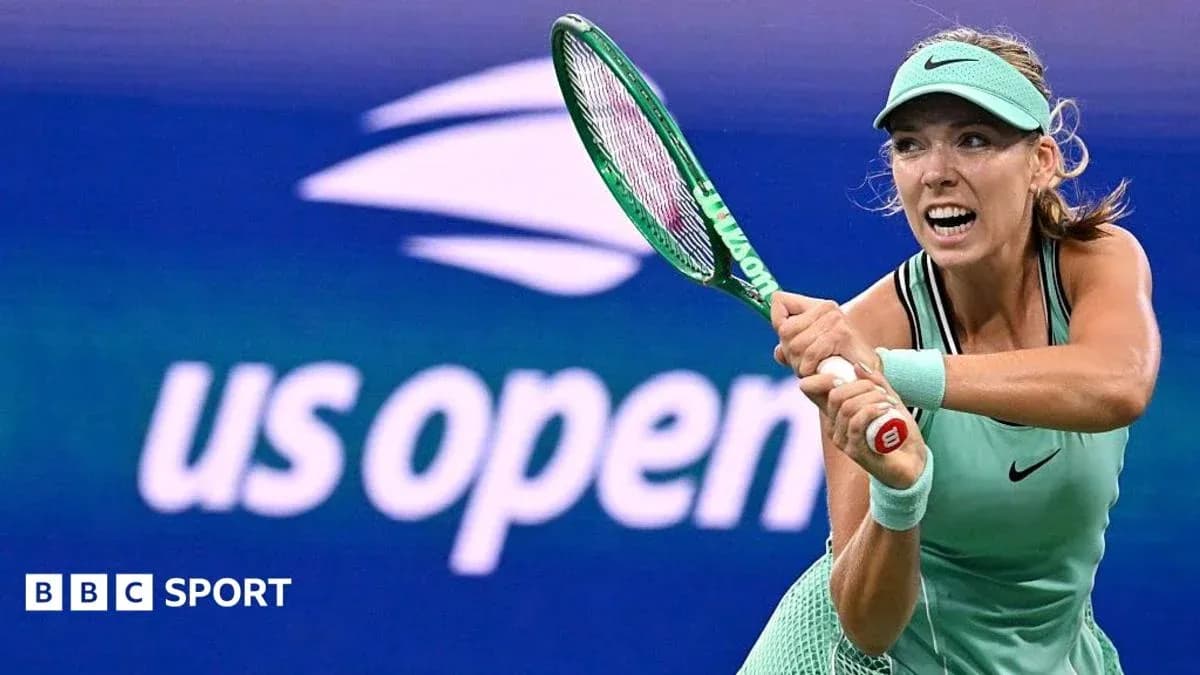
Katie Boulter walked into Louis Armstrong Stadium with a promotion she had earned over the past 18 months – British number one, a main-stage slot, a chance to make a statement in New York.
She walked out 58 minutes later with just one game on the board and a brutal reminder of how far the gap still is to the game’s elite.
Karolina Muchova, the seventh seed and Wimbledon runner-up, dismantled Boulter 6-1 6-0 in a one-sided second-round contest that never really caught fire. For the fans who had ducked the rain and found themselves with an unexpected third match on their day session ticket, it felt more like a cameo than a contest.
“It was a bad day at the office – times two,” Boulter admitted afterwards. No argument there.
Big stage, bigger problems
This was supposed to be a showcase. Heavy rain had forced organisers to move the match from an outside court into the 14,000-seat Louis Armstrong Stadium. A break for the schedule, a big opportunity for Boulter.
Instead, the occasion swallowed her.
“I struggled with the conditions. I struggled with the roof, the noise, I let things distract me,” she said. “I let it get to me. I'm not usually aware of everything going on. It made me feel a little bit uncomfortable. I have to deal with it better.”
Her discomfort showed from the very first game. The serve, usually a reliable platform, simply deserted her. Eight double faults. No aces. Just 33% of points won behind her first serve. Every service game felt like a negotiation she was losing.
Muchova did not need a second invitation. Calm, composed, and ruthless, she read Boulter’s delivery early, stepped in on the return and never eased off. The Czech carved 14 winners, mixed in clever drop shots with heavy, piercing groundstrokes, and finished with just nine unforced errors.
Boulter, by contrast, sprayed 22 unforced errors and managed only four winners. She failed to save a single one of the seven break points she faced. The scoreline told the story. The numbers underlined it.
A harsh verdict from the commentary box
From the outside, it looked like a mismatch. From the commentary box, the assessment was even more unforgiving.
“I would be really humbled [if I was Boulter], I would sit down with my team and say ‘OK, we need to change something big time’,” former world number five Daniela Hantuchova told BBC Radio 5 Live.
“First of all, it was very obvious today that it was the serve. I feel like it needs to be cleared up because she was losing the rhythm and not using her legs. That's the number one thing.
“If I am Boulter, I would be on the practice court tomorrow. If she still wants to invest everything into her tennis then she needs to be on the court.”
It was a blunt message, but not an unfair one. This was not just a bad hour. It was the latest chapter in a season that has drifted.
A year that won’t quite click
Off the court, Boulter has had reasons to smile. She married Australia’s Alex de Minaur, the world number seven, in July, capping a summer full of personal milestones.
On the court, the narrative is starkly different.
Ranked 62 in the world, she leaves New York with just two wins across all four Grand Slams this year. Since her first-round exit at Wimbledon, she has won only two of six matches. For a player who has talked openly about pushing towards the top 30 and beyond, this is not the trajectory she wanted.
This defeat will sting more than most. Not just because of the scoreline, but because of the stage. This was a chance to show she belongs under a roof, in a big arena, with the noise swirling and the lights up. Instead, she looked rattled, rushed, and out of rhythm.
Mixed fortunes for the Brits
It was a tough day more broadly for the British contingent.
Jacob Fearnley’s US Open run ended in four sets against Argentina’s Tomas Martin Etcheverry. The Argentine’s weight of shot and consistency proved too much as he closed out a 6-3 6-3 3-6 6-3 win, denying Fearnley a place in the third round.
Francesca Jones, at least, offered a brighter note. Returning to court to complete her rain-interrupted first-round match against Poland’s Magda Linette, she steadied herself and finished the job, securing her place in the next round and injecting a rare dose of positivity into a gloomy British day.
Where next for Boulter?
For Boulter, the questions now move beyond one bad performance.
This was not about losing to a top-10 player; Muchova, on this form, can beat anyone. It was about how little resistance she offered, how quickly the match slipped away, and how exposed some of her fundamentals looked under pressure.
The serve, once a cornerstone, suddenly looks fragile. The mental composure that had carried her through tight matches earlier in the season seemed to evaporate under the roof. She admitted she let the environment get inside her head. That is the kind of problem opponents at this level will exploit every time.
The next steps are clear, if not easy: rebuild the serve, harden the mentality, and turn a bruising defeat into a line in the sand rather than a trend.
On a wet New York day, the roof closed, the lights came on, and the stage opened up for Katie Boulter. Karolina Muchova seized it. Boulter didn’t.
The question now is whether this night becomes a turning point or just another warning sign in a season that keeps slipping away.