Bayern Munich vs Arsenal: Tactical Breakdown of a Thrilling 2-2 Champions League Clash
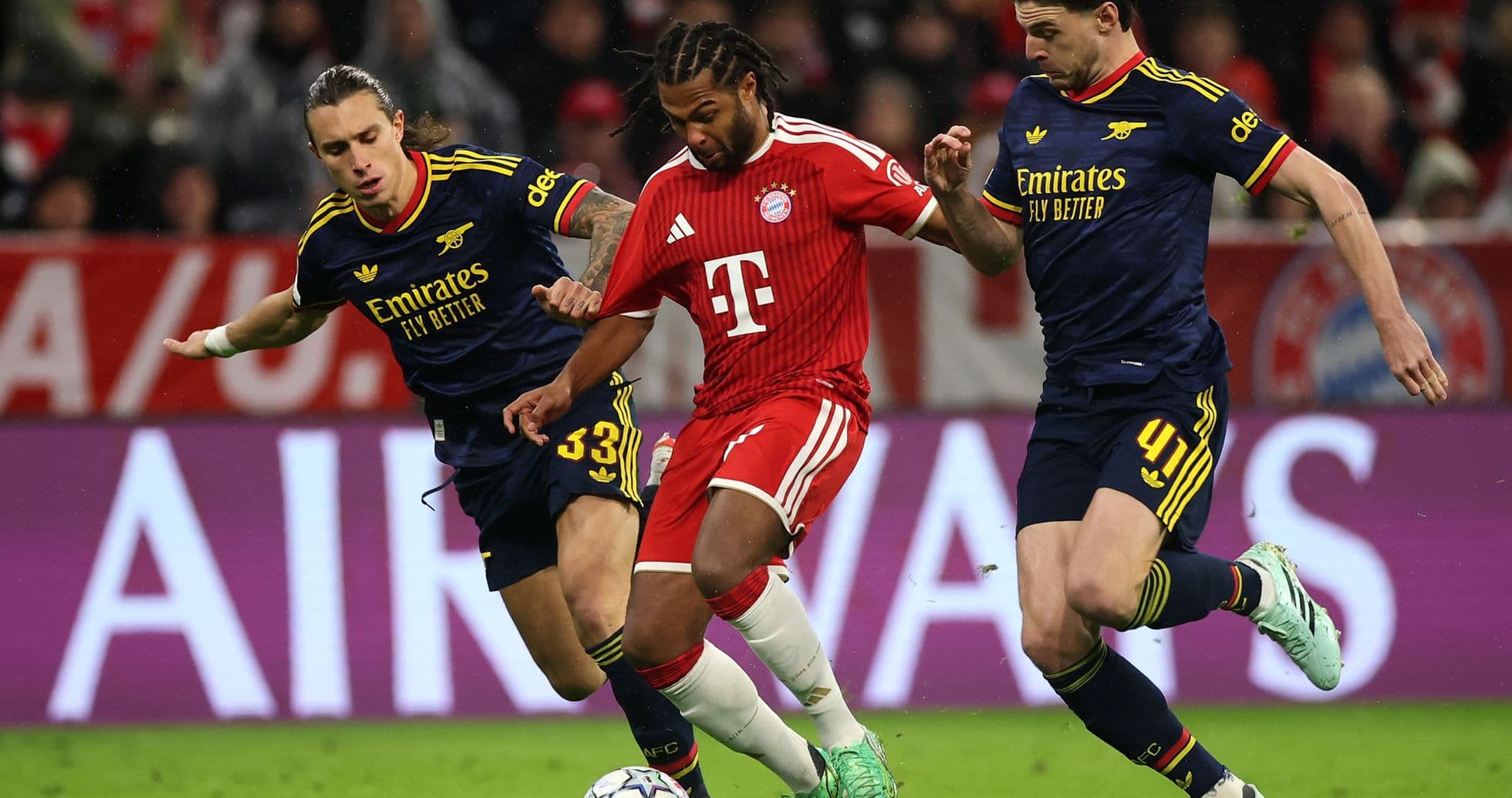
The Champions League fixture between Bayern Munich and Arsenal ended in a dramatic 2-2 draw, featuring intense transitions and standout performances from Harry Kane and Declan Rice. Despite Bayern's dominance in expected goals, Arsenal’s resilience and tactical tweaks in the second half earned them a valuable point away from home.
This encounter illustrated contrasting styles: Bayern pushed aggressive vertical attacks relying on Kane’s deep playmaking, while Arsenal focused on defensive organization and controlled rotations to manage the pace. Both sides fought over space management, with managers exploiting tight areas between lines.
Bayern Munich’s Approach
Bayern operated mainly in a fluid 4-2-3-1 that often shifted into a 3-2-5 during buildup. Kane played deeper than usual, pulling Arsenal’s central defenders out of position to create openings. A key moment came in the 35th minute when Kane’s drop into midfield allowed him to thread a perfect pass to Alphonso Davies for the equalizer. This movement opened lanes for Bayern’s wingers and advancing full-backs behind Arsenal’s high defensive line.
Defensively, Bayern pressed aggressively in a mid-block style, targeting Arsenal’s lateral center-back passes. Aleksandar Pavlovic shadowed Martin Ødegaard closely to disrupt Arsenal’s main creative outlet. Dayot Upamecano’s speed was crucial in recovery, completing 14 defensive actions as a sweeper behind the high line. Their buildup was patient, often involving goalkeeper Manuel Neuer stepping up as an extra defender to outnumber Arsenal’s frontline, but Bayern’s threat peaked when transitioning swiftly through half-spaces.
Arsenal’s Game Plan
Mikel Arteta stuck to his favored 4-3-3 but emphasized defensive rigidity after Bukayo Saka’s early injury. Eberechi Eze replaced Saka, shifting Arsenal’s attack from wide touches to probing interior pockets between Bayern’s lines. This adjustment paid off in the 25th minute when Eze capitalized on Ødegaard’s long ball to open the scoring amid a rare Bayern defensive lapse.
Arsenal’s pressing was more calculated than usual, falling back into a 4-4-2 shape to cut space centrally. Declan Rice served as the pivotal figure, covering large ground and scoring the late equalizer. The Gunners sought overloads on the right side with Noni Madueke to pin Bayern’s full-backs back. Possession hovered at 54%, mostly circulated in front of Bayern’s block, reflecting Arsenal’s preference for safe ball retention rather than risky forward passes that could invite counter-attacks.
Tactical Duel in Zone 14
The critical battle unfolded in the dangerous Zone 14 area, where Bayern placed Kane and Ismael Saibari to generate shooting chances, reflected in their 2.51 expected goals. Yet Arsenal’s center-back duo Gabriel Magalhães and Ezri Konsa stayed disciplined, avoiding reckless challenges.
The game’s turning point came in the 61st minute with a penalty awarded after Kane’s run forced Jurrien Timber into a handball. It seemed Bayern might secure the win through box overloads, but Arsenal’s physical conditioning shone late. As Bayern’s intensity waned, Arsenal’s midfield rotations increased, culminating in Rice’s 82nd-minute equalizer following a left-flank overload where Bayern’s Konrad Laimer was isolated. Arteta’s decision to keep full-backs pushing high even while trailing cracked Bayern’s defensive focus.
In-Match Adjustments
Both coaches made key substitutions to influence the outcome. Arteta brought on Mikel Merino for Ødegaard in the 85th minute to solidify midfield. Earlier, Viktor Gyökeres replaced Kai Havertz to offer a traditional target, occupying Upamecano and freeing Rice to make attacking runs.
Bayern responded at halftime by swapping Kim Min-Jae for Jonathan Tah to handle Arsenal’s aerial threat. Later, fresh wide players Luis Díaz and Lennart Karl replaced Saibari and Gnabry to sustain pressing intensity. Díaz sparked some energy but the changes unsettled Bayern’s rhythm, allowing Arsenal their best possession spell leading to the equalizer. A final substitution brought Bara Sapoko Ndiaye on for Díaz in the 90th minute to protect the draw as Arsenal finished stronger.
Summary of Key Match Stats
- Bayern Munich formation: Fluid 4-2-3-1 shifting to 3-2-5
- Arsenal formation: 4-3-3 emphasizing defensive structure
- Expected Goals (xG): Bayern 2.51, Arsenal lower
- Defensive interventions by Dayot Upamecano: 14
- Possession: Arsenal 54%
- Duels won: Arsenal 55, Bayern 31
- Key goal scorers: Alphonso Davies, Harry Kane (Bayern); Eberechi Eze, Declan Rice (Arsenal)
Final Thoughts
The match was decided by individual roles within well-defined systems. Bayern’s strategy centered around Kane’s multifaceted involvement nearly secured victory, but Arsenal’s adaptability and Rice’s late impact proved vital. Despite Bayern’s greater chance creation, Arsenal’s physicality and structure balanced the scales, making a draw a fitting result as both teams neutralized each other’s strengths.