.svg&w=384&q=75 "logo")
Barcelona Signs Gabriel Jesus as Late No. 9 Solution
The search dragged on all summer. Julian Alvarez was the dream, the long-term answer through the middle, but Manchester City never opened the door. Barcelona, short of a classic centre-forward and short of time, pivoted. Fast.
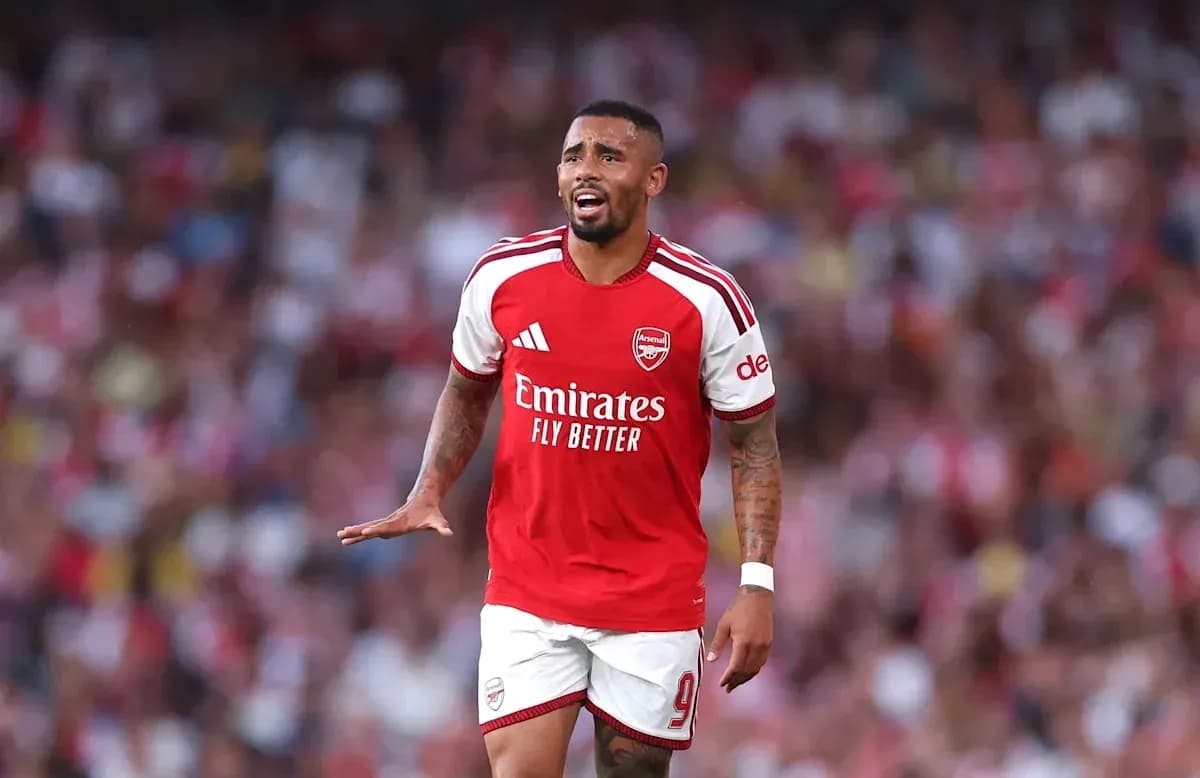
Over the weekend, word leaked out: the Catalan club had moved for Gabriel Jesus, the Arsenal forward who once terrorised La Liga defences in a different shade of blue. By Monday, the story had accelerated from rumour to reality. Jesus landed in Catalonia, passed his medical and is now only an official announcement away from pulling on the Barcelona shirt.
A three-year bet on a rebuilt knee
Early whispers suggested a cautious deal – two seasons plus an option. That has changed. As reported by Mundo Deportivo, Barcelona have committed fully: three guaranteed years, taking the Brazilian to the summer of 2029. No half-measures, no safety net.
The 29-year-old completed his medical on Monday and moved quickly to address the only real cloud hanging over this transfer – his right knee. After the ACL injury he suffered in 2025, doubts were inevitable. Jesus, though, was blunt: his knee is “perfect”. The club’s doctors have signed off, the contract is ready, and the risk is now shared between player and institution.
While the paperwork was being finalised, Jesus was already at the heart of things. He watched from the directors’ box at the Spotify Camp Nou as his future teammates dismantled Rayo Vallecano, a ruthless reminder of the attacking power he is walking into. Once the ink dries, he will immediately come under the orders of Hansi Flick and be registered with La Liga, making him available for the next league clash against Valencia.
Raphinha’s form, Flick’s puzzle
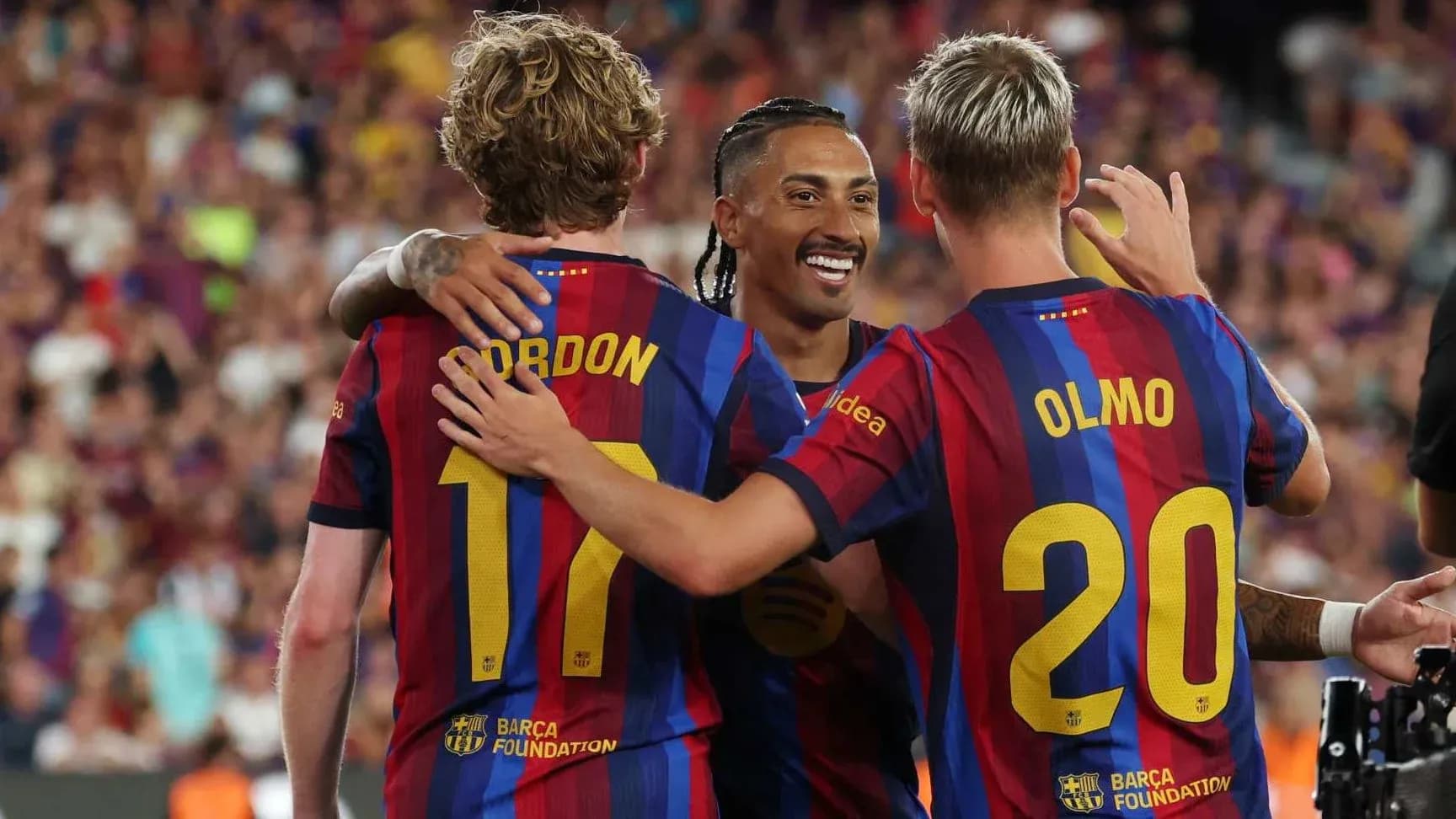
The timing is intriguing. Raphinha, nominally a winger, has exploded as a makeshift No. 9 in the opening matches, and right now looks nailed on as Flick’s starting centre-forward. Jesus is not arriving as a guaranteed star around whom the attack will be built. He is arriving as competition, as depth, as a different profile for the same role.
That distinction matters. It frames the deal not as a desperate lunge, but as a calculated addition to an evolving frontline. Jesus thrives between the lines, presses aggressively, links play and drifts wide to create space for runners. Those traits mesh neatly with Flick’s high-energy, vertical game. He may not start every week, but when he does, Barcelona’s pressing and positional interchanges should sharpen.
The numbers: low fee, high questions
For a player of his pedigree, the fee is strikingly modest. Barcelona will pay €10 million fixed, with a further €4 million in potential add-ons. Arsenal have protected themselves with a 20% future sell-on clause, a clear sign they still see value in the Brazilian’s name and potential resale.
The doubts are obvious and fair. His fitness record. The stop-start rhythm of his recent seasons. The fear that the ACL injury has taken a fraction of his explosiveness, the fraction that separates a good striker from a great one. At a different price, those concerns might have been prohibitive.
At this price, they turn the move into a calculated gamble.
For Barcelona, still navigating tight financial margins, this is the sort of operation they have to get right: a proven international, still in his prime years, acquired for a fee more often associated with squad players than Champions League forwards.
If Flick and his staff manage his minutes, if the medical team keeps that “perfect” knee as advertised, Jesus can become far more than a stop-gap. He can be the experienced, hard-running, selfless No. 9 that knits together a young, ambitious attack.
The question now is simple: in a team that has rediscovered its bite, does Gabriel Jesus become the final edge – or just another reminder of how thin the line is between smart business and an expensive roll of the dice?