.svg&w=384&q=75 "logo")
Barcelona's Centre-Back Dilemma: The Need for Depth
The clock is ticking at Barcelona, and one problem refuses to go away.
They have added numbers, they have added flair, they have patched holes across the pitch. But at the heart of the defence, with the transfer window down to its final hours, a familiar unease lingers. One more centre-back. That’s the missing piece.
Goals flowing, doubts growing
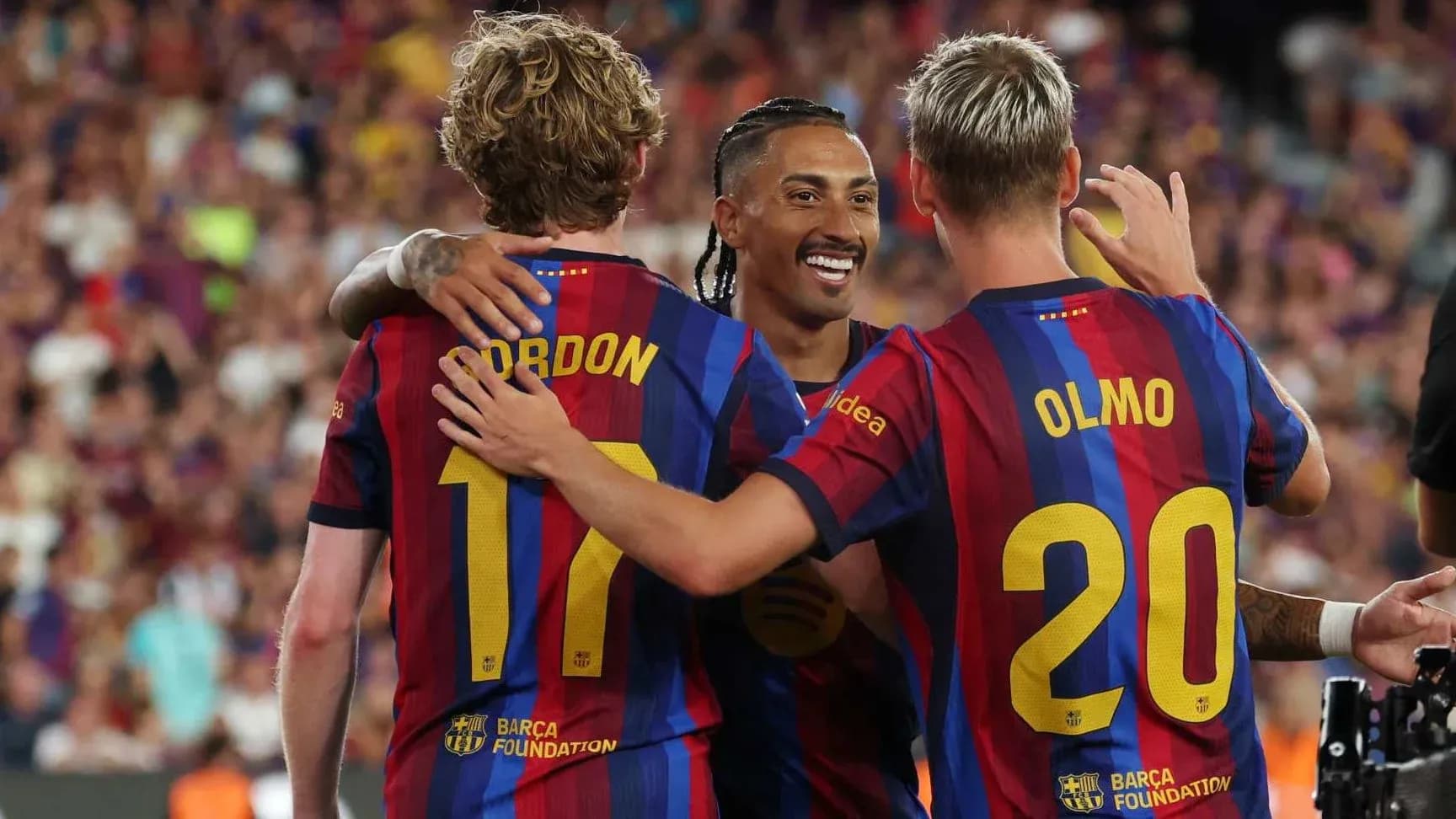
The 5-2 win over Rayo Vallecano was a snapshot of this Barça: wild, exhilarating, and slightly reckless. They can blow teams away going forward, yet still leave the back door open. Opponents keep finding space, keep asking questions of a defensive unit that looks one injury away from trouble.
This is not a squad built for a single-front campaign. Hansi Flick’s side will be stretched across league, Europe, and domestic cups. Rotations will come. Fatigue will bite. When it does, the centre of defence cannot be held together by hope and improvisation.
A thin core at centre-back
Álvaro Cortés’ departure has sharpened the issue. Strip it down and Flick has only three senior centre-backs he can truly call on in their natural role: Pau Cubarsí, Gerard Martín, and Andreas Christensen.
Eric García and Jules Koundé are technically options, but in practice they are being used at right-back. On the tactical board, they are defenders. In Flick’s current reality, they are full-backs.
Cubarsí and Martín have grown into the coach’s go-to pairing for the big nights. They’ve earned it. Against Athletic Club, they looked like they had been there for years: calm on the ball, assured in duels, unflustered under pressure. They play with the authority of veterans, not youngsters still feeling their way.
Christensen, when fit, is a luxury as a third choice: experienced, composed, comfortable in possession. But that last phrase is the problem—“when fit.” His injury record hangs over any long-term planning. One setback for him, one knock to Cubarsí or Martín, and suddenly Barcelona are gambling at the most unforgiving position on the pitch.
Yes, García or Koundé can shuffle inside if needed. On paper, that solves the depth chart. In reality, it stretches other areas and forces Flick into compromises he would rather avoid.
What Barça actually need
This isn’t about signing a new defensive leader or dislodging Cubarsí and Martín. The requirement is simpler and more specific: a reliable, low-cost centre-back who can absorb minutes without drama.
Someone who can start away to a lower-table side when legs are heavy. Someone who can step in for an injured regular without the entire system needing to be reimagined. Not a star, not a marquee name—just a trustworthy defender who understands his role.
Given the financial constraints, that points to creativity. Deco’s job is to find value where others don’t look, to pull a loan or a smart, inexpensive deal out of a shrinking market. The profile is clear; the margin for error is not.
Ruud Nijstad: the tempting gamble
Into that context steps Ruud Nijstad.
Barcelona’s interest in the 18-year-old FC Twente defender is no secret. Left-footed, 195 cm tall, physically imposing, and comfortable carrying the ball out from the back—he ticks a lot of modern-centre-back boxes. Scouts and onlookers have been impressed by his defensive instincts and his ability to step into midfield with the ball.
He also fits another key part of the Barça model: upside. At 18, he is not just cover for today, but potentially a long-term piece alongside Cubarsí and Martín. A new generation of centre-backs built in the club’s image, with the physical tools to handle the modern game.
There’s another layer. Nijstad has already spoken of his desire to play with Cubarsí at Barcelona. For a club that leans heavily on identity and connection, that kind of ambition is never ignored.
The obstacle: Twente’s stance and the clock
The problem? FC Twente know what they have.
Nijstad only recently signed a contract that runs until 2029. That is a statement from the Dutch club: they see him as a cornerstone, not a short-term asset. Selling him now, late in the window, makes little sense from their point of view unless the offer is impossible to refuse.
For Barcelona, that is exactly the dilemma. They need depth, but they also need discipline. A big outlay on an 18-year-old, no matter how talented, is a different kind of risk. A loan would ease the strain, yet Twente’s position suggests they are in no hurry to open that door.
So the deal looks difficult. Not impossible, but complex, expensive, and time-sensitive. Every hour that passes tightens the squeeze.
Deadline-day decision
Strip away the noise and the questions are stark.
Do Barcelona need another centre-back before the window closes? Given the current numbers, the injury histories, and the demands of the season ahead, the answer leans heavily towards yes.
Is Ruud Nijstad that solution? He might be. The profile fits, the talent is real, and the long-term potential is obvious. But the cost, the contract, and Twente’s reluctance mean he is far from a straightforward fix.
If Deco cannot unlock this deal, he will need an alternative—someone cheaper, more attainable, perhaps less glamorous, but ready to do the unglamorous work that keeps a season on track.
The window is closing. The squad is almost complete. One decision at centre-back could define how brave, or how exposed, Barcelona look when the real tests arrive.