.svg&w=384&q=75 "logo")
Bacary Sagna on Transfer Market Excess: A Call for Limits
Bacary Sagna has watched this transfer window unfold with the same disbelief as many supporters, only his perspective comes from inside the machine.
The former Arsenal and Manchester City full-back, now looking on from a distance, has seen another Premier League summer swallowed by nine-figure deals and spiralling fees. Chelsea spend big again. Liverpool break the bank for a Champions League winner. Arsenal, City, Tottenham, the usual heavyweights, all push the market higher. The numbers keep climbing. The concern in Sagna’s voice does too.
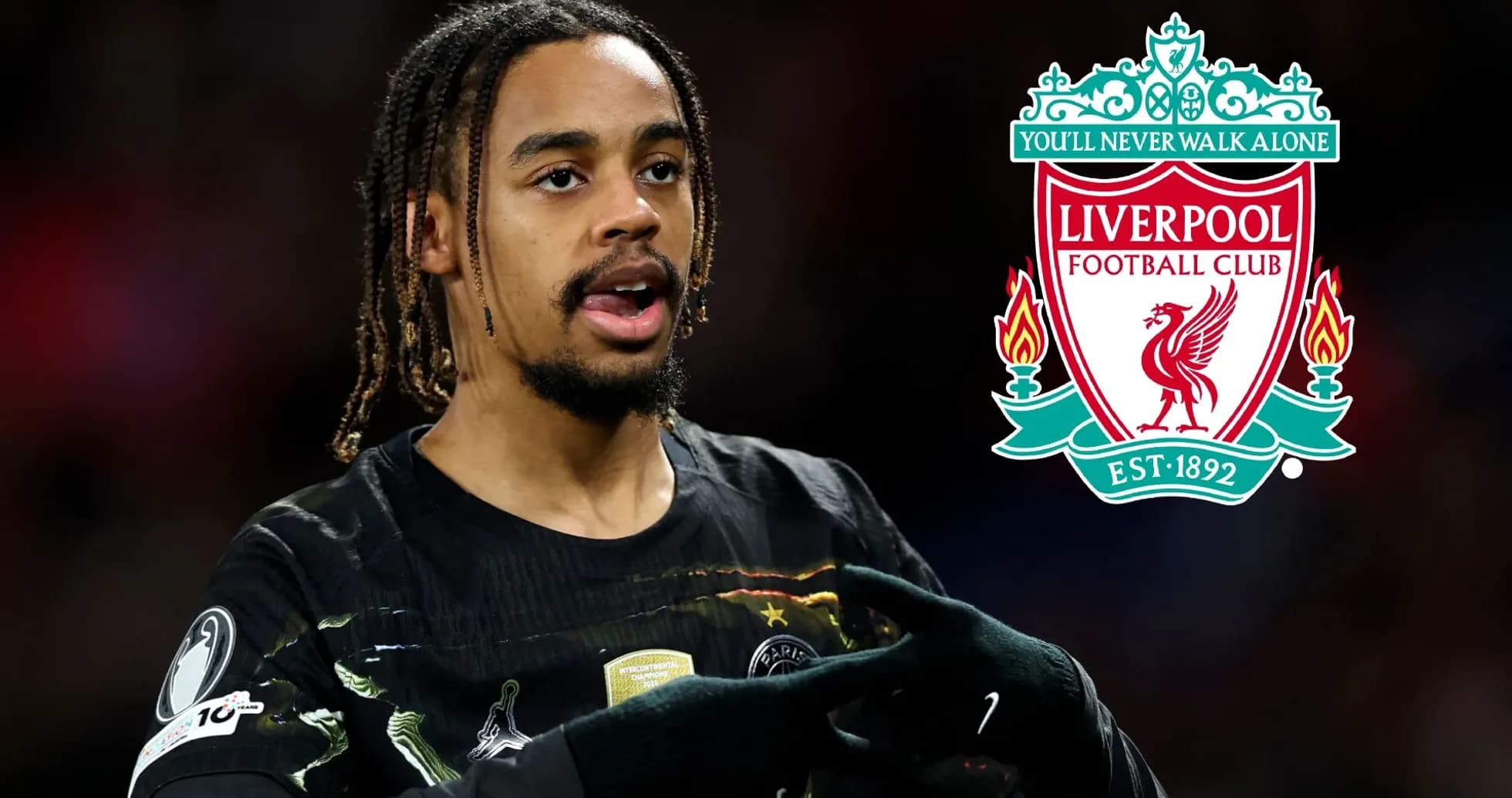
At the heart of it sits Bradley Barcola’s move to Liverpool, a deal that has sent another jolt through an already inflated market. Barcola, 24, arrives at Anfield after impressing at Paris and Lyon, a player Sagna openly admires. But admiration only stretches so far when the fee hits £123 million.
“Barcola is an amazing player,” Sagna told GOAL, speaking in association with BetVictor Online Casino. He knows the winger’s pedigree, knows what he did in France. That isn’t the issue. The price is.
“He went for 123 million, no? That's a lot of money if he's evaluated now,” Sagna said. He accepts that football has changed, that the economics of the game bear little resemblance to his own playing days. Once one player goes for £100m, the logic follows that a better one must cost more.
Proportionally, as he put it, the deal “makes sense”. In reality, to him, it doesn’t.
This is where Sagna draws a line. Not at Barcola’s quality, which he repeatedly defends, but at the idea that there is no ceiling, no restraint. “For me it doesn't remove anything on his quality, he's a top player and I think he's going to be good at Liverpool, but for me this is crazy, this is 123 million.”
He comes back to the same word: limit.
“They should have a limit and they should set up a limit because in five years what's going to happen? Players will leave for 500 million?”
That is not a rhetorical flourish. It is a genuine fear. The Frenchman sees a sport accelerating without brakes, where every record fee becomes the starting point for the next negotiation. The more clubs like Liverpool, Chelsea, City, Tottenham and Arsenal commit to these numbers, the more the rest of the game feels the strain — including the fans who ultimately pay to watch.
Sagna’s unease runs deeper than one transfer. He looks at the wider landscape, at FIFA’s recent scandals and the governing body’s struggles to hold any moral high ground, and he sees the same pattern.
“You know it's football, a business, it's good football became a business but any business going high also has its bad side and danger,” he said. The money has transformed the game, but it has also opened doors to excess, to exploitation, to decisions driven by revenue rather than sporting sense.
To Sagna, regulation is not some abstract concept. It is a necessity. “So to regulate football rules and football financial rules you have to be very smart because soon something like we saw with FIFA trying to sell the World Cup will happen and I'm not surprised.”
He repeats that phrase. He is not surprised. Not by the controversies, not by the investigations, not by the headlines dragging FIFA back into the mud.
“I'm not surprised because there is no limit, there is no financial rules anymore. Any player can leave for any kind of money.”
That is the core of his argument. Without clear, enforced boundaries, the sport invites chaos. Not only in boardrooms, but in dressing rooms, academies and fanbases. Sagna believes football, like players, needs roots.
“There have to be rules and roots,” he said. He compares it to education: the grounding you receive as a child, the values that shape you. “When you were educated, you have 60 per cent from when you are little, you were grounded in that, and then of course you will develop yourself on the other 40. Football has to be the same.”
The basics, he insists, should not be touched. Competition. Fairness. Sustainability. Once those are compromised, the problems multiply.
“The basics will never change if you start touching the most important things and you get trouble,” he said. From his vantage point, that trouble has already arrived. FIFA faces legal and reputational battles. Clubs walk the tightrope of financial fair play. Supporters are asked to accept higher prices and greater distance from their own teams.
“When I see all the problems with FIFA being attacked by everyone, I'm not surprised. And this is the same for players.”
Sagna sees the next fault line coming. Wages and fees rising. Expectations rising with them. Frustration building on both sides.
“Soon you will have players complaining and clubs complaining and clubs being out of the financial fair play,” he warned. In that scenario, he believes, the richest clubs tighten their grip even further, while the rest are left to pick through the scraps.
“So top clubs will control it and you'll have to bring other clubs that are not going to have the same quality. The image rights will be damaged because if you don't have the same quality, then you don't have the same money, and when you start going down that path it is difficult to stop.”
That is the future Sagna wants football to avoid: a distorted competition, a damaged product, a game where only a handful of clubs can truly compete and the rest simply fill the fixtures.
His message, beneath the admiration for Barcola and the acknowledgment of modern realities, is blunt. The game needs to slow down, set boundaries, protect its core before the next record fee no longer shocks anyone at all.