.svg&w=384&q=75 "logo")
Aussies Face Chaotic Morning at Flushing Meadows
For the third straight day, the weather has muscled its way into the story at Flushing Meadows. Another morning, another delay. Courts glistened, players paced, and the radar told a grim tale long before the umpire did.
Play was held up for a couple of hours, and even when it finally creaked into life, a fresh shower swept across the grounds. The rain wasn’t heavy enough at first to clear the courts, so players were told to stay put, hovering in that strange limbo between focus and frustration. Then the call came: pack up. Just like that, the outside courts fell silent again.
The show courts, covered like Melbourne’s, kept the tournament’s heart beating. Everywhere else, the day stuttered.
Kasatkina blitzed as Badosa storms through
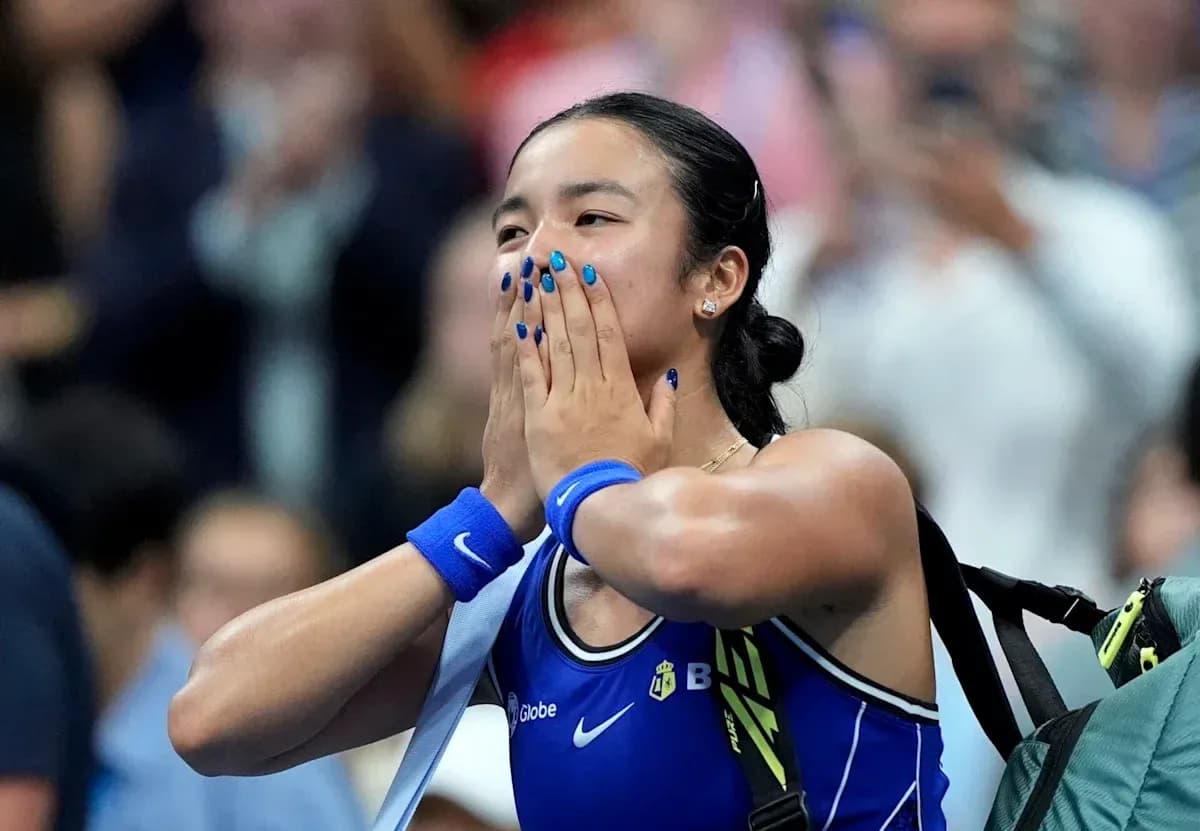
Daria Kasatkina barely had time to settle before the first set was ripped away from her. Paula Badosa broke to love for 3-1 and never looked back, turning the opener into a 23‑minute procession.
On Nine’s coverage, Jelena Dokic nailed the pattern early: Badosa was coming out swinging at the start of rallies, taking time away, forcing Kasatkina to defend on the back foot. Kasatkina, she said, needed to “weather the storm”, drag the points out, and make Badosa hit one more ball.
She never really got there. The errors came too early in the rallies, the pressure too constant. Just as Kasatkina began to look more settled in the second set, the weather cut in again, slicing through any rhythm she’d managed to build.
Schoolkate serves his way into second round
On a stop-start morning, Tristan Schoolkate delivered something refreshingly simple: big serving and a hard-earned win.
The Australian powered past American Nishesh Basavareddy in four sets, 7-6 (4), 3-6, 6-3, 6-4, to reach the second round. His serve was the anchor. Schoolkate finished with 25 aces and an imposing 82 per cent first-serve percentage, numbers that allowed him to ride out the inevitable momentum swings.
The match itself was tighter than the scoreline suggests. Total points read 121-119 in Schoolkate’s favour, a reminder of just how fine the margins were. When it mattered, though, the Australian found the extra gear.
The reward is significant. A second‑round berth brings prize money just shy of $266,000. For a player still carving out his place on tour, that kind of cheque can change a season.
Earlier in the contest, Schoolkate’s dominance on serve had already stood out. At one stage he had 18 aces and was landing 83 per cent of first serves, yet still trailed Basavareddy in total points, 97-93. It was a match played on a knife edge, settled by a serve that refused to blink.
Sweeny’s upset path opens as Moutet retires
On another court, Dane Sweeny’s morning took a strange turn.
He had already put himself on the brink of a major upset, leading Frenchman Corentin Moutet by two sets to love, 7-6 (4), 6-4, and up 3-0 in the third, when the match abruptly ended. Moutet walked to the net, offered his hand, and retired.
The reason wasn’t immediately clear from the stands. Moutet carried heavy strapping on his forearm and, moments after the handshake, buried his face in his towel. There was animated discussion with the chair umpire; it sounded as though he believed he had asked for a physio earlier and been refused, though the details remained murky.
What was clear: Sweeny, ranked outside the top 100, had been on the verge of toppling a player who sat as high as No.30 in June and now sits in the 60s. On paper, it was a mismatch. On court, it was anything but.
The numbers told a tight story. Moutet had five aces to Sweeny’s one, but his first serve misfired too often. Sweeny grabbed four breaks to Moutet’s three, and the total points sat at just 92-83 in the Australian’s favour when the Frenchman stopped. When the big points arrived, Sweeny owned them.
One moment summed up his day. In the second set, he slipped mid-rally, lost his footing, and still had the touch to feather a drop shot for the point. It felt like a sign. Whatever the ranking said, this was his match to win.
It was not the way he would have imagined closing out the biggest victory of his career. But the scoreboard doesn’t carry asterisks.
Kokkinakis hit by another cruel blow
Not every Australian story carried a smile.
Thanasi Kokkinakis, one of the game’s great crowd favourites, withdrew only hours before his scheduled first-round match. The 30‑year‑old has been battling an ankle injury, another addition to a long and bruising medical file.
Earlier this year, it was his shoulder that kept him off court at the Australian Open. Now the ankle has intervened, robbing him of a chance to face rising star Rafael Jodar.
For Kokkinakis, it is another brutal interruption. For the rest of the Australian contingent, it sharpens the question: on a day of rain, upsets and opportunity, who will be fit enough, and fearless enough, to carry the flag deepest into this tournament?