.svg&w=384&q=75 "logo")
Aubameyang's Bitter Exit from Gabon National Team
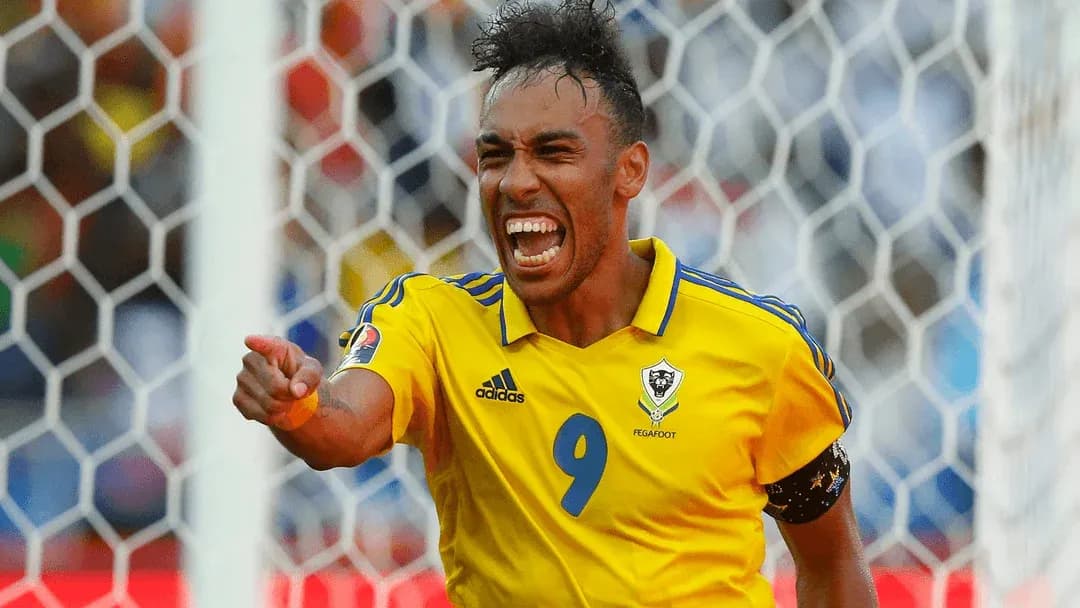
Pierre-Emerick Aubameyang was supposed to leave the Gabon national team to applause, not acrimony. Instead, at 37, the greatest goalscorer in the country’s history has shut the door with a mixture of anger and resignation, his farewell stained by a political and sporting storm that followed Gabon’s disastrous Africa Cup of Nations campaign.
The Deportivo striker confirmed his international retirement after a turbulent few months in which he was first blamed, then banished, then brought back. By the time the federation reversed course, the damage was irreparable.
“They humiliated me and tarnished my image when I had played at AFCON while injured,” Aubameyang said in a television interview. “It was the last straw and I’d rather leave it here.”
Those words carry the weight of an era ending not with a testimonial, but with a rupture.
AFCON collapse lights the fuse
The chain reaction began in Morocco at the 2025 Africa Cup of Nations. Gabon did not simply underperform; they collapsed.
Three games, three defeats, and a group-stage exit. The final blow came in a 3–2 loss to Ivory Coast, a result that sealed a pointless campaign and sent the Panthers home in embarrassment.
The response back home went far beyond the usual post-tournament inquest. It became a national issue.
Gabonese president Brice Clotaire Oligui Nguema publicly framed the debacle as something deeper than sport, declaring that “a part of the national identity” had been weakened. That line set the tone. This was no longer just about tactics or team selection; it was about image, pride, and blame.
The government moved swiftly. The entire coaching staff was dissolved. The national team itself was suspended until further notice. And then came the decision that would define Aubameyang’s final chapter in a Gabon shirt: he and veteran defender Bruno Ecuele Manga were dropped from the squad.
Two of the most experienced, visible faces of Gabonese football were singled out. Many supporters saw scapegoats, not solutions.
“The problems run much deeper”
For Aubameyang, it cut deep. Not only because of the humiliation of being publicly cast aside, but because he believed the crisis engulfing the national team had roots far beyond any one player.
“I think the national team’s problems run much deeper than the little part that I represent,” he said, laying out his position.
He had gone to AFCON carrying an injury, pushing his body to be there. From his perspective, that sacrifice was met not with gratitude, but with condemnation. To be painted as a symbol of failure after playing through pain felt like a betrayal of everything he had given to the Panthers.
The authorities eventually reversed their stance. Aubameyang and Ecuele Manga were reinstated. On paper, the rift was healed.
In reality, the trust had gone.
The striker chose not to simply move on as if nothing had happened. The episode became his breaking point, the moment he decided his international story had reached its final page.
A giant of Gabonese football exits the stage
Aubameyang leaves the national team as its all-time leading scorer, the face of a generation and the player who carried Gabon’s colours onto the global stage like no one before him. For years, he was the country’s attacking reference point and its most recognisable footballing export.
Now Sébastien Migné, newly appointed as head coach, must plan for a future without the man who defined Gabon’s attack for more than a decade. The task is not simply to replace a centre-forward, but to rebuild an identity after a public and painful implosion.
This was not how it was supposed to end. No farewell match. No lap of honour. No final ovation for a player who spent years as the symbol of Gabonese ambition.
Instead, Pierre-Emerick Aubameyang walks away feeling “humiliated” and unfairly burdened with blame, leaving a national team still searching for answers in the wreckage of its AFCON failure.