.svg&w=384&q=75 "logo")
Aryna Sabalenka Dominates Polina Iatcenko in Quick US Open Victory
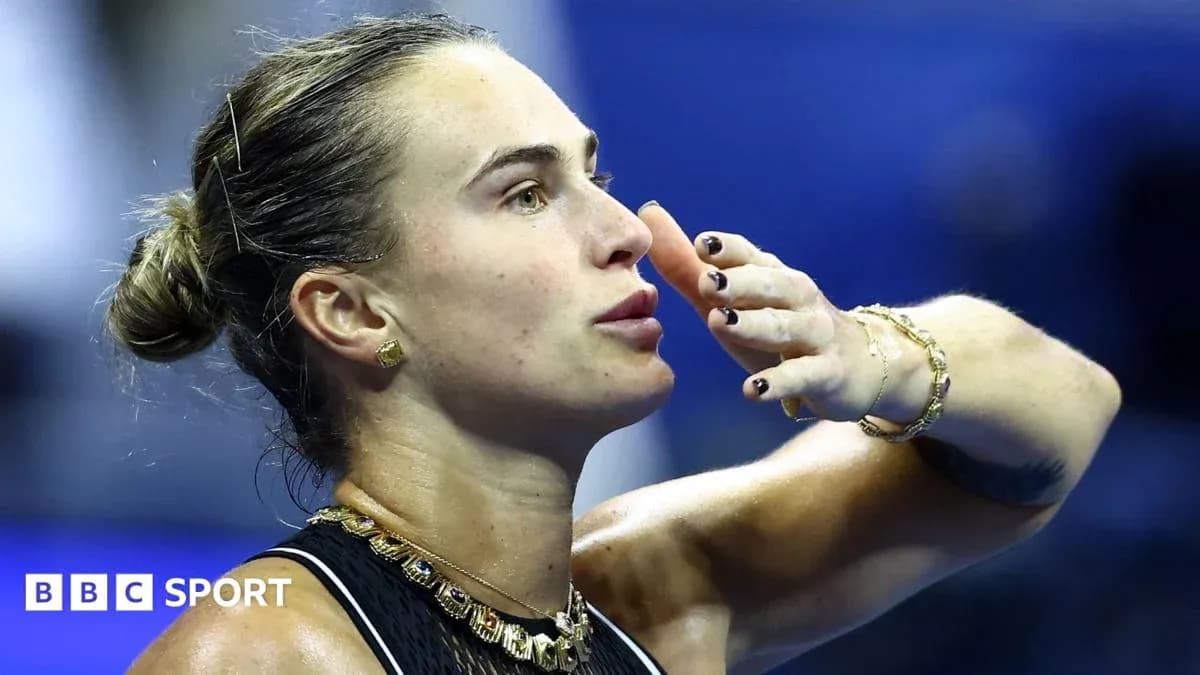
Aryna Sabalenka needed just 53 minutes to flatten Polina Iatcenko at the US Open. She walked off Arthur Ashe Stadium with a 6-1 6-1 win, barely breaking sweat.
She didn’t look remotely satisfied.
This was one of the quickest Grand Slam victories of her career, a mismatch between the world number one and a 22-year-old qualifier playing her first main-draw match in New York. Sabalenka’s power ripped through the contest: 24 winners to Iatcenko’s three, heavy serving, relentless depth. The scoreline told one story. Her body language told another.
Sabalenka is chasing a third straight US Open crown, trying to turn a strange, lopsided season into something historic. She has dominated for stretches, then drifted. She is still searching for her first major title of 2026, still trying to climb out of a five-month dip that has stripped away the aura of inevitability she carried through the spring.
This rout didn’t really answer the question of where her level sits. It did, though, restore some swagger.
“I’m happy with the level I played, happy with the focus and happy to be through this match,” she said, already looking ahead to a third-round meeting with Kamilla Rakhimova.
A quick demolition, a restless champion
From the opening game, the gulf was brutal. Iatcenko, ranked 160 in the world, looked tight and overawed on the biggest court in tennis. Her first steps were tentative, her swings rushed. Sabalenka pounced.
The top seed bullied returns, stepped inside the baseline and forced error after error. Iatcenko’s shoulders tightened with each missed forehand, each short ball punished. The scoreboard raced: 2-0, 4-0, 5-0.
At 5-0 down, the Russian finally held serve, drawing a warm smile and a flicker of relief. It felt like a small victory in a one-sided lesson. Sabalenka immediately slammed the door, holding to love in under 90 seconds to seal a 24-minute first set.
Even that short spell left Iatcenko needing a reset. She took a bathroom break, officially to change her kit, though it looked far more like a mental timeout. Sabalenka stayed loose, hitting serves on the baseline, refusing to let the chill of a stop-start night creep into her arm.
The second set began with the same script. Sabalenka broke twice for 3-0, her weight of shot simply too much. A sloppy game then handed one break back, a reminder that the world number one is still ironing out the kinks. She snapped straight back, breaking twice more to finish the job with minimal fuss.
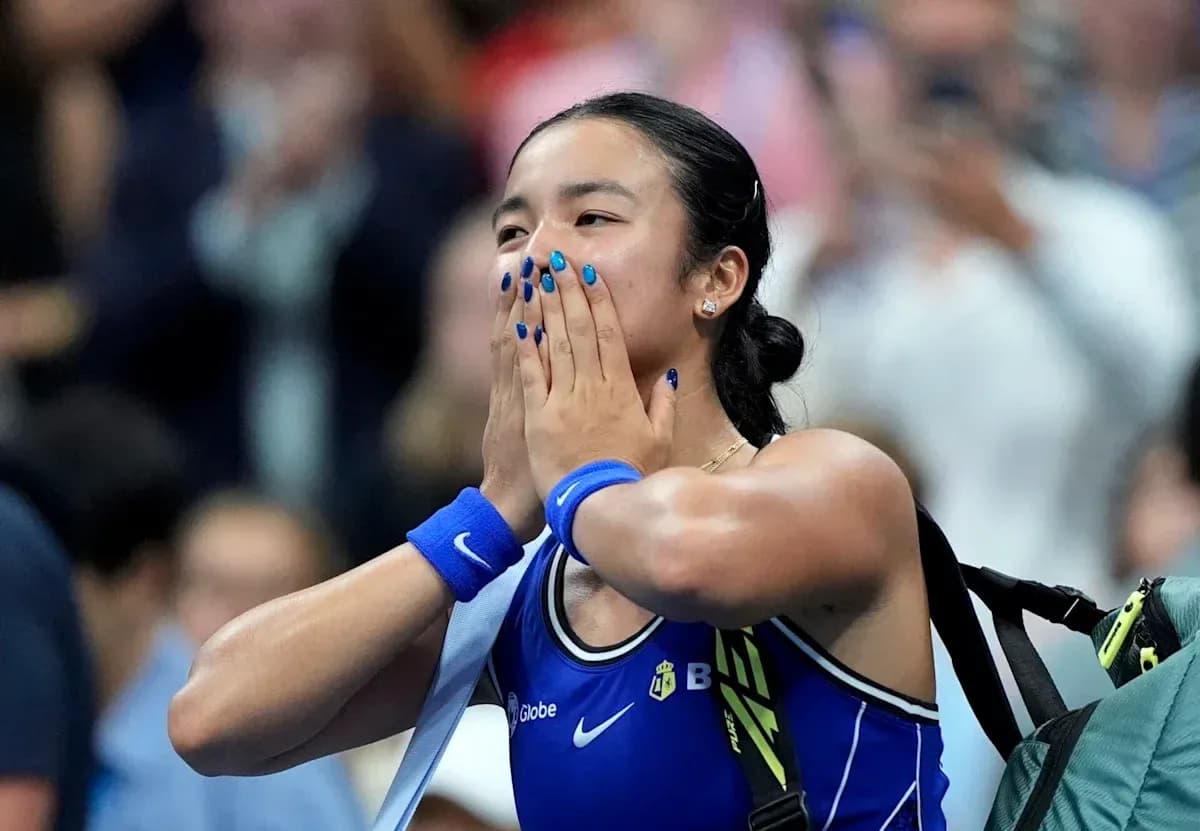
For Iatcenko, the defeat stung but came with perspective. She leaves New York with a valuable first taste of top-level pressure, a clear benchmark of what the elite looks like, and a significant boost to her finances. Having earned around $300,000 in her career before this tournament, she adds another $190,000 to reinvest in coaching, travel and the grind of the tour.
Sabalenka left with something different: a win that looked easy, but a mood that suggested the real battles lie ahead.
Rankings pressure and a sharp edge
The stakes around Sabalenka this fortnight are not just about trophies. They’re about status.
To have any hope of staying at number one, she must lift the US Open title again. Even that might not be enough. Elena Rybakina will take the top ranking if she reaches the semi-finals, regardless of what Sabalenka does.
A few months ago, that scenario sounded remote. Sabalenka opened 2026 at full throttle, reaching the Australian Open final and then tearing through the Sunshine Double, winning Indian Wells and Miami back-to-back. Across her first 27 matches of the year, her only loss came to Rybakina in Melbourne.
Then the rhythm cracked. Since Miami, her win-loss record before New York slid to 17-7. One WTA semi-final in five months. A player used to dictating every narrative suddenly found herself answering questions about form, focus and what had gone wrong.
Before the tournament, she admitted she had been “dealing with several things” during that lean spell, without expanding on the details. The subtext was clear: this version of Sabalenka is not the one that steamrolled the tour in March.
So when a reporter suggested in her post-match press conference that she had been attending “lots of parties” before the US Open, the reaction was instant and icy.
“What kind of question is that? Just because I posted some activities with brands, you think that I've been partying [and] not training?” she snapped back.
Asked if she was “getting serious” now that the tournament had started, she hit harder: “Oh yeah, I wasn't serious before that. Next question.”
It was a glimpse of the edge that has always lived close to the surface with Sabalenka. The same fire that fuels her game, the same intensity that can either carry her to titles or drag her into turbulence.
A draw holding steady, and rivals closing in
On a day when the women’s draw again held firm, Sabalenka’s demolition job fit the pattern. Few shocks, few alarms, the top seeds moving through with minimal fuss.
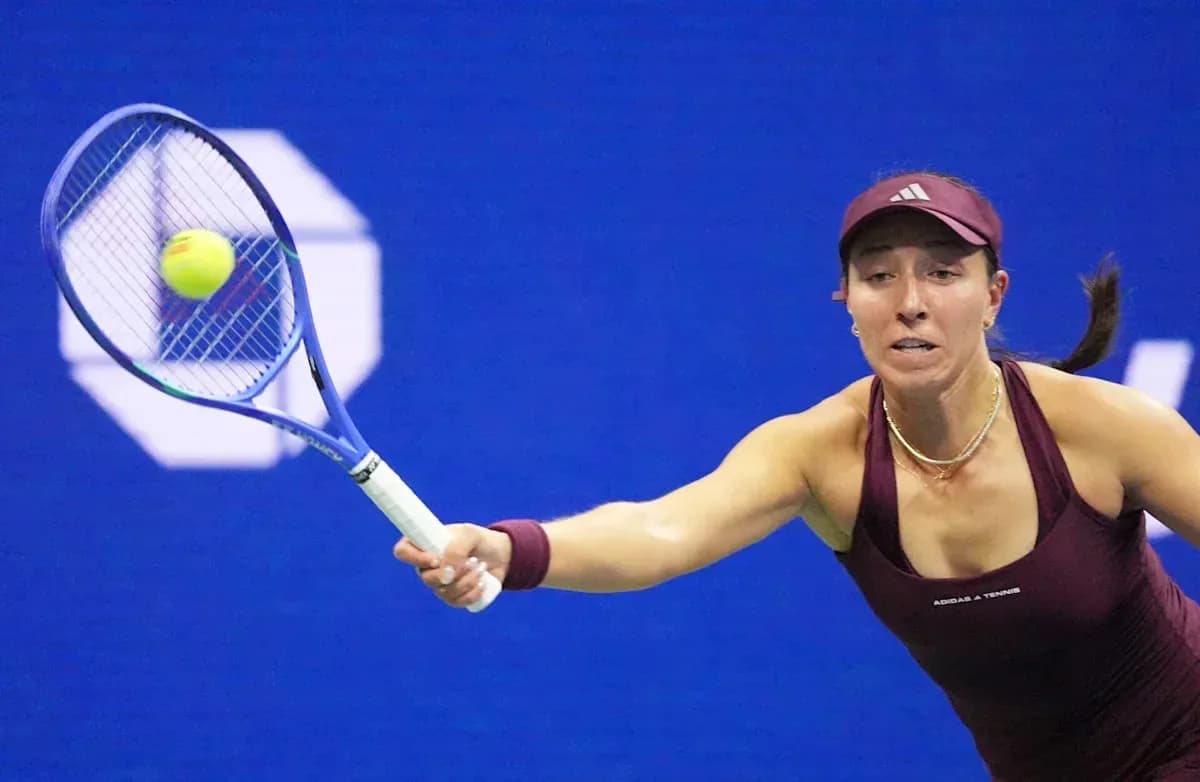
Third seed Jessica Pegula kept her own push for a first Grand Slam singles title on track, beating fellow American Sofia Kenin 6-3 6-1. Pegula, like Sabalenka, has a path to number one if she wins the title. So does Coco Gauff, the fourth seed, who also advanced to keep the ranking battle alive.
Karolina Muchova, the Wimbledon runner-up, moved through in straight sets. Marta Kostyuk, a two-time major semi-finalist, did the same. Teenage American Iva Jovic added to the home crowd’s optimism with another composed win.
The heavyweight names are holding their ground. The early rounds have belonged to the favourites.
For Sabalenka, that only sharpens the focus. The three-peat is still on, the ranking race still in her hands for now. She has the power, the pedigree and the track record in New York.
What she does not yet have this year is certainty.