.svg&w=384&q=75 "logo")
Aryna Sabalenka Dominates Jessica Pegula to Reach U.S. Open Final
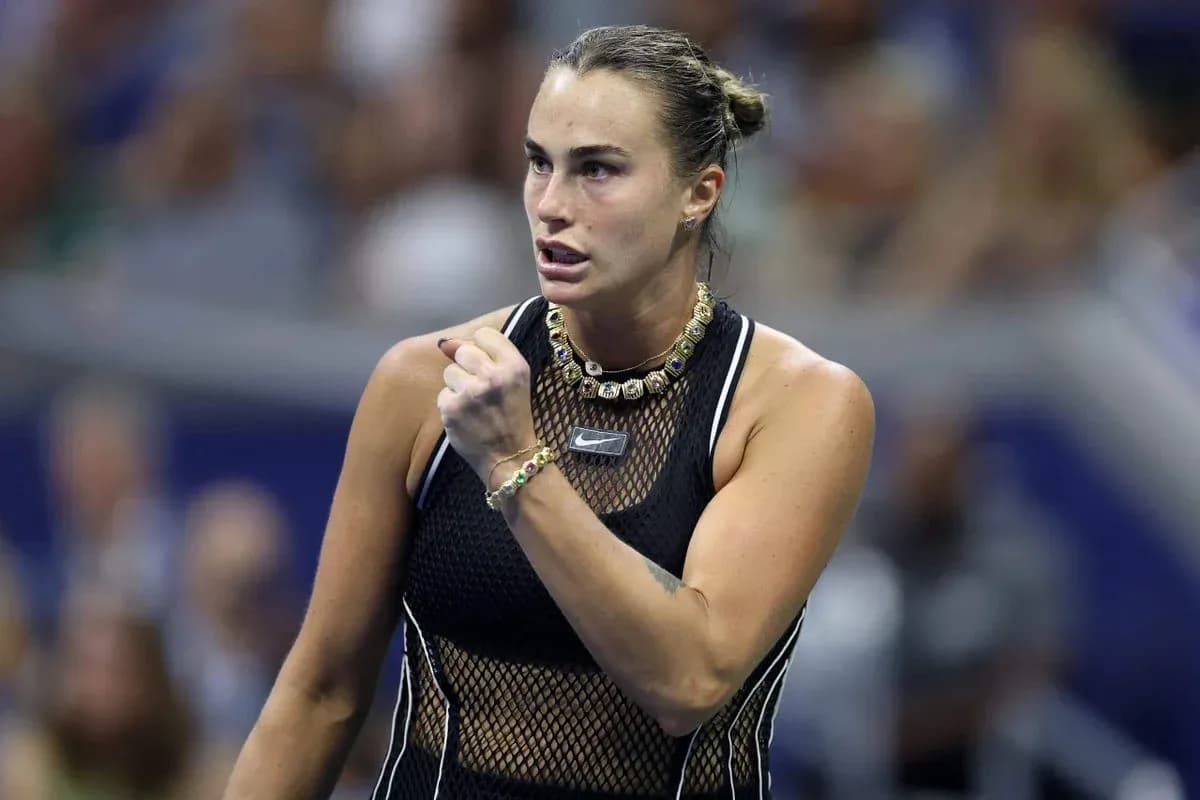
NEW YORK — On a night when the air felt thick enough to cut, Aryna Sabalenka sliced straight through it.
The defending U.S. Open champion is back in the final, again, after bullying past Jessica Pegula 7-5, 6-2 inside a heavy, humming Arthur Ashe Stadium. One more win, and she completes a rare New York three‑peat. Standing in her way: Elena Rybakina, the woman who will take her No. 1 ranking on Monday.
The ranking can wait. The trophy is all that matters to Sabalenka now.
Sabalenka sheds her doubts in New York
This run did not look likely a month ago. For most of the last four months, Sabalenka has looked human, sometimes fragile. Early in the season she was almost untouchable; since April she has been anything but, leaking errors in big moments, letting matches slip away as much from her own racket as from her opponents’ brilliance.
That version of Sabalenka has not shown up in New York.
“I feel confident and I feel mentally and physically really strong right now,” she said after the win, sounding like a player who has rediscovered her center of gravity.
Six matches in, the edge that followed her into the city has melted into something more dangerous: calm conviction. A week ago she bristled and barked her way through early rounds. On Thursday night, in the stadium she loves so much she named her cavalier King Charles spaniel Ash, she played like water — flowing, forceful, impossible to hold.
“I just love New York and I love being here, and I love the energy of the city,” she said. “I think that’s what drives me. That’s what really inspires me and pushes me to keep going.”
The U.S. Open is notoriously brutal to champions trying to defend. It arrives at the tail end of a long season, when bodies ache and minds fray. Players come in taped up, worn down, vulnerable. To be back in a third straight final, with the chance at a third straight title, would be extraordinary for anyone. For a player who has wobbled as much as Sabalenka has since the spring, it borders on defiant.
Pegula shut out of her home party
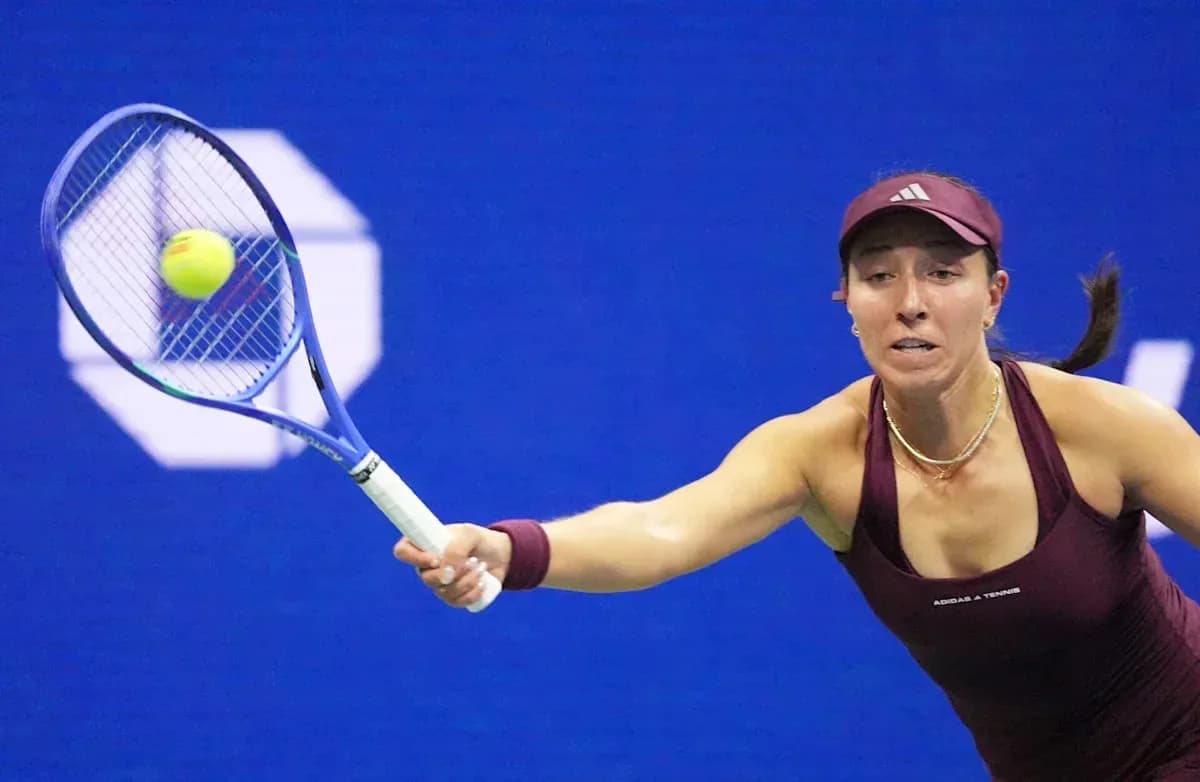
This was supposed to be a night for the home favorite. The 24,000 on Ashe leaned hard toward Pegula, the world No. 3, a summer banker for deep runs and a player who had already handed Sabalenka a humiliating 6-0 set in Berlin this year.
But that was grass. This is Sabalenka’s territory.
On hard courts — especially these fast, lively ones — she looks at home, her heavy topspin and raw power biting high and deep. “Fast courts, but also bouncy a little bit,” she said. “That really gives me more possibilities of, like, pushing her back.”
She did exactly that from the opening games. Pegula tried to stick to her plan: flat, hard drives down the middle, robbing Sabalenka of angles, forcing her to misfire. It never truly took hold. Sabalenka met the pace, absorbed it, then sent it back with interest.
The first set became a test of nerve on serve. Eleven straight holds. Short, sharp rallies. Pegula had just one break point; Sabalenka erased it with a big first serve and a bigger forehand. When Sabalenka did miss — a netted forehand here, a frustrated glare there — Pegula couldn’t quite turn those flickers into a fire.
At 5-6, Pegula finally blinked. Sabalenka’s weight of shot dragged two errors out of the American. The tension crept in. A double fault from Pegula. On the second set point, Sabalenka went right at her, hammering down the middle. Pegula’s reply died in the net.
Set over. Halfway to the final.
The second set felt like a verdict. Sabalenka loosened her shoulders and tightened her patterns. Pegula kept swinging, but the court seemed to shrink around her. The American later admitted it felt like there were no exits, no trapdoors, no way out.
She tried to joke about it after, saying she and her team had teased Sabalenka’s camp: “We’re like, ‘Do you like us?’ Like, we’re good people, we’re pretty nice to you guys. Do you think that maybe one day she could be maybe off a little bit, so I could just, like, get a chance?”
Not on this night. Not with this version of Sabalenka.
Second serves, first intent
Sabalenka’s serve numbers on paper were not perfect. She landed only 55 percent of her first serves. Under normal circumstances, that opens a door. Pegula never found it.
The reason sat in the second serve column. Sabalenka rolled in vicious, twisting deliveries and won roughly two-thirds of those points. Every time Pegula thought she might see a second serve she could attack, the ball kicked away from her strike zone or jammed her body. What should have been a pressure point became another Sabalenka platform.
Pegula, who came into New York 22-5 since her first-round loss at Roland Garros, left sounding almost resigned about what she’d just faced. Once Sabalenka synced with Pegula’s flat pace, the American felt stripped of her usual options.
“I’m not quite a Rybakina where I can serve myself out of trouble, and I’m not quite a Coco that can rely on insane athleticism,” she said, measuring herself against the two players Sabalenka could face in the final at the time she spoke. Then came the blunt conclusion: “I do think the way she played tonight, I think she would have beaten anybody.”
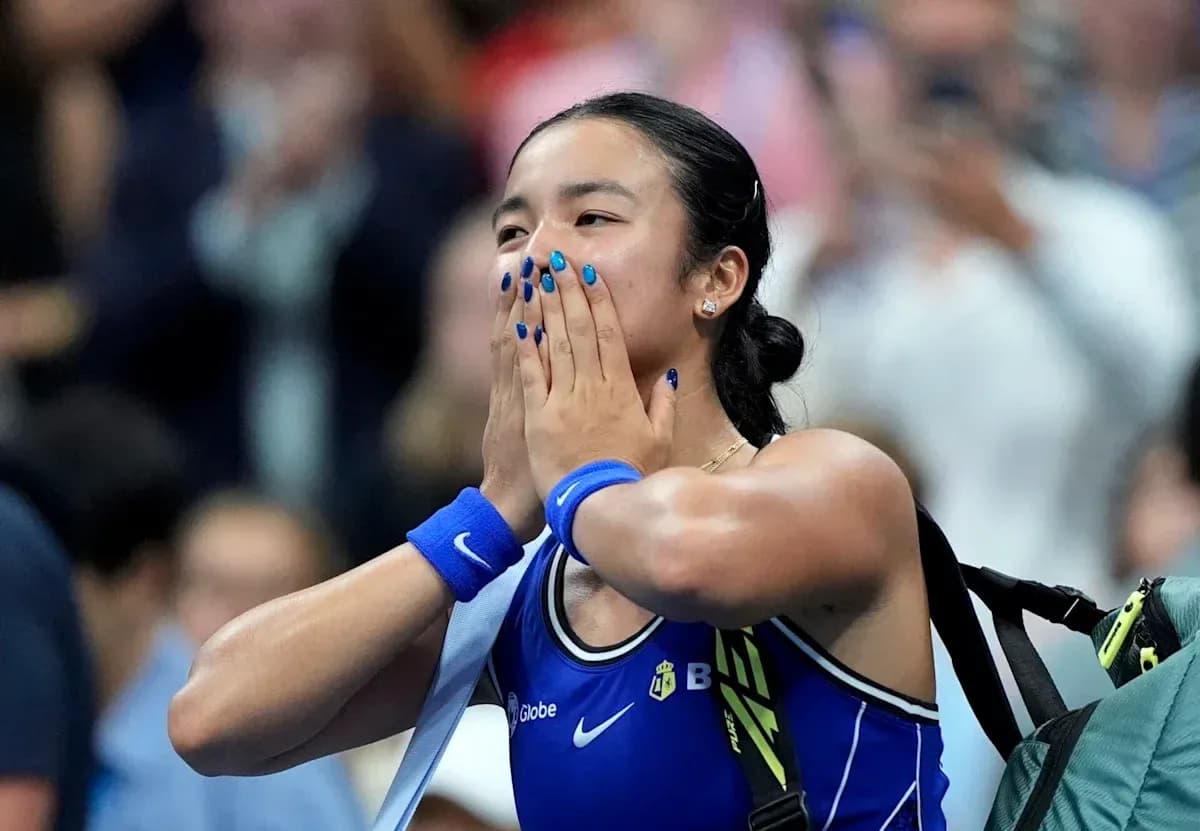
Sabalenka closed it out with a controlled ferocity, punctuating her win with a restrained fist pump rather than a roar. No theatrics, no overkill. Just the look of someone who knows there is still one job left.
One more night, one massive hurdle
This is Sabalenka’s fourth straight U.S. Open final. She has already won two. She also reached a fourth consecutive Australian Open final in January, winning two there as well. On hard courts, she has become the standard.
Yet the third title in Melbourne has eluded her, two finals lost in succession. New York, she believes, offers a different script.
The stakes on Saturday are layered. Rybakina will walk into the final as the incoming world No. 1, the woman officially replacing Sabalenka at the top. Sabalenka will walk in as the two-time defending champion, the player who has “essentially owned the hard-court Slams the past four years,” as the numbers now insist.
She has already said the ranking shift is fine. The math will do what it does. What she wants is simpler and more brutal: one more win, one more trophy, one more night where the city she loves lifts her, and she crushes everything in front of her.
If she finds this level again under the lights, the question may not be whether she can stop Rybakina.
It may be whether anyone on hard court can stop her at all.