.svg&w=384&q=75 "logo")
Aryna Sabalenka Dominates Iatcenko in US Open Second Round
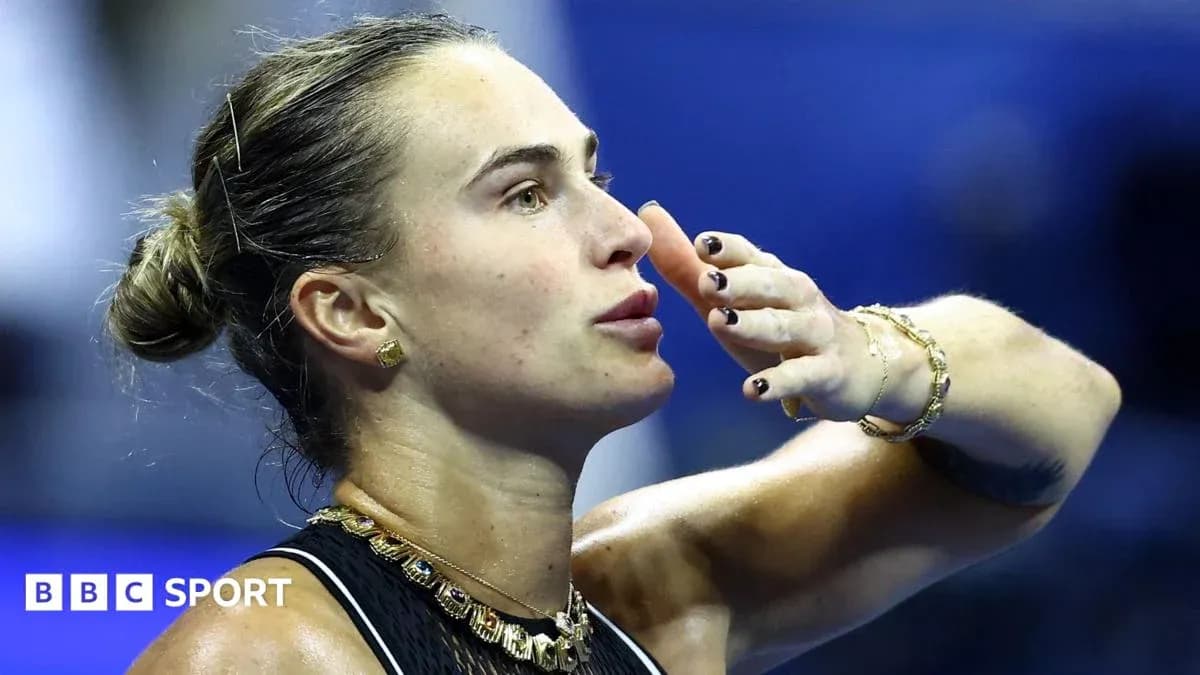
Aryna Sabalenka needed just 53 minutes to remind Flushing Meadows why it has become her personal playground. She left Polina Iatcenko with barely a foothold in the match and barely a memory worth keeping: 6-1 6-1, a demolition dressed up as a second-round contest.
Yet when it was over, the world number one didn’t look remotely satisfied.
A Rout Without Answers
On paper, this was a mismatch. A two-time defending US Open champion against a 22-year-old qualifier playing her first main-draw match in New York. On court, it looked even more lopsided.
Sabalenka ripped 24 winners to Iatcenko’s three, bullied the world number 160 off the baseline and never allowed the debutant to feel anything resembling comfort. The Belarusian’s pace and weight of shot simply overwhelmed her opponent from the first game.
Iatcenko, tight and tentative at the start, finally relaxed when she held serve at 5-1 in the opening set, breaking into a broad, relieved smile just for getting on the board. Any sense of a foothold vanished almost immediately. Sabalenka served out the set to love in under 90 seconds, a brisk full stop on a 24-minute opener.
The Russian took a bathroom break, officially to change kit, though the timing screamed more of a mental reset than a wardrobe issue. Sabalenka stayed on court, shadow-serving, keeping her engine running. When they resumed, the pattern didn’t change much.
Sabalenka surged to a double-break lead at 3-0 in the second set, briefly wobbled with a sloppy service game, then slammed the door again with two more breaks. For Iatcenko, it was a harsh but valuable education on the biggest court in the sport — and a lucrative one. She arrived in New York with $300,000 in career prize money and leaves with another $190,000 to plough back into the grind.
For Sabalenka, it was business taken care of. But not a test passed, because this was never a test.
A Season of Extremes
The number one seed is chasing a rare “three-peat” in New York, but the broader context of her season adds an edge to even routine wins like this.
She opened 2026 like a runaway train: Australian Open final, Indian Wells title, Miami title. In her first 27 matches of the year, she lost only once — to Elena Rybakina in Melbourne. The conversation around the rankings back then felt settled. Sabalenka at the top, everyone else chasing.
Then the rhythm broke.
Since completing the Sunshine Double, her win-loss record has slipped to 17-7 coming into the US Open. Only one WTA semi-final in the past five months. Before this tournament, she admitted she had been “dealing with several things,” fully aware she had dipped far below the level that made her look untouchable in the spring.
Now the maths is unforgiving. To have any chance of clinging to the number one ranking, Sabalenka must lift the trophy again in New York. Even that might not be enough. If Rybakina reaches the semi-finals, she will climb to the top regardless of what Sabalenka does.
The pressure is clear. The scoreboard against Iatcenko didn’t show it, but her demeanour afterwards did.
Tension in the Interview Room
If the match was straightforward, the post-match press conference was anything but.
Sabalenka bristled when a reporter hinted she might have been at “lots of parties” in the lead-up to the tournament, a suggestion seemingly based on her social media activity.
“What kind of question is that? Just because I posted some activities with brands, you think that I've been partying [and] not training?” she shot back, visibly irritated.
When the same line of questioning turned to whether she was “getting serious” now that the US Open had started, Sabalenka’s sarcasm cut through the room.
“Oh yeah, I wasn't serious before that. Next question.”
It was a glimpse of a player on edge, fiercely protective of her professionalism at a time when her results have dipped and the number one ranking hangs by a thread.
On court, though, the message was far calmer.
“I'm happy with the level I played, happy with the focus and happy to be through this match,” she said, looking ahead to a third-round meeting with Kamilla Rakhimova of Uzbekistan.
A Draw Quietly Taking Shape
The women’s draw has moved through the opening two rounds with barely a tremor. The big names are still standing, and some of them are circling Sabalenka’s ranking as well as her title.
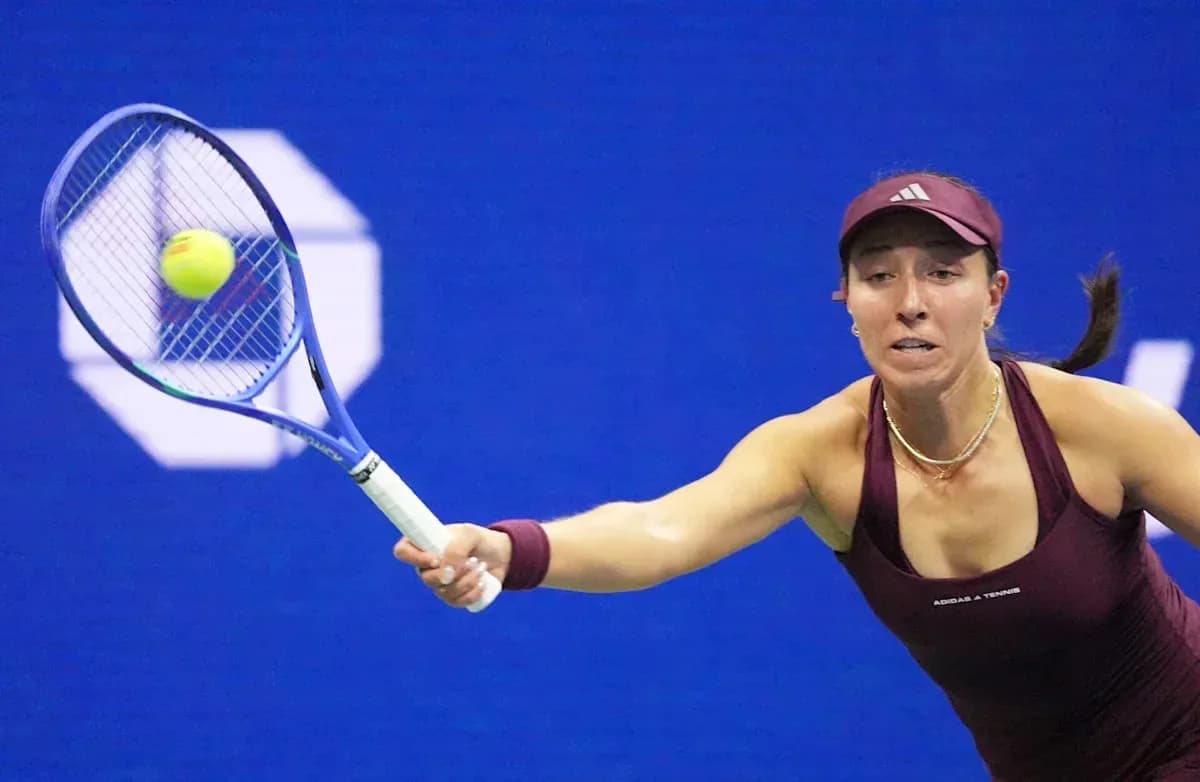
Earlier on Wednesday, third seed Jessica Pegula kept her own dream of a first Grand Slam singles crown alive with a composed 6-3 6-1 win over fellow American Sofia Kenin. If Pegula wins the title, she too could replace Sabalenka at the top of the rankings.
So could fourth seed Coco Gauff, who also remains in the hunt. The fight for number one is no longer a two-player storyline; it’s a crowded, high-stakes race playing out on the same hard courts Sabalenka has ruled for the past two years.
Karolina Muchova, this year’s Wimbledon runner-up, moved through in straight sets. So did two-time major semi-finalist Marta Kostyuk. Teenage American Iva Jovic continued her emergence with another confident win, adding to a pattern: the favourites are holding firm, the shocks have been scarce, and the bracket is quietly loading up for a brutal second week.
Sabalenka’s demolition of Iatcenko fits neatly into that script on paper. But for the world number one, this fortnight is about more than another deep run. It’s about proving that the early-season juggernaut is still in there, ready to surface again when the stakes are highest.
She has started with a sprint. The real race, the one for New York and for number one, is only just beginning.