.svg&w=384&q=75 "logo")
Arthur Ashe Stadium: The Noisy Heart of the U.S. Open
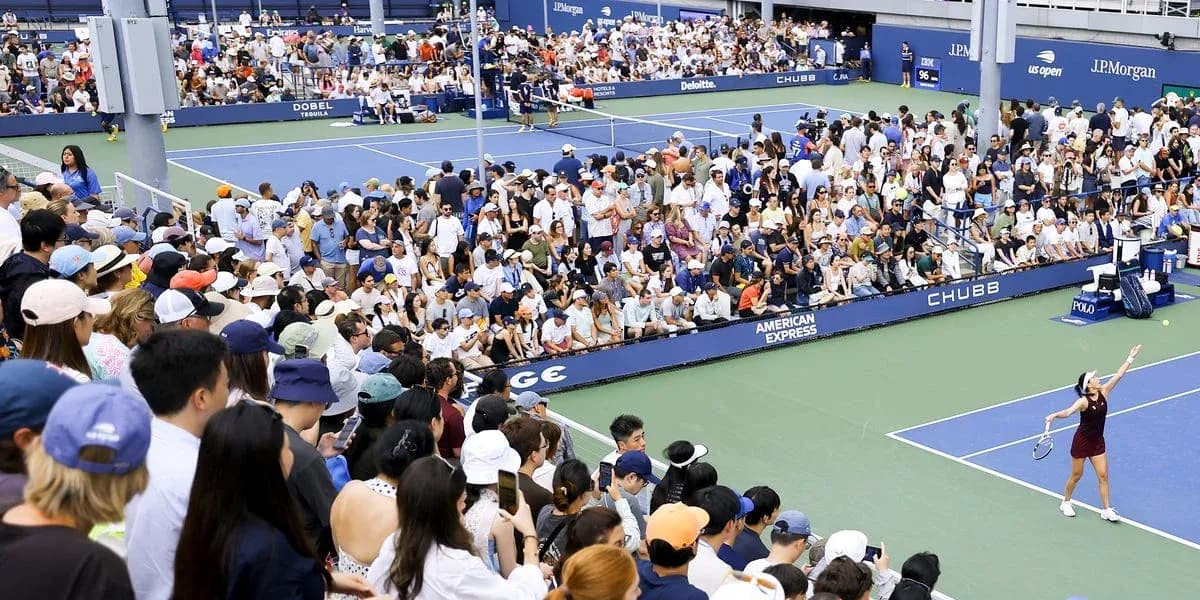
Arthur Ashe Stadium does not do quiet.
The world’s biggest tennis arena, the U.S. Open’s noisy cathedral since 1997, hums and buzzes and shouts its way through every point. Where Wimbledon’s Centre Court and Roland Garros’s Court Philippe-Chatrier fall into reverent silence before a serve, Ashe offers players something else entirely: a constant, restless murmur that never really dies.
“On Arthur Ashe Stadium, there’s always ambient noise,” says Félix Auger-Aliassime, a two-time semifinalist in New York. “The brain just gets used to it after a while. There’s no other way to put it. There’s no preparation for that.”
Players arrive with their routines, their mental tricks, their carefully rehearsed focus. Then they walk into Ashe and have to make it all work in a place that simply refuses to whisper.
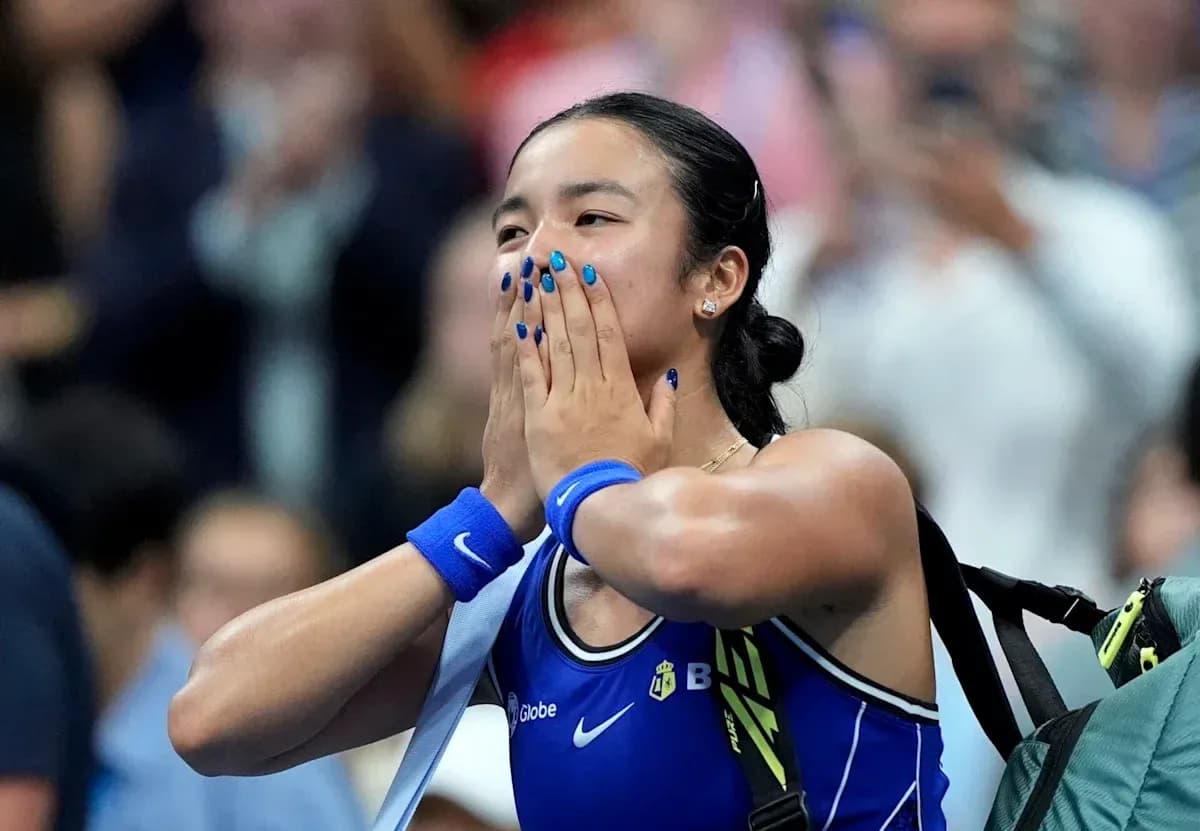
Most of the sport’s stars wouldn’t have it any other way. Frances Tiafoe lights up when he talks about it. “New York—it’s different. Night on Ashe is so special. It’s the biggest court in tennis. The atmosphere is wild.” Naomi Osaka, a two-time champion here, calls the arena a “stage,” the U.S. Open a star-making machine powered by a specific kind of electricity you don’t find anywhere else on tour.
Noise, at this point, is not a byproduct. It’s policy.
Tennis, but make it New York
The U.S. Open has stopped pretending to be a genteel cousin of Wimbledon. It has leaned into what it is: loud, hot, occasionally chaotic, and unapologetically New York.
American Emma Navarro captured it neatly last year, describing the tournament as “casually rowdy” in contrast to the “proper,” “elegant,” and “respectful” vibe at the All England Club. That shift isn’t accidental. In 2024, organizers rolled out a “fan free movement” policy, relaxing long-standing rules on when spectators can move to and from their seats.
“It might be seen as a radical thing for tennis,” tournament referee Jake Garner said at the time, “but I’m not sure trying to increase the fan experience and making it more enjoyable for them should be that radical.”
The Open has become the loud spearhead of a broader etiquette revolution in a sport that, for more than a century, prized restraint. Tennis grew up in the manicured gardens of the British aristocracy, and it inherited their manners. Silence in the stands wasn’t just courtesy; it was class code.
“You can’t separate the sport from the people who played it,” says historian Robert Lake, who has written on the game’s origins. Traditional tennis etiquette, he notes, is “definitely rooted in ideas of class that permeated the sport when it first emerged in the late 1800s.”
Lizzie Post, great-great-granddaughter of etiquette icon Emily Post and co-host of the Awesome Etiquette podcast, sees the same lineage. “There has been a tradition of allowing players to concentrate,” she says. Quiet, in tennis, was never just about sound. It was about a worldview.
That world is fading.
From hushed lawns to festival grounds
Veteran sports journalist Matthew Futterman, who covers tennis for The Athletic, is blunt about where he thinks the sport goes wrong.
“Tennis causes problems for itself when it is clutching its pearls and being precious,” he says. Then he asks the question that haunts every traditionalist: “How in the world are you supposed to get a kid excited about going to a tennis match—and being quiet—when you bring an eight-year-old into a stadium and you say, sit still and be quiet for the next three hours? That sounds like a punishment to me.”
The U.S. Open, perhaps more than any other major, has embraced the reality that a tennis tournament is not a single, sealed-off game. It’s a campus. It’s a day out. Fans drift between courts, snack bars, sponsor activations and practice sessions. On a busy early-round day, they can catch more than a dozen matches.
“Tennis, you’re sort of wandering around,” Futterman says. “You’re in your seat for a while, you watch the match, but a lot of it is about everything else.”
The Open has taken that “everything else” and turned it into a selling point. Music. Food. Parties. A grounds that feels less like a temple and more like a street festival.
“The brilliance of the U.S. Open,” Futterman adds, is that it realized “tennis is at its best when it feels like there’s an outdoor festival party going on with music and great food and all those things—and there happens to also be some tennis which you want to enjoy as well.”
For the USTA, that is not a side effect. It’s the brand.
“Everything that people associate with New York—the passion and the energy and the excitement—feels very much endemic to the U.S. Open itself,” says Nicole Kankam, Managing Director, Pro Tennis Marketing and Entertainment for the USTA. “It’s loud, it’s tough, it’s hot, but it’s also everything that makes it great and exciting.”
Where sport, style, and culture collide
The Open has also become a cultural event in a way that stretches far beyond the lines on the court.
Simone Scott, a journalist behind “The Girls’ Guide to Sports,” a series aimed at building an online sports community for women and helping them feel comfortable in any space, sees the tournament as sitting at a rare crossroads.
“I love how the U.S. Open brings together so many different worlds. It’s very New York,” says Scott, who is working with Dove during this year’s event. “You have incredible athletes competing at the highest level, but you also have fashion, culture, entertainment, and fans from every background all coming together in one place. It feels vibrant, welcoming, and inspiring, and there's really nothing else quite like it.”
That accessibility is not just a feel-good talking point; it’s strategy. The USTA’s mission is to grow the sport, and that means courting people who might not know a kick serve from a drop shot.
“Audiences and fan expectations change and evolve,” Kankam says. “We can maintain some traditions that are at our core, but if we’re not open to evolution and meeting fans where they are, then you miss out on growing your audience.”
One of the most telling experiments is the Finals Fan Fest, launched last year and set to expand. It allows people without stadium tickets to watch the championship matches from parties on the grounds. The numbers are striking: 85% of people who bought Finals Fan Fest grounds passes were new to the U.S. Open, and 95% of ticket buyers for the after party were also net new to the tournament’s audience.
That’s not just a new product. It’s a new pipeline.
The line between buzz and distraction
Not everyone is sold on the new era.
Jessica Schiffer, founder of Hard Court, welcomes the loosening of the sport’s collar. “Tennis has been very stuffy and uptight for too long, and we need to get with the times and make it a little easier for people to enjoy the sport,” she says. But she adds a caveat that many longtime fans share: “That being said, I’m also a purist at heart and I love the peace and quiet that many tennis matches come with.”
The distinction matters. Most critics aren’t asking for Wimbledon-level silence in Queens. They’re asking to see the ball.
Brand strategist Heather Queiroz went to last year’s Open with her family and didn’t mind the soundtrack. What grated was the movement—people standing in the aisles during points, blocking views, turning rallies into a battle to see around a stranger’s shoulder.
“We found ourselves in a lot of weird interactions and arguments with other people because they would just be standing [during points] or just standing in the aisles and then you can’t see,” she says. “What makes tennis so unique is that it’s a very precise sport. If you were going to watch the match, you kind of need to watch it.”
Her fear is that in chasing the casual crowd, the tournament risks alienating the diehards.
“Short-term, you can erode your loyal fan base, but long-term it doesn’t play out,” Queiroz says. “The more OG fans are definitely frustrated—and then with the prices going up, it makes you not really want to go because if you end up not really being able to see the match very well, then you might as well just watch it on TV and at least be able to see good tennis.”
Her proposed fix is simple: education. Signage around the grounds explaining basic tennis etiquette. A short guide attached to tickets. A reminder that “fan free movement” doesn’t mean standing up mid-point in Row 12.
Lizzie Post agrees that the responsibility lies with organizers as much as with fans. “You do want to make sure spectators know what the experience is supposed to be and what the decorum is for it,” she says. That, she notes, is “in the hands of the people issuing the tickets and the ushers who are meant to help crowd control. It’s a lot on the establishments that host these events to determine the type of event they’re going to be throwing and make the atmosphere known.”
For Post, etiquette is not about stuffiness; it’s about awareness. “Etiquette,” she says, is “thinking about our impact on the people around us and how we can make that a positive one and not a negative one. It doesn’t take much.”
At the core, beneath the music and the chatter and the celebrity sightings, there is still the same thing there has always been: two players on a rectangle of court, trying to solve each other at the very edge of their abilities.
“At the heart of the U.S. Open is tennis,” Post says. “It is two competitors playing at their best and trying to be their best. They train all year, every day. Their whole life, their livelihood, is based on this. You don’t want to be the lone voice that’s really loud in a quieter place.”
The trick for the Open is to keep the roar without losing that respect. To let New York be New York, but still give the players a stage, not a circus.
One thing, as Futterman puts it, is beyond debate: “It’s not your British grandmother’s tennis tournament.” The question now is how far this new version of the sport is willing to go—and how many other tournaments will follow Ashe’s noisy lead.