.svg&w=384&q=75 "logo")
Anthony Edwards Leads Timberwolves' Bold Offseason Moves
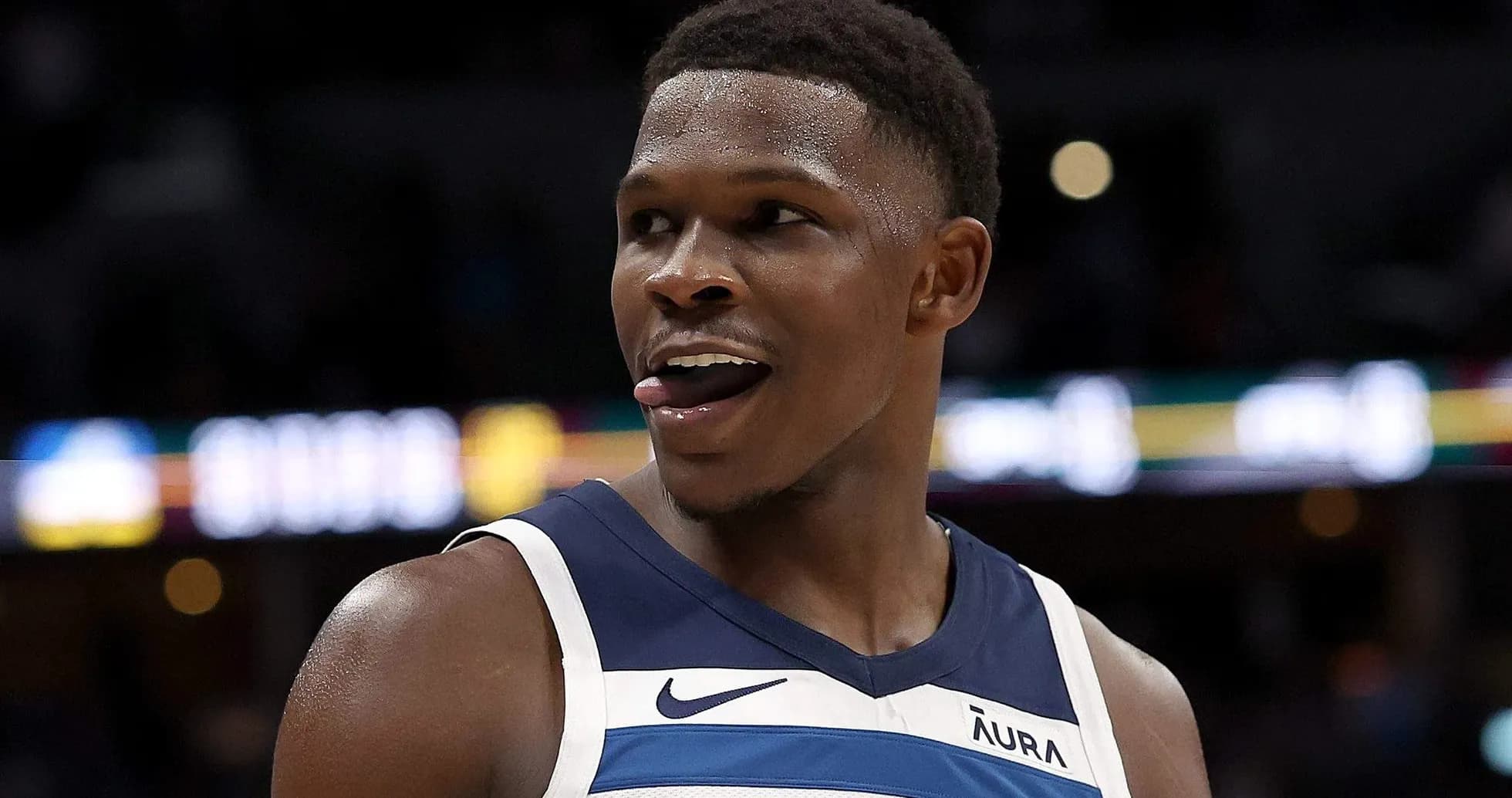
Anthony Edwards wanted help. Minnesota just handed him the keys to an entirely new kind of machine.
The Timberwolves have torn into their roster and their identity this offseason, reshaping everything around their 23-year-old star and a backcourt built to run, attack and overwhelm. The message from the front office is loud. So is the response from the franchise player.
ESPN’s Brian Windhorst reported on the “Hoop Collective” podcast that Edwards is “very pleased” with what Minnesota has done, highlighting the headline move: flipping Julius Randle and Naz Reid for LaMelo Ball and Jonathan Kuminga. For a team that has leaned on size and defense in recent years, it’s a sharp turn into a guard-driven, high-octane style tailored to Edwards’ prime.
Windhorst even floated a thought that will echo around the league: if Edwards’ extension were on the table right now, this kind of offseason might be enough to push him to sign immediately. The belief inside the organization is simple — LaMelo Ball isn’t just a big name. He’s a fit.
Edwards, the Recruiter
The Wolves didn’t just trade for talent. They recruited it, and Anthony Edwards led the charge.
Jonathan Kuminga hit the market with options. Real ones. The Los Angeles Lakers, Chicago Bulls and Portland Trail Blazers all had interest. According to his agent, Aaron Turner, Kuminga walked away from more money to join Minnesota.
“Ant was super active in the recruitment of him,” Turner told The Athletic. That matters. Stars don’t just score and sell jerseys anymore; they close deals.
Edwards didn’t pitch touches or shots. He sold something else.
“One thing he did was focus his message on, we’re gonna really guard here,” Turner said. “Everybody looked at the offensive end. JK and I looked more at the defensive end.”
In an era obsessed with spacing and scoring, Minnesota leaned into its defensive backbone as a selling point. Kuminga listened. He and Turner sat in a gym this week and stripped the decision down to basketball, not billboards.
“We sat at the gym this week, and I asked him, what’s the best basketball situation?” Turner said. “He said Minnesota. Well, nothing else matters. Why would you go anywhere else?”
It wasn’t just Edwards making the calls. Jaden McDaniels and LaMelo Ball also reached out, Turner noted, reinforcing a picture of a locker room that knows what it wants and who it wants with it.
“It was such a solid respect factor from top to bottom,” Turner added. For a franchise that once struggled to keep stars, that line lands like a verdict.
A New-Look Wolves Core
On paper, the Wolves’ retool is bold and unapologetic.
Randle and Reid are out. Ball and Kuminga are in. Around that core, Minnesota kept its bench punch and continuity by retaining Ayo Dosunmu and Bones Hyland, securing Jaylen Clark on an extension and adding the versatile Trey Lyles to deepen the rotation.
The blueprint is clear: Edwards and Ball form a dynamic, shot-creating, playmaking backcourt. Kuminga brings length, athleticism and defensive upside on the wing. McDaniels remains one of the league’s premier perimeter stoppers. The second unit has ball-handlers, shooting and enough toughness to survive playoff minutes.
This isn’t a tear-down. It’s a pivot. Same ambition, different route.
Chasing the West’s Elite
Minnesota’s recent playoff history explains the urgency.
After back-to-back trips to the Western Conference Finals, the Wolves stalled in the second round this year, bowing out to the San Antonio Spurs. The series never felt quite whole. Edwards played through a bone bruise in his left knee. Donte DiVincenzo never saw the floor. Dosunmu sat with a calf injury. The Wolves limped out of the postseason, not crashed.
The front office didn’t treat that exit as a ceiling. It treated it as a warning.
Around the conference, the bar keeps rising. The Spurs, powered by Victor Wembanyama, look like a long-term problem. The Oklahoma City Thunder are deep, young and fearless. Those two sit atop most early projections.
Minnesota is being slotted right behind them.
ESPN has forecasted the Wolves to finish third in the West, with Tim MacMahon labeling the Edwards–Ball pairing the “league’s most talented backcourt.” That’s a heavy tag for a duo that hasn’t played a minute together, but it captures the sense of what this could become if it clicks.
Sports Illustrated’s Charlie Walton landed in the same place, pegging Minnesota as the projected No. 3 seed and framing the offseason as a series of aggressive swings from president Tim Connelly.
“Things can still change between now and the start of the season. Much more will inevitably change before April rolls around,” Walton wrote. “But I don’t think it is too early to claim that the Wolves can finish third in the West. Sure, Connelly’s swing for Ball could end up being a pop out. So could his swing for Kuminga. But for the time being, the swings have this Wolves team on an upward trajectory toward the top of the Western Conference standings.”
That’s the gamble. Ball has to stay healthy and blend his flair with Edwards’ relentless downhill game. Kuminga has to turn potential into production in a system that demands discipline on defense. The bench has to hold up over 82 games and four rounds.
The Wolves know the risks. They took them anyway.
Because this is what it looks like when a franchise decides its star is ready, its window is open and the West is there to be taken — not waited on.