.svg&w=384&q=75 "logo")
Anthony Davis: A Star's Journey from Lakers to Wizards
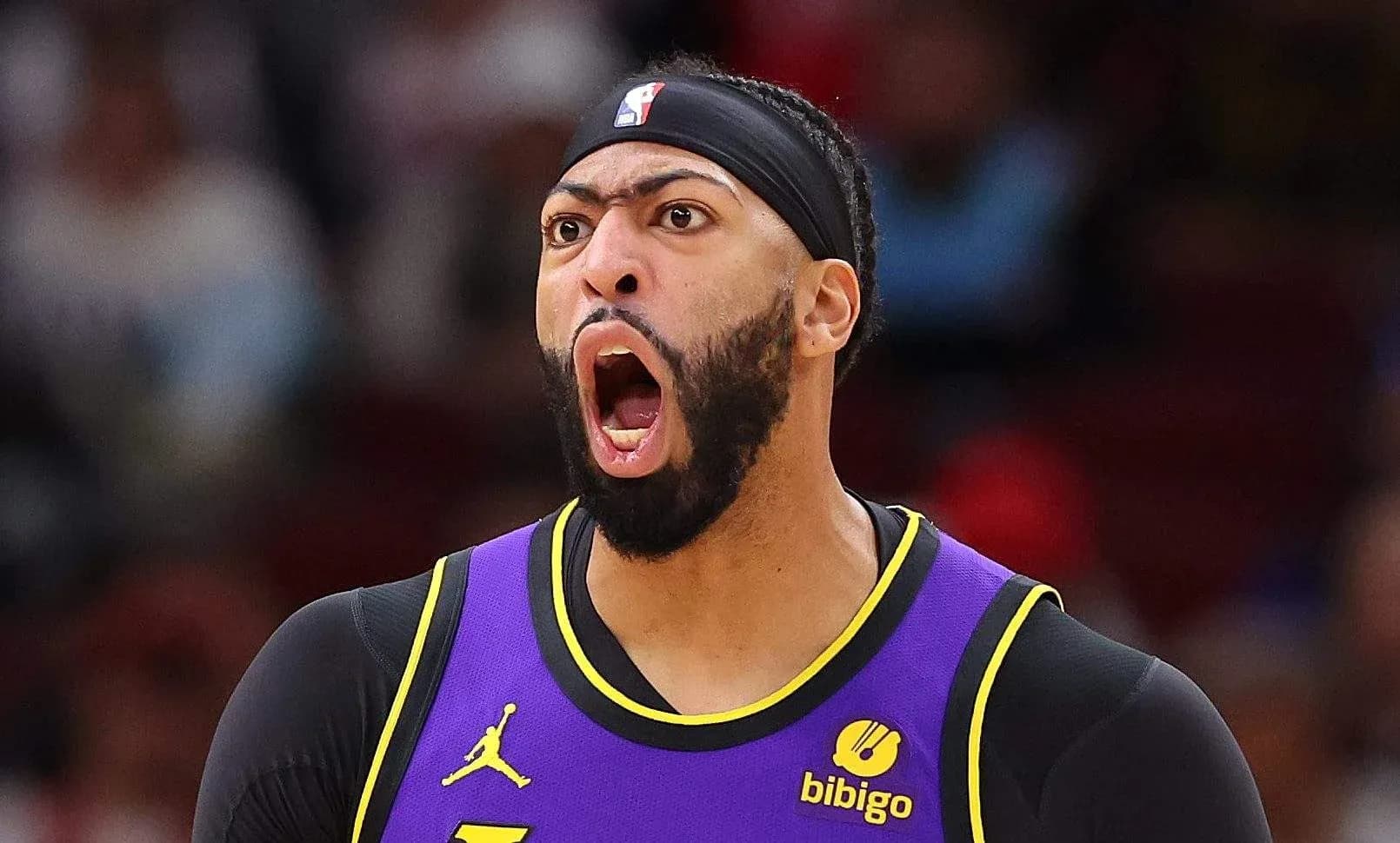
Seven years ago, Anthony Davis was supposed to be the bridge. LeBron James would age, the torch would pass, and the Los Angeles Lakers would glide from one generational superstar to the next without ever dimming the lights at Crypto.com Arena.
Back then, the projections were bold and unflinching. Davis, 26 and still climbing, was penciled in for a decade of dominance in purple and gold, a future top-10 Laker in both points and rebounds, the man to carry the franchise’s gilded tradition into the 2030s.
Roughly 2,600 days later, that vision feels like a relic.
Davis has been gone from Laker land for nearly 19 months, shipped out in the blockbuster that stunned the league: a February 2025 deal that sent him to the Dallas Mavericks and brought Luka Doncic to Los Angeles. The idea that Davis might one day be spoken of as one of the five greatest players ever to wear a Lakers uniform faded even earlier than that.
Now he’s a Washington Wizard, and his NBA life looks nothing like the script that was written for him.
A Star on the Move Again?
Washington is rebuilding, and Davis is 33, a 10-time All-Star with a long injury file and a looming contract question. A multi-year deal approaching $300 million is exactly the sort of commitment a franchise in teardown mode usually runs from, not toward.
So his name naturally drifts back into trade-machine territory.
One scenario pushes him to the last place Lakers fans would ever want to see him: Boston.
The Celtics, still among the league’s heavyweights, are thinner up front than they’d like to be and are searching for fresh firepower after sending Jaylen Brown to the rival Philadelphia 76ers in a move that left plenty of people scratching their heads. The wing depth took a hit. The scoring hierarchy shifted. The roster suddenly needs a new kind of star.
Enter a hypothetical that would send a jolt through both conferences:
Wizards receive: Paul George, Jordan Walsh, Baylor Scheierman and a 2030 second-round pick (via CHA)
Celtics receive: Anthony Davis
For Washington, it’s a pragmatic play. The Wizards sidestep the risk of tying their future to a 33-year-old big man with a history of missed games and instead roll the dice on flexibility and upside. They pick up two emerging pieces in Walsh and Scheierman and take on Paul George as a high-level veteran whose contract can come off the books in two years.
In that window, more than $100 million could vanish from their cap sheet when George’s deal expires. A clean slate, two young rotation prospects, and the freedom to chart a new course — that’s the appeal for a franchise trying to claw its way back to relevance.
Boston’s angle is simpler, and far more ambitious.
Davis is still a franchise-changer when his body cooperates. A five-time All-NBA selection and three-time single-season blocks leader, he remains one of the few players in the league who can tilt a playoff series at both ends of the floor. The Celtics would be betting that he can string together a couple of mostly healthy seasons and finally give Jayson Tatum the elite frontcourt partner he has never truly had.
If that gamble pays off, Boston lands one of the league’s top talents at what, in this era of exploding contracts, would qualify as a relative bargain for that level of impact. A Tatum–Davis 1-2 punch would instantly rank among the most fearsome combinations in the sport, especially in a postseason setting where half-court execution and rim protection decide everything.
Of course, the risk is baked into every sentence that includes Davis’ name. But the upside? That’s the kind of upside that changes banners.
The Laker Years: Peak Davis
To understand why his name still carries this much weight, you have to rewind to his time in Los Angeles.
When the trade sending Davis out of L.A. finally broke, plenty of Lakers fans bristled at the idea of losing him — right up until they saw who was coming back in the deal. That’s not a knock on what Davis gave them. Quite the opposite.
For 5½ seasons, he was LeBron James’ co-star and, at times, the more terrifying matchup. Across his Lakers tenure, Davis averaged 24.8 points, 11 rebounds, 3.2 assists and 2.2 blocks per game. Those aren’t empty numbers. They’re the stat line of a two-way monster in his prime.
He stacked four All-Star selections, two All-NBA nods and two spots on the All-Defensive First Team while wearing purple and gold. On his best nights, he erased entire sections of the floor defensively and then punished mismatches on the other end with the ease of a player who knew exactly how dominant he could be.
And then there’s 2020.
In the bubble run that ended with the Lakers lifting the Larry O’Brien Trophy, Davis was a driving force, a nightmare for opponents on both sides of the ball. His shot-making, his rim protection, his ability to slide between positions — all of it converged at the perfect time. For that stretch, he was everything the Lakers dreamed he would be when they first acquired him.
You can argue that Los Angeles squeezed the absolute apex out of Anthony Davis: the best years of his career, condensed into a window where he was healthy enough, hungry enough, and surrounded by enough talent to turn potential into a championship.
Now the question hangs over the rest of his career.
Was that peak a fleeting moment the Lakers captured at just the right time, or does Anthony Davis still have one more dominant chapter left — perhaps in Boston green, standing next to Jayson Tatum, trying to rip another title out of the league’s hands?