.svg&w=384&q=75 "logo")
Alex Eala's US Open Debut: A Night to Remember
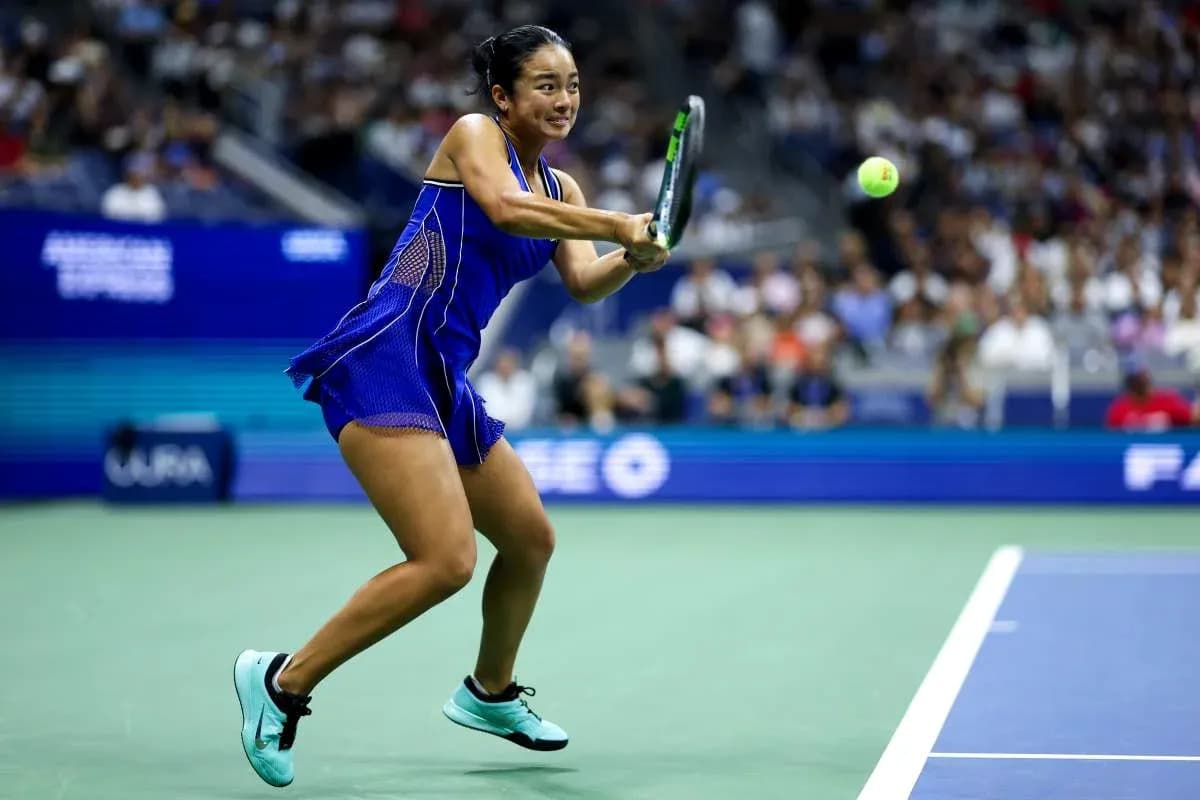
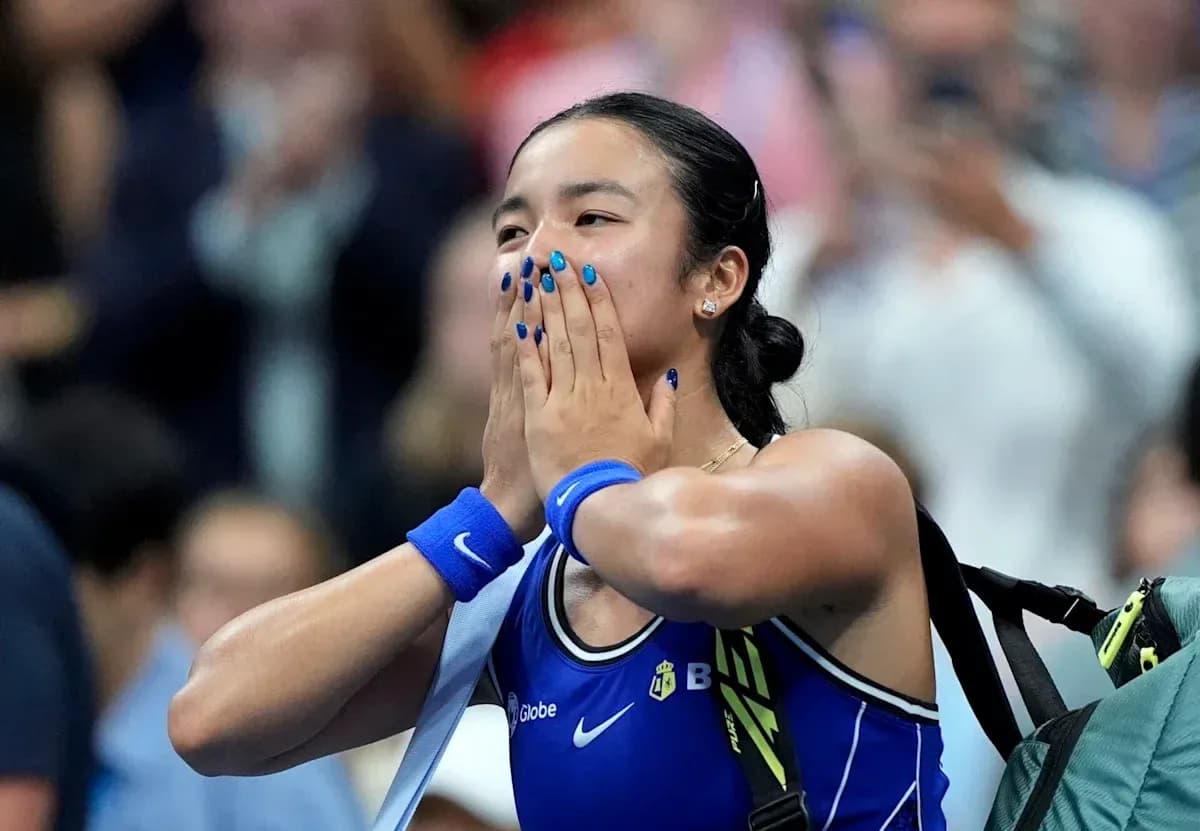
Alex Eala’s first US Open singles main-draw match was never going to be a quiet introduction. Not anymore. Not for a 17th seed who has turned practices into events and Fan Week into a traveling rally of flags, phones and noise.
On Tuesday night in Queens, the 19-year-old Filipina walks into Louis Armstrong Stadium for her 2026 US Open debut, a stage big enough—just—to hold what now surrounds her.
She gets the late slot. The second match of the night session on Armstrong at the USTA Billie Jean King National Tennis Center, following Adolfo Daniel Vallejo vs. Gael Monfils, which begins at 7 p.m. ET. When their best-of-five is done, Eala and American qualifier Mary Stoiana take over.
Tournament officials won’t pin it to a clock, only to the order of play. Roughly 8:40 p.m. ET is the working estimate. It could be earlier if Vallejo and Monfils race through it, or much later if they dig in. In the Philippines, fans are bracing for a breakfast-time start around 8:40 a.m. on Wednesday, Sept. 2.
What is certain: when Eala walks out, she does so in a 14,000-seat bowl with a roof that traps sound and a borough ready to roar.
A Star on the Rise, a Seed in the Draw
This is not a wild card story. Eala arrives in New York as the world No. 18, a career high, and as a newly crowned WTA Tour singles champion after her breakthrough title run in Washington.
That week in D.C. was not padded with soft draws. She beat Zheng Qinwen, Leylah Fernandez, Elina Svitolina, Naomi Osaka and Jessica Pegula on the way to the trophy—five names that define the current and recent landscape of the women’s game. It was the kind of run that forces a sport to recalibrate how it speaks about a player.
The US Open seeding reflects that shift. So does her court.
Louis Armstrong is the tournament’s second-biggest stage, behind only the 23,771-seat Arthur Ashe Stadium. For most players still chasing their first Grand Slam quarterfinal, a spot there might feel like a generous nod. For Eala, whose practice sessions have been ringed several rows deep all week, it looks more like crowd management.
Her opponent has earned her way in the hard way. Stoiana, ranked No. 122, battled through three qualifying matches to reach the main draw, sealing her spot with a 6-3, 4-6, 6-4 win over Yuan Yue in the final round. She is no stranger to the big college stage, a former collegiate No. 1 now testing herself on the sport’s biggest professional one.
They have shared a court before. In 2024, at the ITF event in Landisville, Eala won 7-5, 6-2. That result sits on the page, but both players arrive in New York two years older, stronger, more seasoned. The tape matters; it doesn’t define tonight.
Patrick McEnroe Asked. New York Delivered.
Eala’s placement on a marquee court did not happen in a vacuum. During ESPN’s US Open preview conference call, Patrick McEnroe issued a pointed warning.
“The USTA better make sure they put her on big courts,” he said, predicting that New York’s crowd would be “wild for her” and urging organizers not to bury one of the tournament’s hottest tickets on an outside court.
The past week has backed him up. Mary Joe Fernandez, the former world No. 4 and now an analyst, described Eala’s following as “off the charts,” noting that fans have started showing up not just for her matches but for her practices.
The evidence has been everywhere.
Practice courts have turned into viewing platforms, spectators leaning over railings and stacking along fences to catch a glimpse. Phones out. Flags up. The atmosphere more like a match than a tune-up.
Then came the Stars of the Open exhibition inside Arthur Ashe Stadium, where Eala faced close friend Iva Jovic in a one-set showcase. Jovic won it 6-3, but the scoreline faded the moment the two invited their fathers onto the court for a playful doubles cameo. Under the Ashe lights, with a packed house dotted by Philippine flags, the ovation swelled again—less for a result than for a shared, joyful moment.
This is not new to Queens. Last year, more than 8,000 spectators crammed into Grandstand to watch Eala claw back from 5-1 down in the third set against Clara Tauson. She won that match and, with it, became the first Filipino in the Open Era to win a Grand Slam singles main-draw match.
Twelve months later, the crowds are bigger. The stakes are higher. So is the expectation.
From Prospect to Headliner
The noise around Eala in New York has not come only from the stands. It has come from mastheads.
Her arrival at this US Open has been chronicled across some of the sport’s most influential platforms. Forbes put her on its Daily Cover, dissecting her growing fame and commercial appeal. Sports Illustrated splashed her across its digital cover under the headline “Pinoy Power,” calling her “tennis’s next great superstar.”
The New Yorker stepped back and told a broader story, tracing how Eala has become a symbol of the Philippines, tying her rise to cultural values and a surging sense of national pride. ESPN went deep with “Inside the Raucous and Rapid Rise of Alex Eala,” detailing the crowds, the expectations, the weight she carries, and casting her as part Manny Pacquiao, part Maria Sharapova—a unique blend of fighting spirit and global-market presence, with the game to back it up.
Players without a single Grand Slam quarterfinal rarely receive this kind of simultaneous treatment from Forbes, Sports Illustrated, The New Yorker and ESPN. Eala does, because her story now stretches beyond the baseline.
Her schedule has reflected that status. She took part in US Open Media Day, filmed tournament promotional spots and moved through a carousel of interviews across the grounds. One clip, her meeting with New York Knicks guard Jordan Clarkson, spread quickly—two high-profile Filipino athletes sharing a moment and a heritage in the heart of Queens.
Queens as a Second Home
Geography has helped turn this into something more than a standard rising-star narrative. It has given Eala a home crowd.
According to an Asian American Federation demographic study, about 94,000 Filipinos lived in New York City as of 2023. Nearly 49,500 of them called Queens home—more than any other borough.
Just a few miles west of the National Tennis Center sits Woodside’s Little Manila, a stretch of Roosevelt Avenue centered around 69th and 70th streets. Restaurants, bakeries, groceries, remittance centers, small businesses—Filipino-owned storefronts line the corridor, a compact slice of home under the 7 train.
A New York City neighborhood study estimates that Filipinos make up roughly 16% of Woodside’s population. In 2022, the city put that identity on the map, co-naming the intersection of 70th Street and Roosevelt Avenue “Little Manila Avenue.”
Those numbers do not capture the full picture. They do not count the fans crossing state lines from New Jersey, Long Island, Connecticut or Pennsylvania. They do not account for those flying in from the Philippines itself. When Eala plays in Queens, her audience is at once local, regional and global.
On Tuesday night, many of them will funnel toward Louis Armstrong, flags in hand.
The Rest of the Stage
Eala will not step onto Arthur Ashe Stadium for her opener. That honor on Tuesday belongs to the established headliners.
World No. 4 Coco Gauff anchors the women’s night session there, starting at 7 p.m. ET against Turkey’s Zeynep Sonmez. Top seed Alexander Zverev follows, taking on Italian veteran Lorenzo Sonego under the Ashe lights.
The daytime slate on Ashe begins with Madison Keys against Alina Korneeva, then Taylor Fritz against 18-year-old American wild card Darwin Blanch.
On Louis Armstrong, the day starts at 11 a.m. with No. 5 seed Flavio Cobolli facing Francisco Comesana, followed by No. 5 seed Mirra Andreeva against Indonesian qualifier Janice Tjen. Vallejo vs. Monfils opens the night there at 7 p.m., before Stoiana and Eala close the show.
ESPN’s coverage runs from 11:30 a.m. ET to 6 p.m., followed by “US Open Match Point” from 6 to 7 p.m., then primetime coverage from 7 p.m. on ESPN and ESPN2. Every court streams via the ESPN App for ESPN Unlimited subscribers.
So no, Eala will not walk into the sport’s biggest stadium on Tuesday. Gauff and Zverev own Ashe for the night.
But with 14,000 seats, a roof that keeps the noise swirling and one of the tournament’s most fervent fan bases ready to pour in from Little Manila and far beyond, Louis Armstrong is perfectly set for something else.
Not a coronation. Not yet.
A statement. And maybe the loudest party in Queens.