.svg&w=384&q=75 "logo")
Alex Eala's Journey at the US Open: New Challenges Await
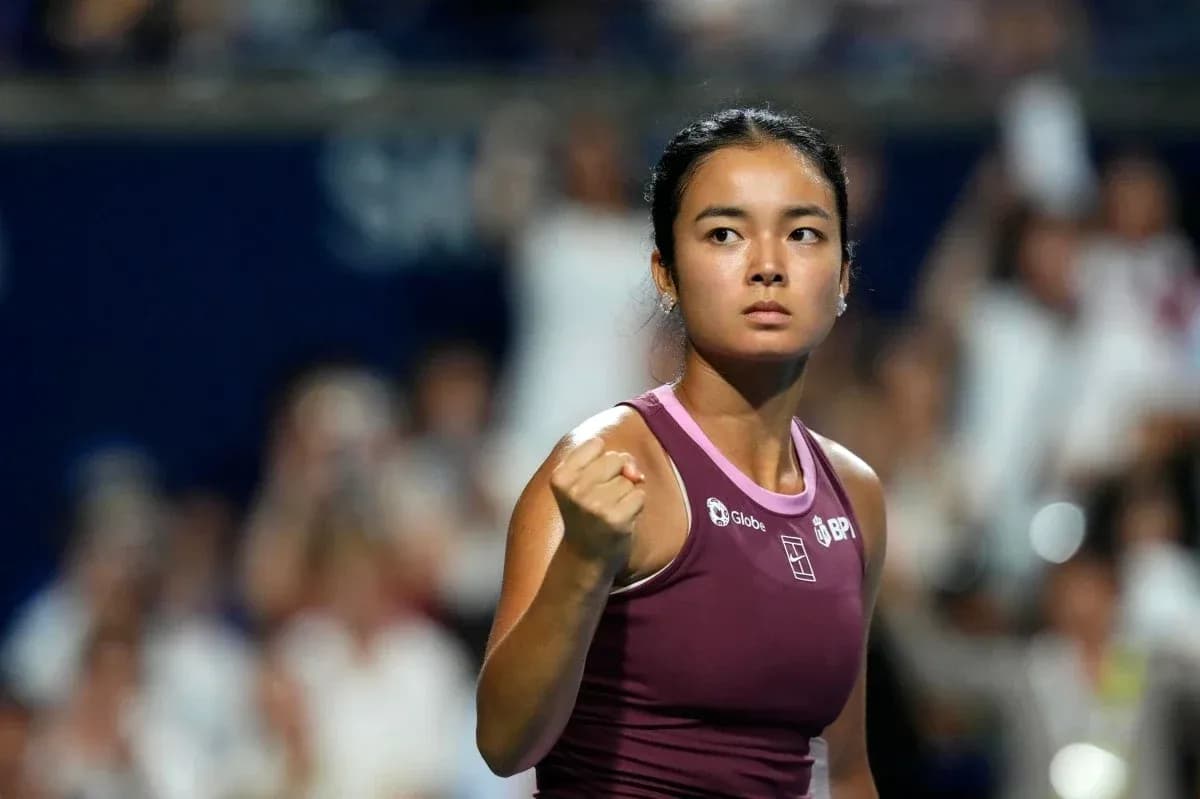
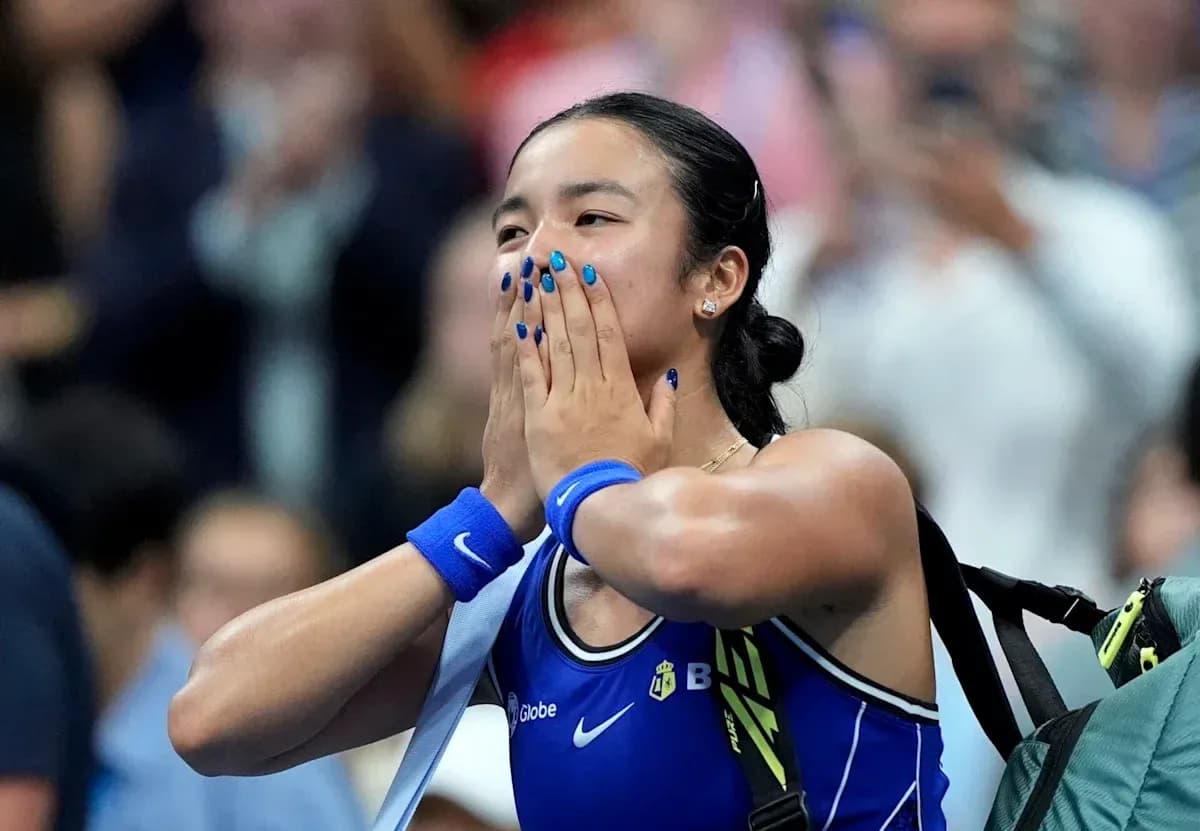
Alex Eala walks into New York with the kind of number beside her name that changes how a locker room looks at you.
No. 17 seed at the US Open. Her highest Grand Slam seeding. Her first time this deep in the pecking order at a major. And it comes in the unforgiving chaos of Flushing Meadows.
A New Status, A Brutal Draw
This is uncharted territory for the 21-year-old Filipina. She arrived at Wimbledon as the No. 25 seed and left with a career-best fourth-round finish. Now she returns to a major as a bigger target, slotted into the bottom half of a draw that offers no soft landing.
Waiting in her section: last year’s finalist and 10th seed Amanda Anisimova, among a cluster of elite shot-makers who can rip through a set in minutes. The ranking boost has elevated Eala’s status. It hasn’t cushioned her path.
Her campaign starts against a qualifier, the kind of opener that can look straightforward on paper and turn nasty under the lights in New York. Win that, and the stakes rise quickly.
Familiar Faces, Fresh Threats
A first-round victory would set up a second-round clash with either Oleksandra Oliynykova or American wildcard Reese Brantmeier.
Oliynykova is no mystery. Eala met the Ukrainian in May at the WTA 500 event in Strasbourg and took her the distance before bowing out in three sets in the opening round. It was the kind of tight, early loss that lingers in the mind of a competitor. A possible rematch on a Grand Slam stage brings its own edge.
Brantmeier, by contrast, is a blank page for Eala at WTA level. No shared history. No previous reads. Just the unknown of a home hope swinging freely in front of a partisan crowd.
Deeper into the draw, the names grow heavier.
There is close friend and 14th seed Iva Jovic, a potential opponent who would turn a routine match into an emotional test. There is Anastasia Potapova, a two-time Grand Slam doubles quarterfinalist with enough firepower to blow open rallies. Looming larger still are major champions: 2017 French Open winner Jelena Ostapenko, and 19-year-old reigning French Open champion Mirra Andreeva, the latest teenager to bend the sport to her will.
Every section of the bracket seems to carry a warning label. At this level, it always does.
Riding a North American Surge
What Eala brings to New York, though, is not just a seeding. She brings form. Real form.
Her North American swing has been the best stretch of her young career. At the Mubadala DC Open, she didn’t just pick up a trophy; she carved through a field stacked with pedigree. Zheng Qinwen. Last year’s champion Leylah Fernandez. Second seed Elina Svitolina. Four-time Grand Slam champion Naomi Osaka. 2024 US Open finalist Jessica Pegula.
One by one, she took them out, turning a promising summer into a statement.
That run did more than pad her ranking. It hardened her belief that she can live with, and beat, the sport’s biggest names on hard courts. New York, with its noise and nerve, rewards that kind of conviction.
She arrives, too, with fresh mixed doubles experience alongside Canadian Felix Auger-Aliassime, a pairing that ended in defeat to Gael Monfils and Elina Svitolina. Even in a loss, it kept her under the lights, on big courts, in big moments. Those reps matter when a tiebreak hangs on a single second of composure.
From Breakthrough to Expectation
For the first time at a Slam, Eala isn’t just the dangerous floater or the intriguing youngster from a non-traditional tennis nation. With the No. 17 beside her name, she carries expectation.
Her Wimbledon fourth round set the benchmark. The task now is to clear it in a setting that punishes any lapse in focus and amplifies every surge of momentum. There will be nights when the wind whips through the stadium, the crowd roars for the other player, and the match swings on a handful of points.
That is the arena she has played herself into.
Eala has spent the past few months proving she belongs among the game’s elite. New York will ask a sharper question: is she ready to stay there when the draw tightens, the pressure spikes, and the sport’s biggest stage refuses to blink?