.svg&w=384&q=75 "logo")
Alcaraz Returns Strong at U.S. Open, Sabalenka Shines
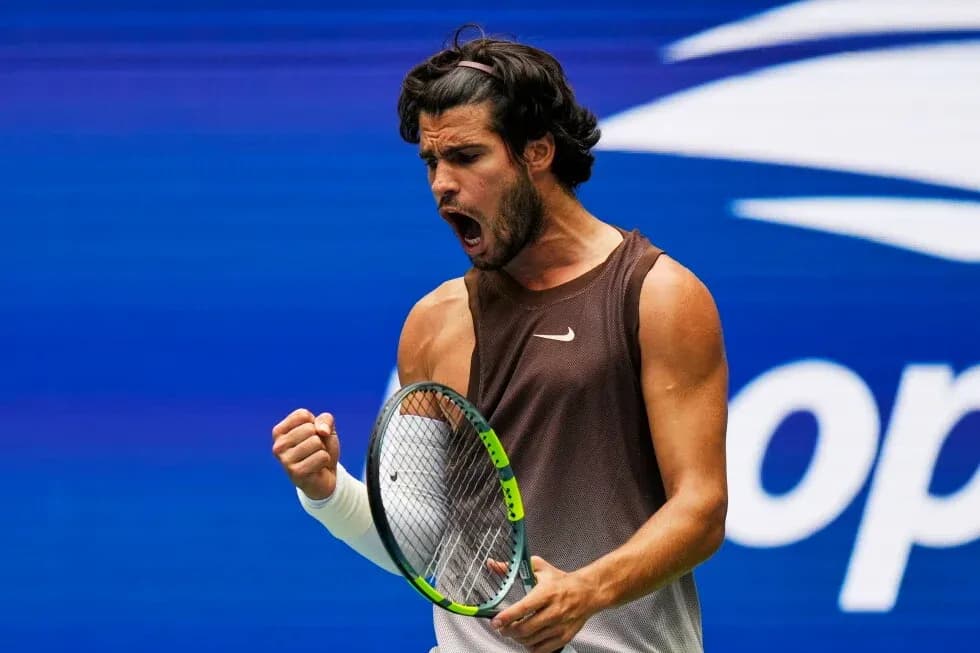
NEW YORK — Carlos Alcaraz walked back into Arthur Ashe Stadium carrying nerves, adrenaline and, crucially, no pain.
Three sets later, the defending U.S. Open champion had something else: proof that his right wrist, the joint that shut down his season in April, could stand up to Grand Slam intensity.
He beat Roman Safiullin 6-4, 6-4, 6-4 on Monday, the scoreline neat, the performance increasingly loose and familiar as the night went on.
“I was playing pretty normal, playing my style,” Alcaraz said. “The arm, the wrist, everything felt great.”
On this evidence, the men’s draw — already turned upside down — has a new, old favorite.
Alcaraz back, the swagger returning
There was rust early. There were nerves, too, by his own admission. Alcaraz has not played a tour match since April, missed Roland Garros and Wimbledon, and chose to parachute straight into New York without a single warmup event.
“I had more nerves than usual,” he said. His target for this fortnight is simple: “compete” and “enjoy,” then see what the body says.
What the body said on Monday was encouraging. The No. 2 seed grew into the match, the forehand whipping, the backhand crisp, the movement light. The crowd felt it as much as he did. He cupped his hand to his ear, asking for more noise, then punctuated a delicate volley winner in the final game with a clenched fist and a roar.
He is not promising anything. “I don’t know how far I’m going to go in the tournament,” Alcaraz admitted. “I didn’t know if I was going to lose this one, if I’m going to make the second round, final. I don’t know how far I’m going to go.”
But he knows what he wants from every step: to walk on court, soak up the New York energy, and feel like himself again.
No man has defended the U.S. Open title since Roger Federer’s five-year run from 2004 to 2008. That streak has humbled giants for more than a decade. Now the field around Alcaraz is suddenly thinning.
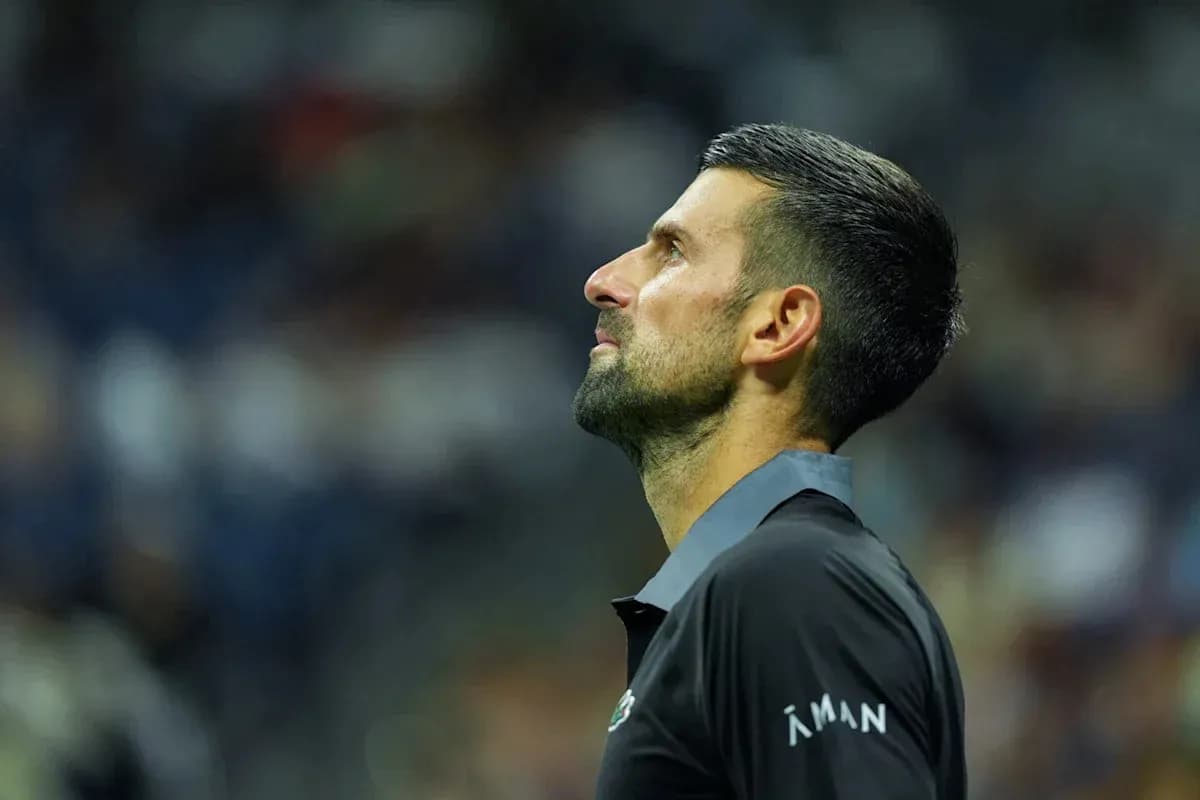
Top-ranked Jannik Sinner is out with a knee injury. No. 4 seed Novak Djokovic, four-time champion here and a man who arrived with a 19-0 record in first rounds at Flushing Meadows, crashed out on Sunday in a stunning opening loss.
A seven-time Grand Slam champion, healthy again and liberated by low expectations, might soon find himself carrying the weight of favoritism whether he wants it or not.
Sabalenka restores order — and owns the stage
If Djokovic’s exit rattled the grounds, Aryna Sabalenka’s performance on Ashe restored a measure of normality.
The two-time defending champion began her bid for a third straight U.S. Open crown with a solid 6-4, 6-4 win over Camila Osorio, a result that kept her remarkable New York run intact. Sabalenka has now reached the last three finals here, losing to Coco Gauff in 2023 before lifting the trophy in 2024 and again last year against Amanda Anisimova.
“I feel like this is one of my favorite stadiums,” she told the crowd. “I really experienced the best emotions here in this stadium.”
She looked the part, too. Sabalenka swapped the black mesh she wore in last week’s mixed doubles with Djokovic for an all-orange Nike look, covered by orange mesh — a change that had less to do with social media chatter than simple logistics.
“To be honest, I didn’t know that I have a day dress,” she said. “I thought I have a black dress with orange underneath. I figured (out) when I went to Nike that I actually have day session and night session, which is just like black and orange for the day.”
The outfit drama was light. The tennis mattered more.
Sabalenka had stumbled into New York with a string of disappointing results: fourth-round exits in Toronto, Cincinnati and at Wimbledon. The No. 1 ranking now hangs by a thread. Even if she wins the title again, she needs help. No. 2 Elena Rybakina will overtake her by simply reaching the semifinals — and could grab top spot without winning a match if Sabalenka fails to lift the trophy.
On Monday, at least, the performance matched the occasion. She hit through the ball, managed the key moments and walked off looking like a player who still believes this court belongs to her.
Wawrinka’s farewell, Tsitsipas’ defiance
Elsewhere, the day carried the full emotional range of a Slam.
On one court, Stan Wawrinka played the final Grand Slam match of a career that reshaped his own story from talented outsider to three-time major champion. The 2016 U.S. Open winner fell to Matteo Berrettini, bowing out at 41.
“I’m going to miss it for sure. I’m going to miss it big time,” Wawrinka said, the weight of a decade and a half at the top sitting in those few words.
On another, Stefanos Tsitsipas sent a reminder that he has no interest in being a footnote.
Unseeded in New York for the first time, the former world No. 3 took out No. 10 seed Arthur Fils — fresh from a title in Cincinnati — 4-6, 7-6 (3), 6-1, 6-4. Once he flipped the second-set tiebreak, the Greek took over, dictating rallies and riding the wave.
Asked if he can rediscover the level that took him to two Grand Slam finals, both lost to Djokovic, Tsitsipas didn’t hesitate.
“Why not?” he said.
The men’s draw, shaken by Djokovic’s early departure, may yet find its drama in comebacks like this.
No. 8 seed Ben Shelton delivered his own mini-rescue act. Broken three times in a 28-minute opening set, he looked lost against Tallon Griekspoor. Then the switch flipped. Shelton stormed back 1-6, 6-1, 7-6 (3), 6-2, his power game finally locking in.
Champions steady, seeds scatter
The women’s side saw a mix of stability and surprise.
Past U.S. Open champions Iga Swiatek, the No. 8 seed, and 2017 winner Sloane Stephens both advanced, while two-time champion Naomi Osaka was scheduled for the night session.
No. 6 seed Linda Noskova, fresh from her Wimbledon triumph, moved through. So did No. 7 Karolina Muchova, who lost to her fellow Czech in the final at the All England Club, and No. 10 Amanda Anisimova, last year’s runner-up in New York.
But not everyone with recent success arrived unscathed. Sara Bejlek, the No. 28 seed who stunned Sabalenka in Cincinnati, fell in three sets to Cristina Bucsa, her upset magic unable to stretch across continents.
Navarro holds her nerve, Boisson breaks
For pure raw emotion, Emma Navarro and Lois Boisson supplied one of the day’s most striking images.
Their first-round match started Sunday and finished Monday because of rain, stretching into a three-set grind Navarro finally claimed 7-6 (6), 6-7 (1), 6-3.
As Navarro turned toward the stands, pumping her fist in relief and celebration, an ESPN camera caught the scene behind her: Boisson, crushed by the loss, smashing her racket repeatedly into the court.
One frame, two realities — the brutal split-screen that defines this tournament every year.
On a day when Alcaraz’s wrist held, Sabalenka’s reign stayed alive, Wawrinka said goodbye and Tsitsipas whispered about a revival, the U.S. Open reminded everyone of its favorite trick: it never just tells one story. It lets them all collide.