.svg&w=384&q=75 "logo")
2026 FIBA World Cup Preview: Team USA Faces Rising Competition
The world is catching up. Fast.
When the 2026 FIBA World Cup tips off in Berlin on Friday, Sept. 4, the United States women arrive as the sport’s long-standing superpower — nine titles in the last 12 tournaments, four in a row, and not a single World Cup defeat since 2006. That’s dynasty territory.
Yet the mood around this tournament is anything but comfortable.
"It's going to be the most difficult World Cup to win," Team USA head coach Kara Lawson said on Tuesday, Sept. 1. She didn’t dress it up. She didn’t need to. "There's no question that the world is improving at a rapid rate. It's so exciting to see ... now when you look at rosters, there's a number of just high quality players. I think the depth of these rosters is really strong."
She’s right. The numbers back her up.
Sixteen nations, four groups, and a talent map that looks nothing like the one that allowed the U.S. to cruise through previous editions. Every player on Team USA’s roster comes from the WNBA. That used to be a unique advantage. Now it’s more like a shared language.
France and Australia trail just behind with eight WNBA players each. Spain brings five. Germany and Belgium have four apiece. The badge on the jersey still matters, but the gap in day-to-day experience has narrowed to a sliver.
Berlin, then, becomes the stage not just for another American title defense, but for a full-scale test of whether the rest of the world has finally reeled in the giant.
Group A: Craft, Speed, and a Host Nation with Belief
Group A drops Japan, Spain, Germany, and Mali into the same pool — four programs at very different stages, all dangerous in their own way.
Japan, led by head coach Corey Gaines and assistant Tomoki Miyata, will lean on pace, spacing, and precision. Their identity is clear: ball movement, shooting, and relentless off-ball motion. They rarely beat themselves.
Spain, under Miguel Méndez with assistants Cristina Cantero, Raquel Romo, and Anna Montañana, arrive with pedigree and depth. With five WNBA players in the mix, Spain offer a blend of European structure and American-hardened talent. They know how to manage tournaments, how to survive tricky group nights, how to play late-clock basketball when the game slows and nerves kick in.
Germany might be the most intriguing story here. Hosting the entire event, they sit under the glare of home expectation with Olaf Lange at the helm and a staff of Stefan Möller, Parker Lovett, and Constanze Wegner. Four WNBA players give them real top-end quality. The question is whether they can turn home energy into sustained performance over two intense weeks, not just a one-off emotional surge.
Mali, led by Mali Oumarou Sidiya, round out the group. Their staff is still to be announced, but African teams have made a habit of turning physicality and fearlessness into upsets on this stage. Nobody in this group can afford to drift through a game.
Group B: France in the Crosshairs
Group B looks, on paper, like France’s to control — but this is a World Cup, not a chalkboard exercise.
Hungary, with head coach Péter Völgyi, bring structure and discipline. Korea, coached by Park Soo-ho, will push tempo and stretch defenses with shooting and speed. Nigeria, under Rena Wakama, carry the kind of athleticism and edge that has unsettled big names before. Their remaining staff is still to be announced, but the program has already shown it can shock established powers.
France, though, are the headline act here. Jean-Aimé Toupane leads a group stacked with eight WNBA players, supported by assistants David Gautier, Christophe Léonard, and Grégory Halin. That’s not just depth; that’s star power spread across positions. They have size, playmaking, and a bench that can swing games.
If any team is built to stare down Team USA later in the tournament, it might be this one. For now, they’ll have to prove they can handle being the hunted inside their own group.
Group C: Australia’s Ambition and Belgium’s Rise
Group C feels like a collision course.
Australia, coached by Sandy Brondello with assistants Renae Garlepp, Paul Goriss, and Kennedy Kereama, come in as perennial contenders with eight WNBA players. They know what it takes to live in the medal rounds. They rebound, they defend, and they carry a physical edge that often sets the tone in tournaments like this.
Belgium, under Mike Thibault and assistants Pascal Angillis, Fred Dussart, and Dena Evans, bring four WNBA players and a generation that has steadily pushed the program toward the elite tier. They can score in bunches and have enough shooting to punish any defensive lapse. They’re no longer a dark horse; they’re a problem.
Puerto Rico, led by Gerardo Batista, will lean on resilience and rhythm. They’ve grown into a consistent presence on the global stage and have shown they won’t be intimidated by big names.
Türkiye, with Andrea Mazzon on the sideline and assistants Murat Alkaş and Fatih Emre Gezer, remain a wild card. Parts of their staff are still to be announced, but the core identity is familiar: tough, organized, and capable of grinding games into half-court battles that frustrate more talented rosters.
One slip in this group, and the path out becomes brutal.
Group D: The Champions and the Chasers
Group D is where the reigning queens of the sport enter the picture.
China, led by Gong Luming with assistant Pierre Vincent and additional staff to be announced, have grown into a genuine contender in recent years. Their size, discipline, and tactical clarity make them a nightmare matchup. They don’t scare easily, and they don’t give you much for free.
Czechia, with Romana Ptáčková in charge, and Italy, coached by Andrea Capobianco with assistants Vincenzo Di Meglio, Alessandro Fontana, and Angela Gianolla, round out a group that offers no soft landings. Both European sides have the tactical backbone to drag the U.S. into uncomfortable stretches if the Americans lose focus.
Then comes USA.
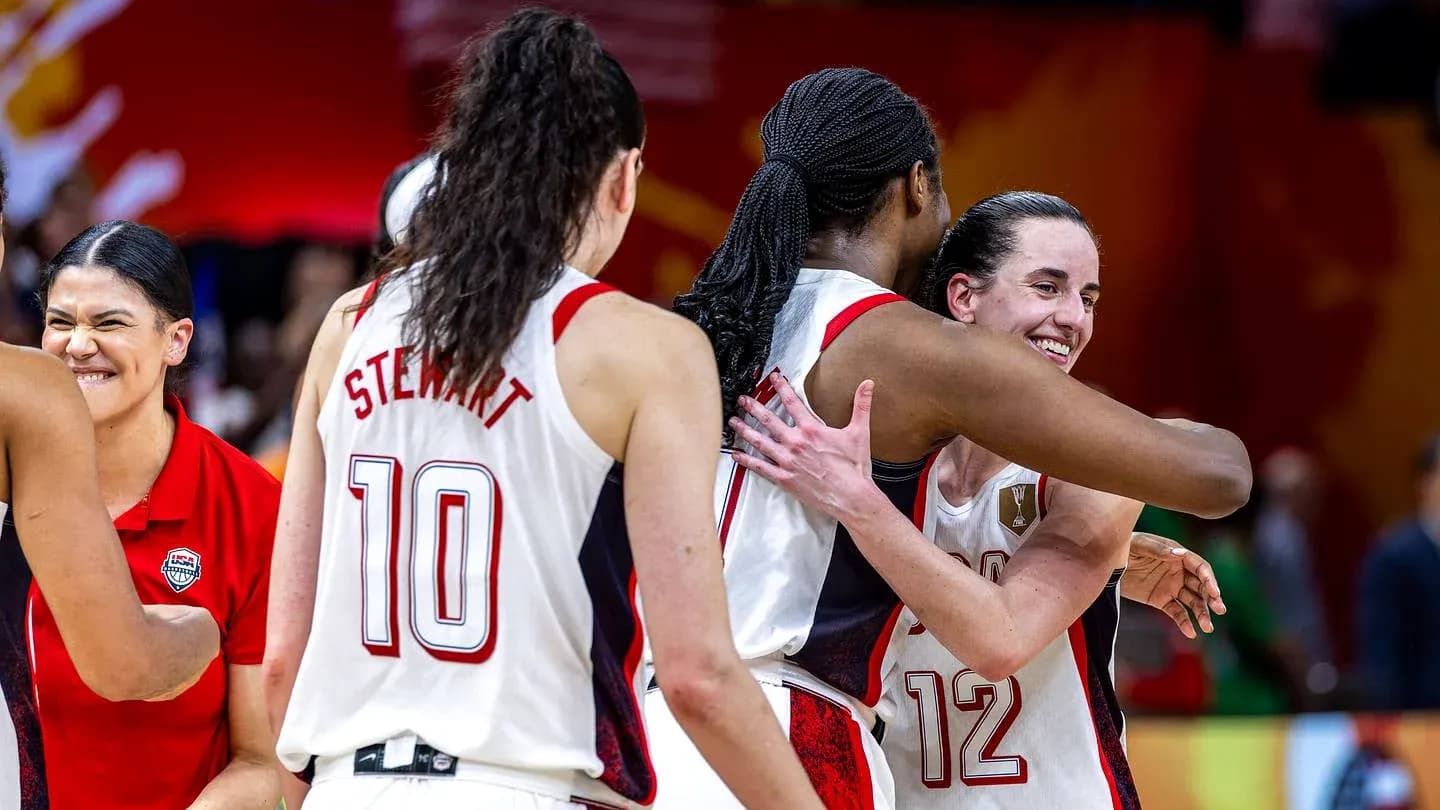
Kara Lawson, supported by assistants Natalie Nakase, Nate Tibbetts, and Stephanie White, leads a roster made entirely of WNBA players. That alone sends a message. Every player is used to nightly scouting, relentless travel, and the pressure of professional expectation.
The dominance is undeniable: nine of the last 12 World Cups, four straight titles, and an unbeaten run on this stage stretching back two full decades. Yet this tournament feels different. The rest of the field is no longer chasing a distant silhouette; it’s running alongside.
Lawson knows it. The players know it. The world can see it in the rosters.
The U.S. still carry the target on their backs, but this time, the arrows are sharper and coming from every direction. Berlin is about to show whether the gap has finally closed — or whether the standard, even under heavier fire, still belongs to the same team.