.svg&w=384&q=75 "logo")
Mourinho Reshapes Real Madrid's Defense with Key Substitutions
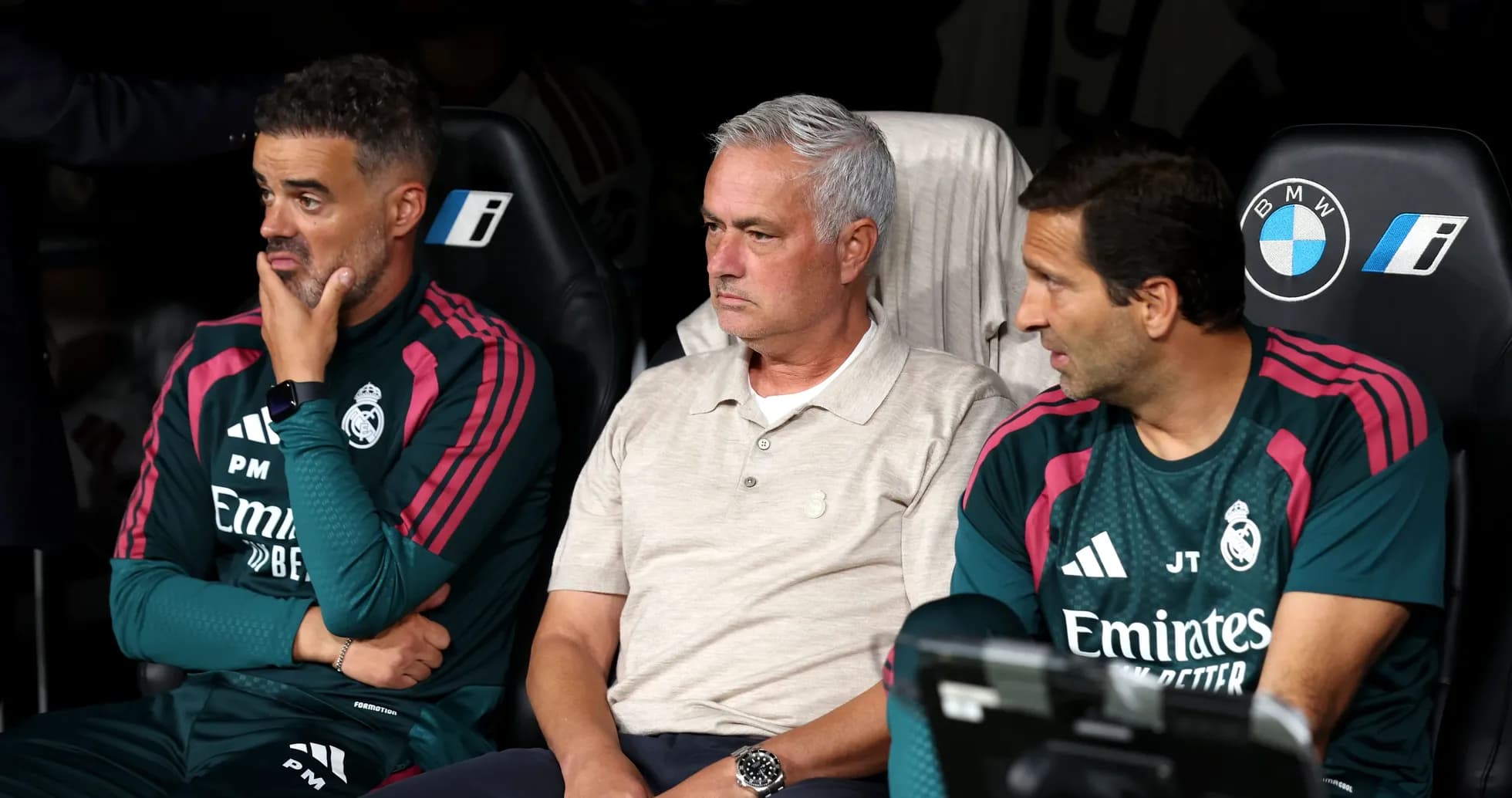
Jose Mourinho did not wait for trouble. He saw it coming in the 35th minute at the Santiago Bernabeu and cut it off at the source.
A fierce drive from Sergio Gomez had just skimmed dangerously close to Thibaut Courtois’ goal, snapping the calm that had reigned since the Belgian’s early stop from Mikel Oyarzabal in the tenth minute. Mourinho reacted instantly. The touchline, quiet until then, suddenly came alive.
Five players were sent to warm up with Antonio Pintus: Cucurella, Camavinga, Brahim Diaz, Trent Alexander-Arnold and Asensio. It looked like a shockwave. It was, in fact, part of the plan.
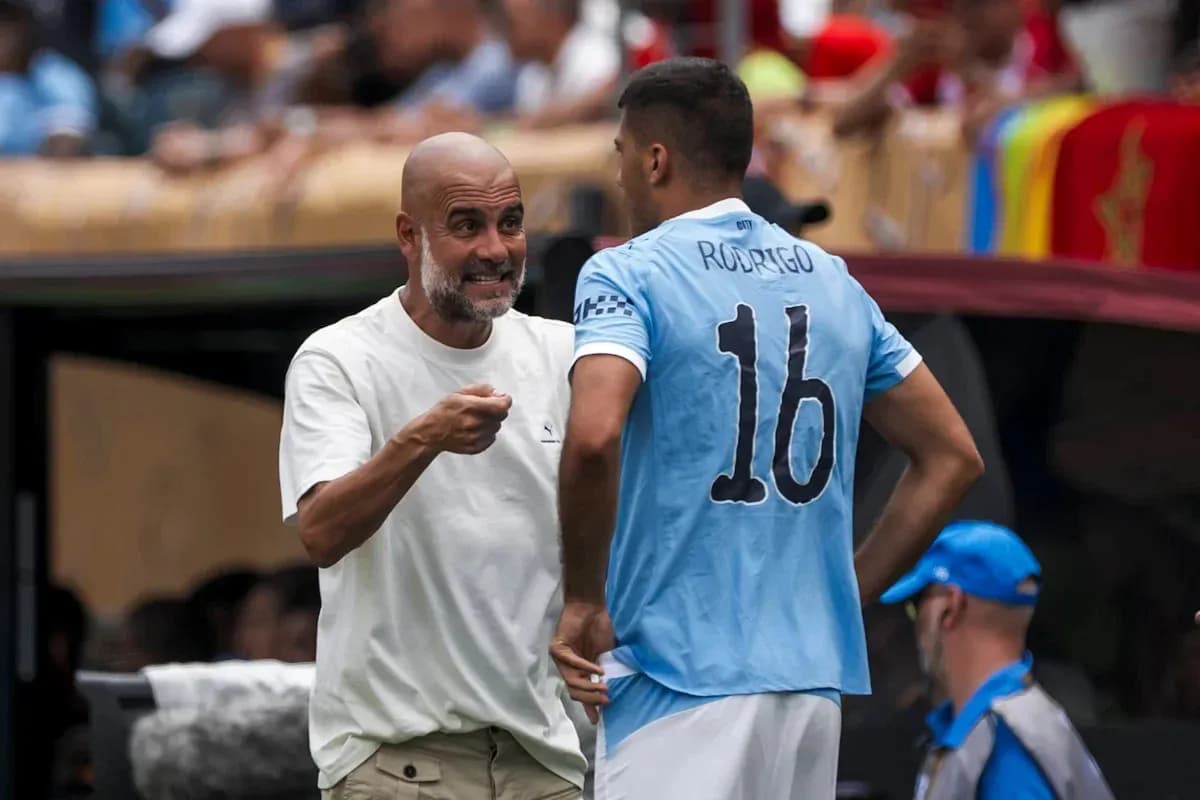
“I always do that in the 35th minute. I like everyone to be inside during the break, because there are instructions for everyone,” Mourinho explained. Typical Mourinho: control the details, control the game.
The match went into the interval locked at 1-1, but the real reshaping of Real Madrid’s season began as the teams emerged for the second half.
A new back four takes shape
Cucurella stepped onto the Bernabeu pitch for the first time in a Real Madrid shirt, replacing Alvaro Carreras, who had been walking a tightrope since a tenth-minute yellow card for a foul on Kubo. Mourinho did not dress it up.
“The change of Carreras was because of the yellow card,” he said. Nothing more, nothing less.
That single substitution crystallised the defensive project the staff have been building. Suddenly, Madrid’s back four contained three summer signings: Dumfries at right-back, Cucurella on the left, Konate as the right-sided centre-back, and Huijsen – signed last season – on the left of the pairing.
It looked new on paper. On the pitch, it looked like a line Mourinho already trusts.
Inside the club, the technical staff have settled on this structure. Barring injuries or suspensions, only minor tweaks are expected. Rudiger may rotate with Konate or Huijsen, and at some point Militao will return to reclaim a place, but the blueprint is clear. This quartet will carry Real Madrid through the decisive stretch of the season.
Dumfries over Trent, Cucurella’s edge
The biggest call sits on the right flank. Dumfries, long accustomed to operating as a wing-back in a five, has surged ahead of Trent Alexander-Arnold to become Mourinho’s undisputed first-choice right-back.
It is a tactical statement. With Dumfries on one side and Cucurella on the other, the full-backs push the defensive line higher, compressing the pitch and giving Real Madrid the platform to defend and attack in advanced zones. That, in turn, frees the midfielders and forwards to launch the aggressive high press Mourinho demands.
The numbers back up the eye test. Opta data shows Dumfries finishing fifth in passes played in the final third with 15. Only Guler (25) and Mbappe (22) produced more, while he matched Valverde and sat just behind Bernardo on 17. For a right-back in a newly assembled back four, that is influence, not decoration.
On the opposite side, Cucurella brought bite and clarity. He did not just hold his line; he stepped into duels and matched Konate at the top of the tackling charts with two successful challenges. His arrival immediately tilted the defensive balance in Madrid’s favour.
Huijsen’s calm, Carreras’ graft
Between them, Konate and Huijsen offered exactly what Mourinho demands from his centre-backs: control, aggression, and a refusal to panic.
Konate led the side in tackles, again underlining why the staff view him as a cornerstone of the project. Next to him, Huijsen quietly produced the most complete passing display on the pitch: 69 accurate passes from 72 attempts, a 95.8% success rate. In a game where Real Madrid needed to reset their structure, the young defender became the metronome at the back.
Carreras, withdrawn at the break, still left his mark. His yellow card forced Mourinho’s hand, but before coming off he had recovered four balls, matching Huijsen’s total. The numbers underline the collective effort: across the match, Madrid’s back line recovered 15 balls, seven of them inside Real Sociedad’s half. That is not just defending; that is territorial dominance.
Defensive standards, Mourinho standards
On the surface, Real Madrid’s defensive record against Real Sociedad looked solid. Courtois faced only three shots on target, the same total the team allowed against Espanyol. For many coaches, that would be more than acceptable.
For Mourinho, it is a warning light.
Three shots on goal is still high by the standards he set during the 2010–2011 season, when his side kept 30 clean sheets in 59 matches. Sixteen shutouts in 38 La Liga games, eight in 12 UEFA Champions League fixtures, six in nine Copa del Rey ties. More than half the matches, no goals conceded. That is the bar he carries with him.
This new back four is not there yet. But the structure, the aggression, and the control they showed in the second half against Real Sociedad suggest they are moving in that direction.
A crucial run-in for a new line
The timing is no accident. Mourinho wants this defensive line settled before the calendar tightens and the stakes rise. The coming weeks offer exactly the kind of run he likes to use as a proving ground: Malaga, Betis, the Champions League opener, then Rayo and Elche, all before the derby against Atletico at the Metropolitano.
By then, the experiment will be over. Dumfries or Trent, Cucurella fully embedded, Konate and Huijsen – or Rudiger, or Militao – tested under pressure.
Mourinho has started to draw the outlines of his new wall. The question now is simple: by the time they walk into the Metropolitano, will this back four look like a work in progress, or the foundation of another vintage Mourinho defence?