Manchester United's Michael Carrick Faces Crucial Test at Stamford Bridge
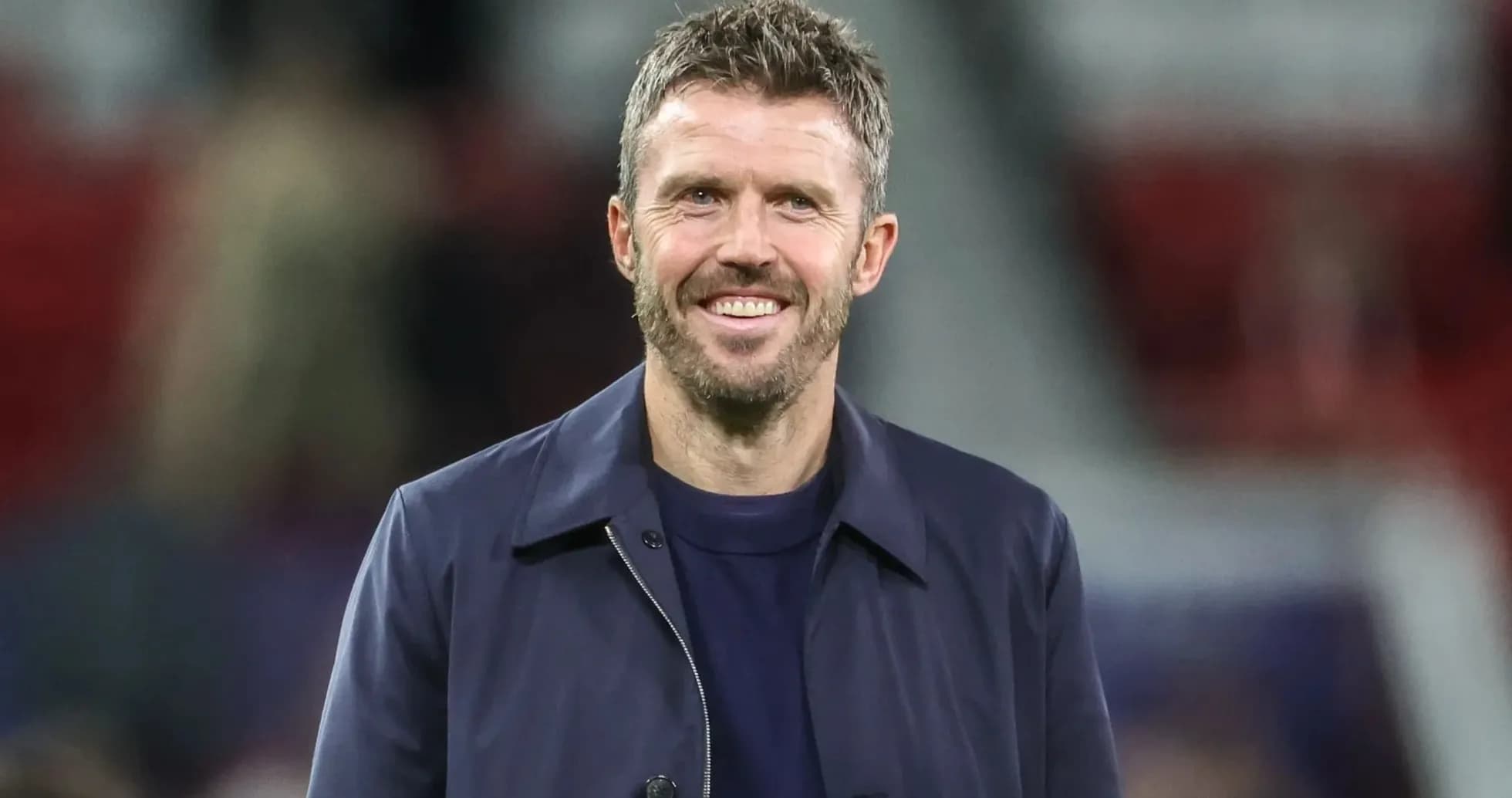
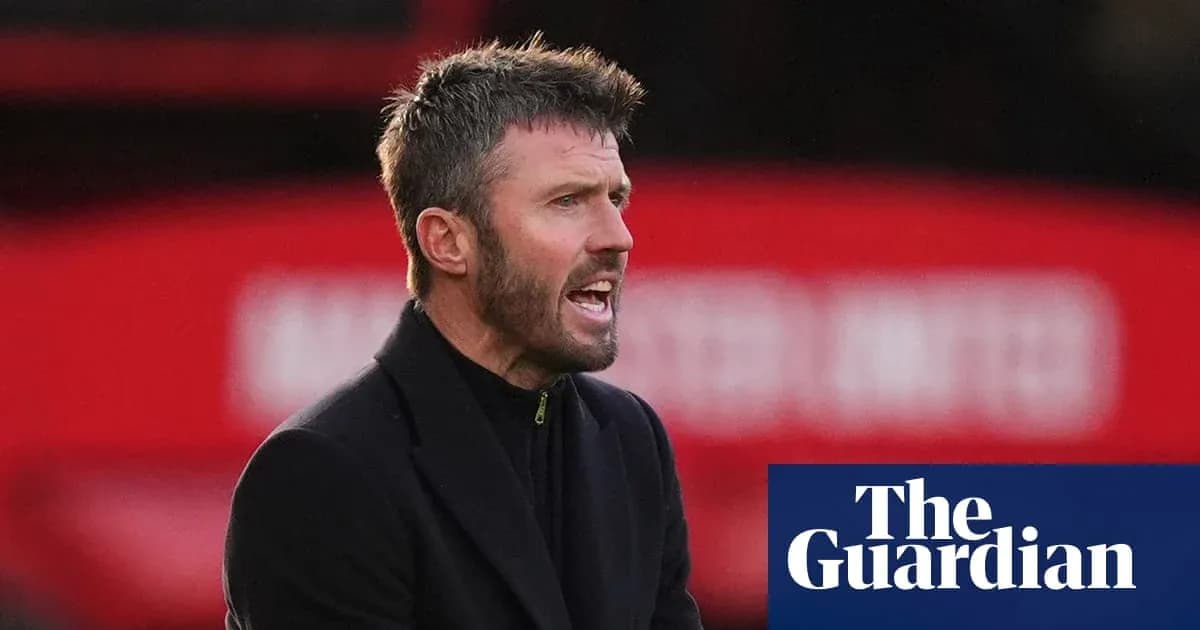
Michael Carrick walked into Carrington this week not as a condemned man, but as Manchester United’s manager. That, in itself, felt like the biggest shock of their season so far.
After eight games without a win, a 3-0 home humiliation by Bournemouth and a slide to 16th in the Premier League, the script was written. Farewell lap, polite applause, the Stretford End’s anger redirected at the players and the board. Then the sack. That is how this story normally ends at Old Trafford these days.
Not this time.
United’s hierarchy have executed a major U-turn. Carrick stays. For now. The club legend has been handed what amounts to a stay of execution and a single, brutal test of his authority: Chelsea away at Stamford Bridge on Saturday lunchtime. It is not just another fixture. It is a referendum on a manager, a squad and a project that already looks dangerously frayed.
Boardroom paralysis buys Carrick time
Carrick’s survival owes as much to indecision above him as anything happening on the pitch. Sir Jim Ratcliffe and his football operation scoured the market and did not like what they saw – or what it would cost.
Eddie Howe was the frontrunner. The former Newcastle boss had watched United games, made notes, prepared as if the call was imminent. Jason Wilcox, United’s director of football, views a coach with Premier League experience as a “must” to drag the club back on course. Howe ticked that box and more.
Yet no offer has come. United would still need to pay several million in compensation under the terms of Howe’s Newcastle exit, a protection clause inserted in case he resurfaced at a rival. After the expensive and messy pursuit of Dan Ashworth, there is little appetite for another complicated deal.
Julian Nagelsmann has also been sounded out. Head of recruitment Christopher Vivell, who worked with him at RB Leipzig, is pushing his case. The German has managed Bayern Munich and the national team, but not the Premier League. Antonio Conte is available too, his name familiar in every crisis meeting at a big club, yet United have not made a formal approach. The board is split, unconvinced, wary.
“The best ones won’t come,” admitted one well-placed source. That blunt assessment has hung over the whole process.
Even when United looked at raiding Premier League rivals, obstacles piled up. Fabian Hurzeler, impressing at Brighton and sitting third in the table, has been all but ruled out due to the sizeable compensation fee required. Unai Emery has admirers at Old Trafford, but he is tied to Aston Villa until 2029 and holds the title of “manager” – a status United have quietly moved away from since Ratcliffe arrived, preferring the more controllable “head coach” model.
The result? Stasis. No consensus, no clean option, no agreement on whether to gamble big or hold their nerve. And so Carrick, by default as much as design, remains.
Dressing-room unrest and a generational low
If the board has been paralysed, the dressing room has looked shell-shocked.
United’s 3-0 defeat to Bournemouth at Old Trafford was not just another bad day. It was their third 3-0 home loss to the same opponent in three years, each under a different manager. That is not a blip. It is a pattern, and a damning one.
At full-time, the atmosphere turned surreal. United fans sang Carrick’s name and applauded him as he walked the touchline, a farewell lap in all but name. When he disappeared down the tunnel, the mood flipped. The Stretford End turned its fury on the players, booing them loudly, pointedly.
Inside the dressing room, a source described the squad as “lost for words” – both at their own performance and at the ferocity of the criticism. They could hardly claim it was undeserved.
Supporters did not stop at the players. In the final 15 minutes, chants of “Sell United and f**k off home” were aimed at Ratcliffe and the Glazers. There were more sinister songs about the ownership and even the club’s stadium plans, with “Stick your new stadium up your a***” ringing out as the team disintegrated on the pitch.
Carrick, curiously, has emerged with more credit than many of his players. The fans have made it clear who they hold most responsible for this mess – and it is not the man in the dugout.
Fernandes, Martinez and a manager under fire
If public anger has largely spared Carrick, internal tension has not.
Bruno Fernandes, United’s captain and a Ballon d’Or top-30 finisher in 2026 after nine goals and a record-breaking 22 assists last season, has become a lightning rod. His form has dipped and his words have cut.
After a 4-1 defeat to Como, Fernandes openly questioned United’s approach without quite naming names. “Conceding early makes us go into game with a mood of defeat,” he said. He criticised the decision “from the staff” not to press man-to-man, arguing that giving teams time and space allowed them to grow in confidence.
Asked if Carrick had got it wrong, Fernandes pushed responsibility back upstairs: “That’s on the manager and staff to see, not me. Sometimes you have to be more brave under pressure, take the risk of pressing high and making them uncomfortable.”
He pointed to Como’s centre-back stepping out to mark him in his own half as an example of the aggression United lacked. “We need to do that as a team but we were unable to,” he said.
Carrick’s response was decisive. Fernandes was dropped. In the current climate, it felt less like a tactical tweak and more like a line in the sand. After Lisandro Martinez had recently directed his own frustrations at the hierarchy above Carrick – comments he later apologised for – the sense grew that the manager either reasserted control or risked being drowned out by his own dressing room.
“Do or die” is a cliché, but it fits. Carrick cannot afford a divided squad heading into Stamford Bridge.
Howe, Nagelsmann and a club split on the future
Outside the dressing room, the debate over Carrick’s potential successor has been loud and public.
Jamie Carragher has nailed his colours to the mast. On Sky Sports, he argued United should opt for Howe over Nagelsmann if – or when – they move on from Carrick. “They’re the obvious ones,” he said of the pair. “Are they better managers than Michael Carrick? Yeah, of course they are.”
Carragher praised Howe’s work at Newcastle, calling him a “great coach” who improves players, and backed his Premier League experience. Nagelsmann, he pointed out, does not know the division but has handled Bayern Munich and Germany with distinction.
Yet even Carragher acknowledged the bigger question: is Howe truly the man to restore United to the very top, to “winning the biggest trophies”? Right now, he argued, the job is more basic – just getting United back into the top half of the table. With Chelsea away and Aston Villa to come, he warned there is “a very, very good chance” United could enter the international break in the bottom three.
Inside Old Trafford’s corridors, the split is even starker. Ratcliffe has long wanted an English manager at what he considers the country’s biggest club. To him, Howe fits that vision. Wilcox agrees, seeing Premier League experience as non-negotiable.
Vivell, though, is pushing Nagelsmann, a coach he knows well and trusts. Conte and Emery remain on the long list, but their cost, control demands and contractual situations complicate everything.
Brighton’s Fabian Hurzeler, whose side knocked United out of the Carabao Cup with a 3-2 comeback win at Old Trafford, has already cooled the speculation. “I am fully focused on my job here,” he said, stressing his respect for Carrick and their relationship. “There’s nothing more to say about that.”
So United hover in limbo. Back him or sack him, as the old line goes. They have done neither.
Carrick’s crossroads at Stamford Bridge
All of this swirls around a man who knows exactly how fortunate he is to still be in a job.
Carrick’s first full season in charge brought promise and progress. This one has “fell off a cliff,” in Carragher’s words. One win in eight. Sixteen place. A fanbase oscillating between fury and apathy. A squad whose leaders have felt emboldened enough to question tactics and direction in public.
Yet he walks into Stamford Bridge with the fans largely behind him and the board, for now, unwilling or unable to pull the trigger. He has Chelsea away, then a brutal November: Roma in the Champions League, Aston Villa at Old Trafford, and a trip to Liverpool. It is an unforgiving run for any manager, never mind one already on the brink.
The numbers from the Bournemouth defeat tell a strange story. United had 63 per cent possession, 17 shots to Bournemouth’s 10, five on target to four. They dominated the ball, but not the game. Bournemouth were sharper, clearer in their plan, more ruthless in both boxes. Tyler Adams and Lewis Cook anchored the visitors, while the likes of Justin Kluivert, Marcus Tavernier and Evanilson carried a threat United never truly matched.
At the back, Harry Maguire was one of the few to emerge with any credit. New faces such as Leny Yoro, Andrey Santos and Youri Tielemans were thrown into the starting XI, while big names like Fernandes and Lisandro Martinez began on the bench. It looked like a reset. It played out like a repeat.
Carrick now has to decide how much he leans into that reset at Chelsea. Does he restore Fernandes, whose creativity and leadership he so badly needs, despite the recent rupture? Does he turn back to Martinez to stiffen a defence that has conceded three at home far too often? Does he stick with the younger faces who at least represent a future?
Whatever he chooses, there is no hiding place. Not from the league table. Not from the run of fixtures. Not from the mood in the stands.
United have already burned through managers at a rate that would make even their chaotic post-Ferguson years blush. A fourth new boss in under three years looms as a very real possibility. Some inside the club, and certainly some outside it, argue it no longer matters who sits in the dugout until the deeper structural issues are fixed.
That may be true in the long term. It will not save Carrick in the short term.
Saturday at Stamford Bridge is not just about points. It is about proof – proof that this team still responds to him, that his ideas still land, that the season is salvageable. If he cannot show that now, with the spotlight glaring and the walls closing in, when will he?