Michael Carrick's Emotional Address: Manchester United's Crisis
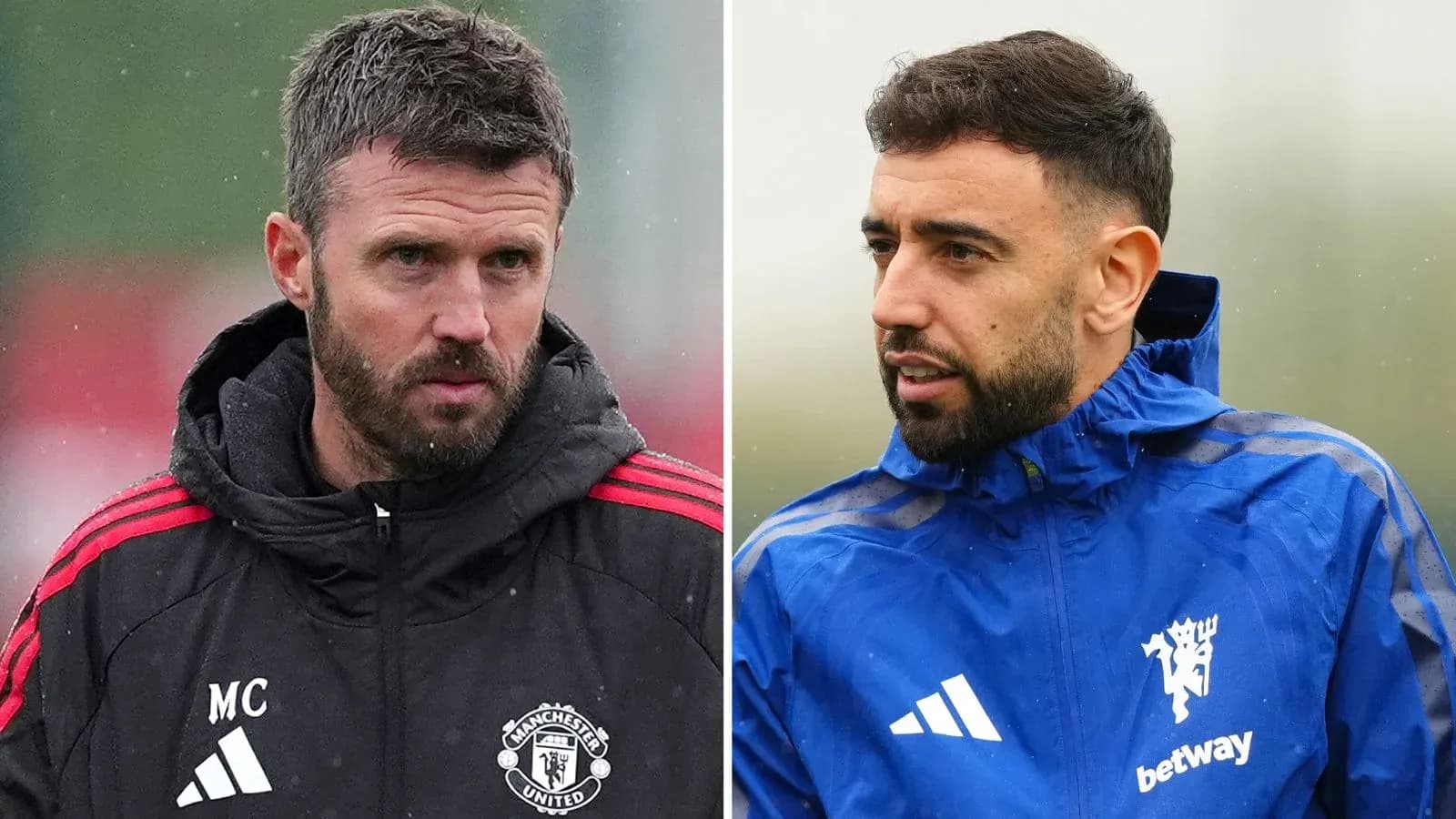
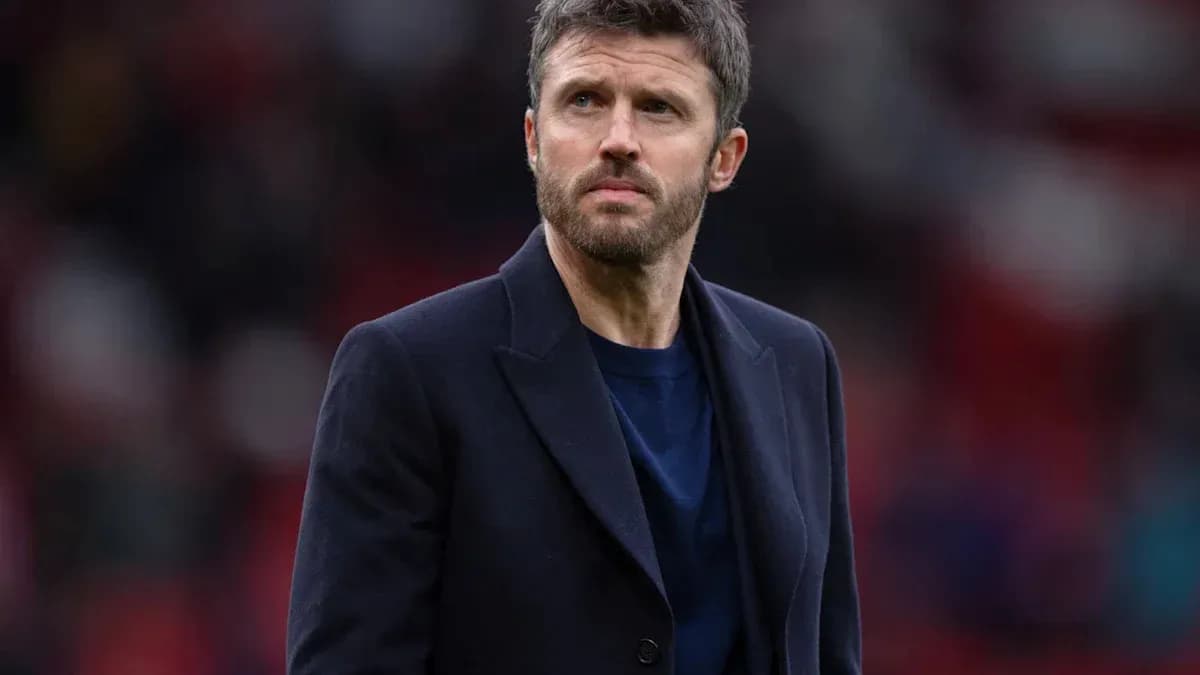
Michael Carrick sat down, took a breath, and did something Manchester United managers rarely do at Old Trafford. He opened up.
Before a single question was asked, the under-pressure head coach spoke for more than five minutes, delivering an emotional address that sounded as much like a plea as a manifesto. United, he admitted, have “lost our way”. The message to his players was blunt: “Respect the club.”
This is a club on a seven-game winless run, their worst sequence since 2015. Performances have sagged, results have followed, and now the tension has spilled into the open. Captain Bruno Fernandes has questioned tactics after the 4-1 Champions League humiliation at Como. Lisandro Martinez has aired his frustrations too. The noise around Carrick’s future grows louder by the day.
He chose to walk straight into it.
“It’s not divided”
Put to him that the dressing room feels split, Carrick did not hesitate.
“It’s not divided,” he said. “We just need to get back to doing what we do best. And we will.”
There was no attempt to downplay the crisis. United have been poor, repeatedly. But Carrick pushed back hard on the idea of a fractured squad, insisting the problems are about standards and execution, not mutiny.
The Fernandes situation sits at the heart of that debate. The captain’s public questioning of the coaching staff after the Como defeat has been widely criticised by former United players, who see it as crossing a line. So the obvious question followed: would Carrick punish him? Strip the armband? Drop him?
“The most important thing for me is the team and the dynamics in the squad. It is about the football club,” Carrick replied. “Whatever the situation is I will always do what is best for the football club.”
He refused to confirm whether he has spoken directly to Fernandes about the comments, keeping those conversations behind the dressing-room door. He did, though, reveal he has spoken to the hierarchy, who are understood to be increasingly concerned by the team’s form.
“It is pretty obvious how we are all feeling,” Carrick said. “The responsibility for me to be in this position is to lead. It is my responsibility what goes on on the pitch.
“I will hold that umbrella for me to get wet and everyone else to stay dry. That is the privileged position I am in.”
The metaphor was telling. Carrick knows where the storm is heading.
A manager on the brink – and on the front foot
If this was a man crumbling under pressure, he hid it well. The emotion was real, the tone controlled. Carrick spoke like someone determined to reclaim the narrative, to remind everyone – players, fans, executives – what Manchester United is supposed to be.
“Recently we haven't had a good time, that's pretty obvious,” he began. “We had five months of relative success in a spell where I was happy with a lot of things that I was seeing and that we were doing as a team.
“We haven't done well enough lately… Wednesday was a bad night, it was a bad night for a lot of reasons and it was a bad night that hurt a lot. It hurt me to see us play that way.”
He kept circling back to the supporters. To their travel, their money, their effort, and the shame he felt at what they had been served in return.
“My responsibility is to get a team on a pitch that represents this football club, represents the supporters and they can be proud of it with the identity that we show. We have gone away from that just recently in certain games, which I'm totally fully aware of and definitely doing something about.”
This was not tactical talk. It was identity, values, culture. Carrick leaned heavily into the club’s history and the standards he believes have been allowed to slip.
Humility, hard work, and a history lesson
The word he kept returning to was “humility”.
“It comes down to humility, it comes down to being humble, it comes down to being hard-working and being really proud to work hard and being proud to live up to their values,” he said.
He spoke of resilience as a defining trait of Manchester United – the comebacks, the late goals, the sustained success. He referenced the figures who built that mythology: Sir Matt Busby, Sir Bobby Charlton, Sir Alex Ferguson. He named former team-mates Ryan Giggs and Wayne Rooney as examples of players who always put the club above themselves.
“Manchester United is always bigger and always has been, always will be bigger than any single individual. Bigger than me, bigger than any of the players and it always has been.”
There was a pointed line buried in there too: “Entitlement cannot be at this football club, we're not entitled to win.”
For a squad that has achieved little but lives under the shadow of a glorious past, it felt like a message aimed squarely at the dressing room. You don’t inherit success at Old Trafford. You earn it, every week.
“We've kind of lost our way a little bit if I'm totally honest and we'll get it back. I'm totally confident we'll get it back,” Carrick insisted. “Respect this football club, respect what it takes because it's very, very important to me.”
A fragile future, a brutal run
The words were powerful. The reality is harsher.
Seven games without a win. A dressing room under scrutiny. A captain publicly questioning tactics. An ownership and hierarchy watching closely. Carrick is fighting on every front, and the fixture list offers no respite.
United’s next six games could define his tenure: Bournemouth at home. Chelsea away. Roma at Old Trafford in the Champions League. Then Aston Villa at home, followed by a trip to Liverpool.
Each of those clubs will smell vulnerability. Each will test the resilience Carrick spoke about so passionately.
He has nailed his colours to the mast now. No talk of luck, no excuses about injuries or schedules. Just a demand: humility, hard work, respect for the badge.
The question is no longer what Manchester United should be. Carrick has spelled that out in detail.
The question now is whether this group of players is willing – or able – to live up to it.