Manchester United's Ownership Dilemma: The Path to 2029

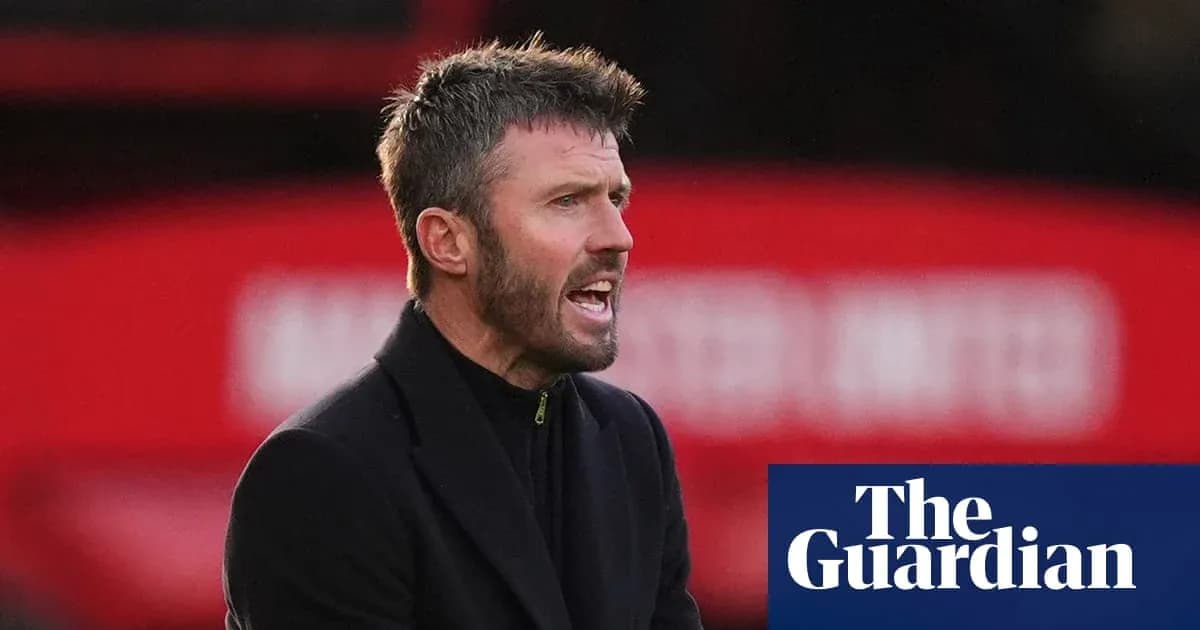
The rage around Manchester United has been raw and relentless. At Old Trafford last Sunday it boiled over, a mutinous Stretford End spitting fury at the Glazers and Sir Jim Ratcliffe, ordering them to “sell the club and f--- off home”. That was one of the cleaner lines. The atmosphere was toxic, and it may not soften when United walk into Stamford Bridge to face Chelsea on Saturday with Michael Carrick clinging to his job and to the faint hope of only a second league win of a miserable season.
Once, Ratcliffe was the great hope, the local billionaire who would cleanse the sins of the Glazer era. Now, for a growing number of United supporters, there is barely a cigarette paper between the British petrochemicals magnate from Failsworth and the reclusive Americans from Florida. Different accents, same problem.
Yet the cold truth is this: neither camp is about to disappear. And for those desperate to know where this club is really heading – who might own it, where it might play, how it might finally drag itself into the modern era – the answers are not in the chants or the banners, but in the small print of the club’s latest accounts.
The debt that will not die – and the clue buried inside it
On the surface, nothing much has changed. United remain shackled to the legacy of the Glazers’ leveraged buyout more than 20 years on. The club has just posted a seventh consecutive annual loss. Interest on long-standing loans alone swallowed almost £39 million last season.
Ratcliffe has already pushed through cost-cutting that is both unpopular and, in hard financial terms, unavoidable. Yet the numbers still scream burden, not freedom.
Look closer, though, at the refinancing completed in June. There, in the detail of $550 million (£411 million) in new “senior secured notes”, lies the clearest timetable yet for when Ratcliffe’s Ineos could realistically move for majority control – and how a new 100,000-seat stadium might be the lever that finally shifts the Glazers out of the picture.
The new structure does two important things.
First, it creates a “New Stadium Group” – a separate company set up to own and run the proposed new ground and surrounding land. In practice, that ring-fences the stadium from the main club’s assets that lenders can grab if things go wrong. Once United formally designate that new arena as their home, some of those protections could change under the loan terms, but the basic idea is clear: separate the stadium from the old debt.
Second, it defines a “Stadium Event”: money raised specifically to build a new stadium or redevelop Old Trafford, whether via fresh borrowing or new equity from investors.
That phrase matters. Because once a Stadium Event happens – and only on or after June 10, 2029 – United can repay those $550 million notes at face value with no early repayment penalty. A separate $225 million (£168 million) secured-term loan can be paid back at any time, but the way the clauses are knitted together is deliberate. They nudge all debt linked to the original LBO towards being cleared at the same moment as the stadium is financed, from mid-2029 onwards.
Add one more date: the revolving credit facility (RCF), currently drawn to £200 million and used to smooth cash flow, expires on December 31, 2029. Put it together and, as sports finance adviser Jamie Bajwa points out, the back half of 2029 becomes the “natural window” to pay down or strip out the LBO debt and refinance the RCF as part of that Stadium Event.
Right now, those LBO-era covenants still cap how much more United can borrow. With total debt standing at £689 million, Bajwa calculates they could raise at most another £295 million under the current rules – nowhere near the £2 billion to £3 billion likely required for a new stadium.
After June 2029, the picture shifts. If the existing debt is removed and leverage is pushed up to five times EBITDA for stadium financing, Bajwa suggests United could, in theory, unlock around £1.6 billion in fresh borrowing power. A modern, bigger stadium would then drive a significant jump in EBITDA and reshape the club’s finances over the long term.
The stadium, in other words, is not just a building. It is the key that could change who really owns Manchester United.
Ownership, power and a clock ticking towards 2029
For that key to turn, one thing is non-negotiable: Ratcliffe and Ineos need control. They currently hold 28.94 per cent of the club. Paying off or refinancing Glazer-era debt without majority ownership would be an act of charity, not strategy. No serious operator does that.
So the obvious questions hang in the air. Can the Glazers be persuaded to sell? At what price? And even if they can, where does the money come from to buy them out and still fund a stadium project of unprecedented scale in English football?
The football reality makes this even more complicated. By 2029, United need to look very different on the pitch. Regular Champions League football is crucial if the numbers are to add up. At present, they are hovering above the relegation zone, not the top five, and yet another manager is under siege.
Then there is Ineos itself. The group is comfortable with big debt loads. It is also carrying more than £10 billion in net debt at a time of rising European energy costs, punishing tax regimes in the UK and EU, and what Ratcliffe has loudly condemned as heavy-handed carbon regulation. Could Ineos really shoulder more debt via United, even if Ratcliffe and his partners wanted to?
For some fans, the dream is simpler: a clean break, a new billionaire, a sovereign wealth fund, someone with deep pockets and no baggage. But there is no serious sign of such a saviour waiting in the wings.
What has changed is that, for the first time, you can sketch a plausible route from here to a different ownership structure and a new home. It is still messy, still expensive, still dependent on outside equity partners and multiple moving parts. Yet it exists.
Ratcliffe’s intent is not in doubt. As part of the summer refinancing, United actually borrowed more to ensure they had the headroom to buy £63.5 million of land next to Old Trafford – land needed for a new stadium.
That decision cut across the mood in the stands. Plenty would have preferred that money to go on a left-back. At the Manchester derby and again against Bournemouth, the soundtrack from the Stretford End was brutal: “You can stick your new ground up your a---.”
The message is clear. Many supporters do not trust these owners to build anything, least of all the future.
The stadium question that will not go away
Yet the stadium question cannot simply be shouted away. Whether the answer is a gleaming new ground or a rebuilt Old Trafford, United cannot dodge it forever. The Glazers were hammered for neglecting Old Trafford and failing to plan long term. That neglect has been expensive, not just in prestige but in revenue and relevance.
Steps to repair two decades of drift are not a luxury; they are overdue maintenance on a crumbling competitive position. They cannot be abandoned because the team is in crisis again or because the fanbase is rightly furious with the current regime.
As Bajwa puts it, “The route to the new Old Trafford is now more intertwined with the financial firepower of Ineos. The terms of the loan notes accommodate Ineos taking a majority position in Manchester United. Ineos could then refinance the LBO debt and house it on their own books rather than the club’s books. Should this happen, it would provide the club with much more flexibility in how they finance a new stadium.”
That is the fault line running beneath every chant, every banner, every angry walk-out. United’s future – who owns it, where it plays, how big it dares to be – is increasingly tied to one date, one event, one gamble on 2029.