.svg&w=384&q=75 "logo")
Manchester United's Defensive Woes: Maguire Under Fire After Hull Loss
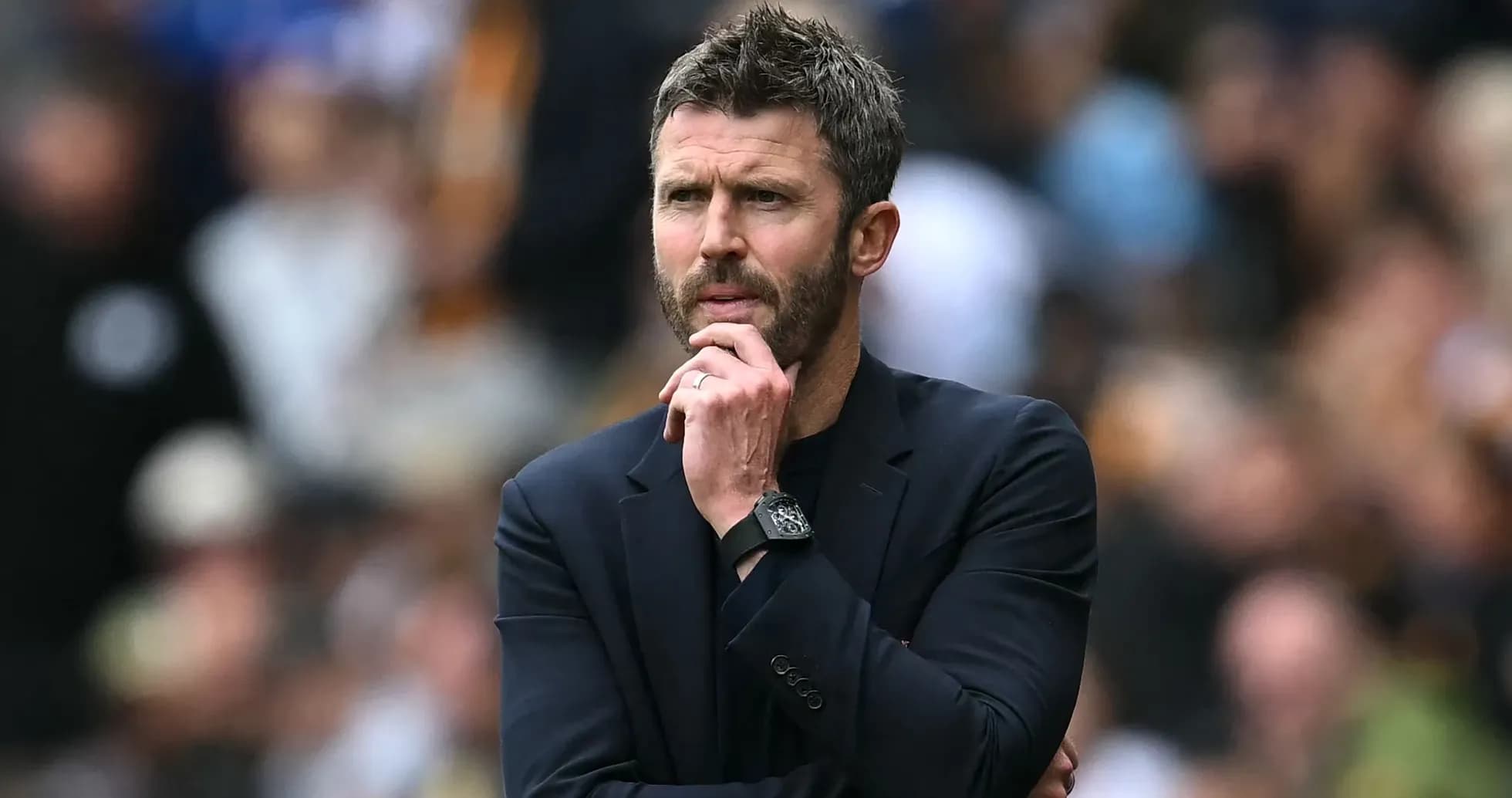
Manchester United’s season began with a jolt rather than a statement, undone 2-0 by newly-promoted Hull City and dragged straight back into a debate they thought they’d parked months ago: Harry Maguire.
With Lisandro Martinez and Matthijs de Ligt still short of full fitness, Michael Carrick had little choice but to improvise. He turned to 33-year-old Maguire, pairing him with Ayden Heaven in a back line that looked patched together and played like it. Hull didn’t need to be spectacular. They just needed to be organised, aggressive at dead balls and alert to United’s uncertainty.
Two set-pieces. Two goals. Three points gone on opening weekend.
Mikel’s brutal verdict
If the performance itself didn’t sting enough, the post-match autopsy cut even deeper. On The Obi One Podcast, former Premier League winner Obi Mikel didn’t bother with diplomacy.
“When your top centre-back is Harry Maguire, you have a problem,” he said, stripping away any illusion about where he believes United now stand. In his view, Maguire was “never a Manchester United player, never suited the system or the football club.”
For a defender who has ridden out boos, dropped captaincy, and transfer speculation, the criticism was nothing new. The bluntness was. Mikel openly questioned how Maguire has survived “seven, eight seasons” at Old Trafford and still emerged as the club’s first-choice defender on opening day.
“That’s a problem,” he repeated. Not a dilemma. A problem.
The former midfielder then zoomed in on the moment that, for him, summed it all up: Hull’s first goal. Amid the chaos of the set-piece, Mikel saw Maguire grappling not with an opponent, but with his own team-mate.
“The first goal, he was grabbing his own player and stopping him from going to defend the guy who was scoring. What was he doing? I have no idea.”
In one clip, one freeze-frame, Mikel saw the embodiment of his wider argument: poor awareness, muddled decision-making, a defender out of sync with the demands around him.
A place in the squad, not in the XI?
Mikel didn’t argue that Maguire has no use at all. He acknowledged the value of experience, the worth of a seasoned head in a long, gruelling season. But he drew a hard line at the idea of Maguire as United’s mainstay.
“They have Lisandro Martinez, Matthijs de Ligt, Leny Yoro; they have players there,” he pointed out. The question, in his eyes, is not whether Maguire belongs at the club, but why he still starts.
“Is he good to be a squad player because of his experience? Yes. But not to start games, not to be your number one centre-back.”
Then came the technical critique. No hiding place there either. Mikel painted a picture of a defender out of rhythm with the modern game: “He’s slow on the ball; he touches it three or four times before releasing it. He doesn’t know what to do with the ball, he’s confused when he has the ball.”
At a club that wants to build from the back and control tempo, that is a damning assessment. For Mikel, a centre-back must shift the ball quickly, set the speed of the team, drag them up the pitch. Maguire, he argued, simply doesn’t move it “quickly enough” to let United play at the right tempo.
From resurgence to relapse
The timing of this collapse in confidence is striking. Only a few months ago, Maguire looked like he had turned a corner. Under Carrick in the latter half of last season, he strung together a run of assured displays, rediscovered some authority in the air, and cut out the wild errors that had made him a lightning rod.
That late-season form almost carried him into Thomas Tuchel’s England squad for the World Cup. His name was back in the conversation, his Old Trafford future no longer a weekly argument.
Then came Hull. Then came the set-pieces. Then came Mikel’s voice echoing what many in the stands and on social media have been asking quietly: is this a revival paused, or a mirage exposed?
Carrick defends, but demands more
Carrick, as expected, refused to turn the defeat into a public trial of his defenders. He bristled at the nature of the goals but not at the players themselves.
“Two goals conceded any way is frustrating,” he said after the final whistle. United, he pointed out, have “been pretty good at defending set-pieces over a period of time,” but on this day, those moments “decided the game.”
He insisted one match would not “change the direction of everything,” a reminder that seasons are not defined in August. Still, there was a clear warning buried in the reassurance: United must be “aware of what we need to get better at.”
That line covers more than just near-post blocks and marking assignments. It stretches to selection calls, hierarchy at centre-back, and how long sentiment or seniority can outweigh form.
For now, Maguire remains at the heart of that question. Hull exposed the fragility of United’s defensive plan without Martinez and de Ligt. Mikel’s words ensured that, this time, the fallout will not be quietly forgotten before next weekend.
How long can Carrick keep faith with a defender so fiercely under the microscope, in a team that cannot afford to stumble again?