.svg&w=384&q=75 "logo")
Liverpool’s Transfer Window: From Dominance to Desperation
Liverpool used to own the transfer window. Not just compete in it, own it. Clear plans, sharp execution, a squad upgraded with cold precision while rivals scrambled around for solutions.
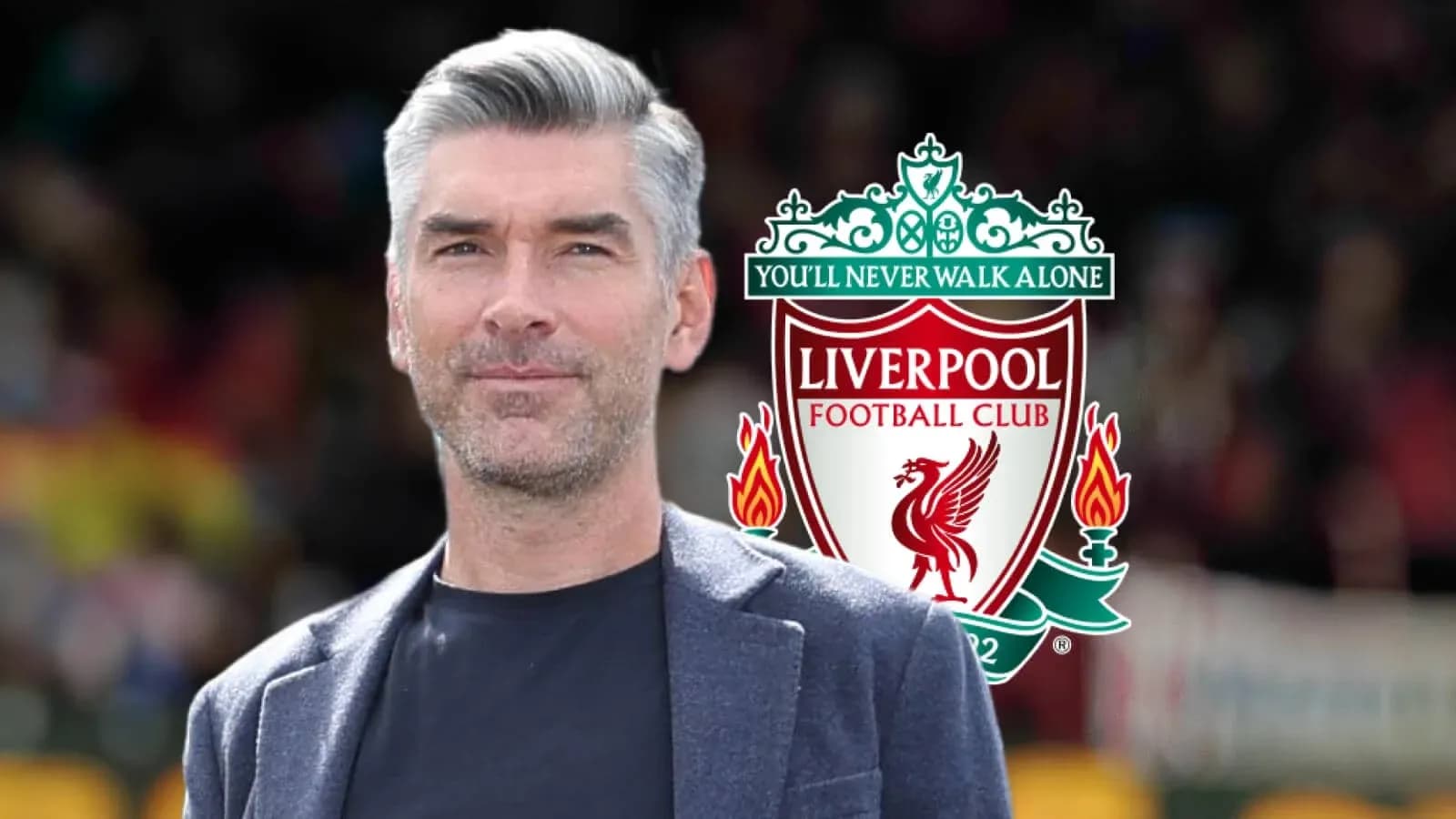
This summer feels like the mirror image of that era. Chaotic, hesitant, oddly passive. And the name being dragged into the spotlight by frustrated supporters is Richard Hughes.
From statement window to silent retreat
Rewind one year and the mood around Anfield was very different. Liverpool, newly crowned Premier League champions, went on a spree that felt like the culmination of a long-term rebuild.
Florian Wirtz and Jeremie Frimpong arrived as Bundesliga winners – young, elite, ready-made upgrades. Hugo Ekitike came in as a pointed move, a statement signing snatched from under Newcastle’s nose. Then Alexander Isak, at the time arguably the sharpest centre-forward in the division, walked through the door to complete a frontline that looked built to dominate for years.
Rival fans didn’t just worry. Many assumed the title race was already over before a ball had been kicked.
Reality, as ever, was less generous. The season never quite matched the hype. But the ambition was unmistakable. Liverpool looked like a club operating with conviction.
Now? The same fanbase is staring at the final days of the window and wondering what on earth the plan is.
Holes everywhere, answers nowhere
The anger isn’t just about who hasn’t arrived. It’s about who has been allowed to leave, and what that says about the club’s internal logic.
Key squad players have gone. Even Stefan Bajcetic, one of the few younger midfielders who looked capable of growing into a long-term role, has been moved on. Behind the starting midfield three, the depth chart looks alarmingly thin.
There is still no clear successor to Mohamed Salah, a generational forward whose exit was hardly a surprise. Liverpool had half a year, at least, to map out a succession plan. They are now staring at the clock, chasing wingers around Europe with the season already under way.
The defensive midfield issue is just as stark. The system asks full-backs to play like auxiliary attackers and defenders at the same time, leaving the centre-backs exposed. Everyone can see the gap. Supporters on video games, ex-players, pundits, even the club captain have all, in one way or another, identified the same need: a proper holding midfielder and two wide forwards.
The market work has not matched that clarity.
Instead, Liverpool have bounced from Bradley Barcola to Yankuba Minteh to Ismaïla Sarr, names swirling around a fanbase that feels more like it is watching a scattergun search than a targeted strategy. For a club that once prided itself on being two windows ahead of the curve, this looks like a side running on the spot.
The Hughes question
When recruitment goes wrong, the spotlight inevitably swings upstairs. Hughes, appointed as sporting director to continue Liverpool’s reputation for smart, efficient business, is being accused of presiding over the opposite.
The complaint from supporters is simple: this is a club that used to sell well, buy better and refresh at the right time. Now it is selling without replacing, dithering over obvious priorities and leaving a new manager exposed.
The contrast is sharpened by the one signing that does fit the old model. Victor Muñoz has been picked out by fans as the type of deal Liverpool built their modern success on: affordable, low-pressure, high-upside. A shrewd, quiet addition.
The problem is that one clever piece of business cannot hide the glaring holes elsewhere. Not when Arsenal, Manchester City, Chelsea, Spurs and Aston Villa are all perceived to be moving with more clarity and aggression in the same market.
This is why the anger feels different. It is not just about missing out on targets. It is about a perceived abandonment of the very principles that took Liverpool back to the top.
A manager handicapped before he starts
Andoni Iraola walks into this storm knowing full well what came before him. He replaces a giant in Jürgen Klopp and inherits a fanbase that has tasted the best and now sees a squad with obvious structural weaknesses.
The fear among supporters is that the new head coach has been asked to conjure a miracle with an incomplete toolkit. If Liverpool are overrun in midfield, if the back line is repeatedly exposed, the mood on the terraces has already shifted: blame the boardroom, not the dugout.
Some fans are already bracing themselves for a season that feels more like the latter years of Arsène Wenger’s Arsenal or the long, fluctuating Spurs cycles: talented, often entertaining, but ultimately short of the ruthlessness required to stay with the very best.
The hope, slim as it may be in some eyes, is that Iraola turns out to be something extraordinary – a hybrid of Pep Guardiola’s precision, Sir Alex Ferguson’s relentlessness and Klopp’s emotional charge. That he somehow bends a flawed squad into a title-challenging shape.
The more realistic voices are looking at the early evidence, such as the bruising encounter with Newcastle, and seeing a team that can be cut through too easily, with a bench that lacks the depth and balance of its rivals.
A club at a crossroads
Liverpool have been here before, in different guises: a giant club, a global institution, teetering between eras. The difference this time is that they know what a fully aligned, brilliantly run Liverpool looks like. They have lived it.
That is why this window stings. Not because every deal has been a disaster, but because the overall picture feels incoherent. A club that once dictated the tempo of the market now appears to be reacting to it.
Hughes and his team may yet pull off a late flourish, landing the defensive midfielder and wide forwards that reshape the narrative and restore some faith. It has happened before. A single inspired move can change the feel of a season.
But the clock is ticking, the questions are getting louder, and the margin for error is shrinking. Liverpool built a modern powerhouse on clarity and conviction.
They cannot afford to become just another club wondering how it let its best ideas slip away.