.svg&w=384&q=75 "logo")
Kurtis Campbell: From Bullied Child to UFC Fighter
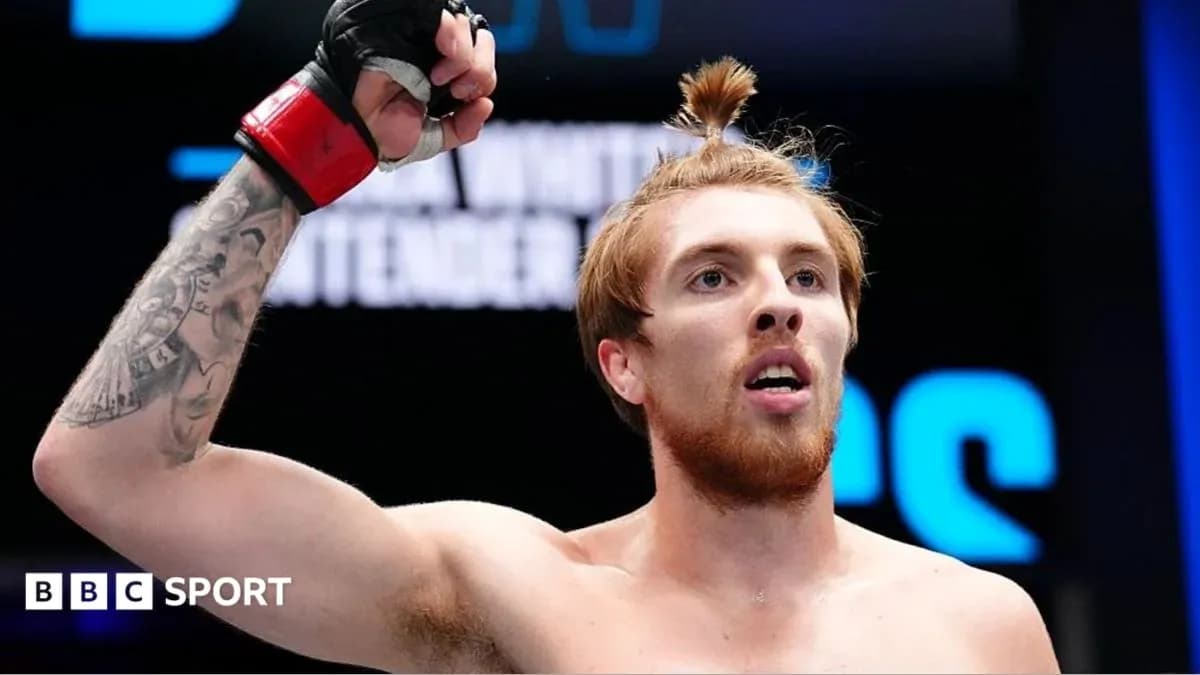
Kurtis Campbell was seven when his parents decided enough was enough.
Primary school in Liverpool had turned sour. The bullying was relentless, and Jay and Michelle could see their son shrinking under the weight of it. He needed something, some way to fight back – or at least to feel like he could.
So they walked him into a Muay Thai gym.
What began as a practical solution, a way to teach a quiet, soft-natured boy how to defend himself before he moved up to secondary school, quickly became something else entirely.
“From there, I've never looked back,” Campbell told BBC Sport. “I've been in love with the sport ever since.”
That decision, made in a moment of parental desperation, now underpins a life built around combat. Without it, there is no 24-year-old on the verge of his second UFC appearance. No rising lightweight set for a high-tempo clash with American Trevor Peek at UFC Paris on Saturday. No talk of titles or legacies.
And certainly no grand plan to pay his parents back.
“I’m not going to stop until my mum and dad are on a beach somewhere, sipping cocktails and doing nothing else for the rest of their lives,” Campbell said. “They can enjoy it, knowing that they've created this monster. That's my plan.”
From soft kid to “monster”
Campbell never saw himself as a natural fighter. Not at first.
“I was quite a soft kid, in the sense that I didn't really like the violence or the fighting,” he said.
The gym changed that. The first few sparring sessions, the first taste of competition, the first time he realised he could impose himself rather than simply endure. Something clicked.
“I felt like when I did fight, and when I really did go into it, everything changed and I never looked back.”
Amateur bouts came thick and fast. What was meant to be a short-term confidence boost became an obsession, an escape from the classroom taunts and the feeling that he didn’t quite fit in anywhere else.
By 15, he had his first international Muay Thai title. A teenager from Merseyside, suddenly winning abroad, suddenly seeing a future in the thing that had started out as self-defence.
With his parents’ blessing, the idea of combat sports as a career stopped being a fantasy and started to feel like a route out.
No plan B
School never held the same pull.
“I was never the cleverest kid. I was always in the bottom sets at school, so I wasn't really focused,” Campbell admitted. “All of the teachers told me, ‘you need to do something else. You have to have a plan B.’”
He ignored them.
While staff urged caution and backup options, Campbell doubled down. Across Merseyside, people in the fight game were beginning to notice the driven teenager constantly turning up, constantly working, constantly improving.
His routine hardened. He would run almost five miles to school, then five miles back, using the journey as conditioning. Lessons were something to get through; training was the point of the day.
There was even a moment that summed up his priorities perfectly. In the middle of studying for his GCSEs, Campbell skipped school to attend a coaching seminar in Liverpool led by John Kavanagh, the man who guided Conor McGregor to two UFC titles. For most students, that would be a reckless decision. For Campbell, it felt like education of a different kind.
Bending the rules for a dream
When his GCSEs were done at 16, he enrolled on a college course that blended academic work in sport with football. On paper, it made sense: qualifications, structure, a traditional path.
Reality looked different.
Campbell struck a deal with the course leaders. He would show up for the classroom sessions, do what was required, then peel away when his peers headed for the football pitch. While they chased the ball, he chased rounds on the pads and hours on the mats.
“I was always avoiding anything just for fighting,” he said. “I really didn't like school. It wasn't me. But I made a good few mates there, so you've got to take the pros with the cons.”
That was the pattern: do just enough to keep the system satisfied, then pour everything else into combat sports. No safety net. No serious thought of another profession.
From a bullied seven-year-old learning how to throw a kick to a 24-year-old lightweight stepping into the UFC cage in Paris, the line is straight. It runs through those cold runs to and from school, the missed day of revision to hear Kavanagh speak, the quiet refusal to accept a “plan B”.
Now Campbell fights to secure the life he promised his parents, and to prove that the kid who didn’t like school was right to believe the gym would be his classroom.