.svg&w=384&q=75 "logo")
Kai Asakura's Dominant Rise in Bantamweight Division
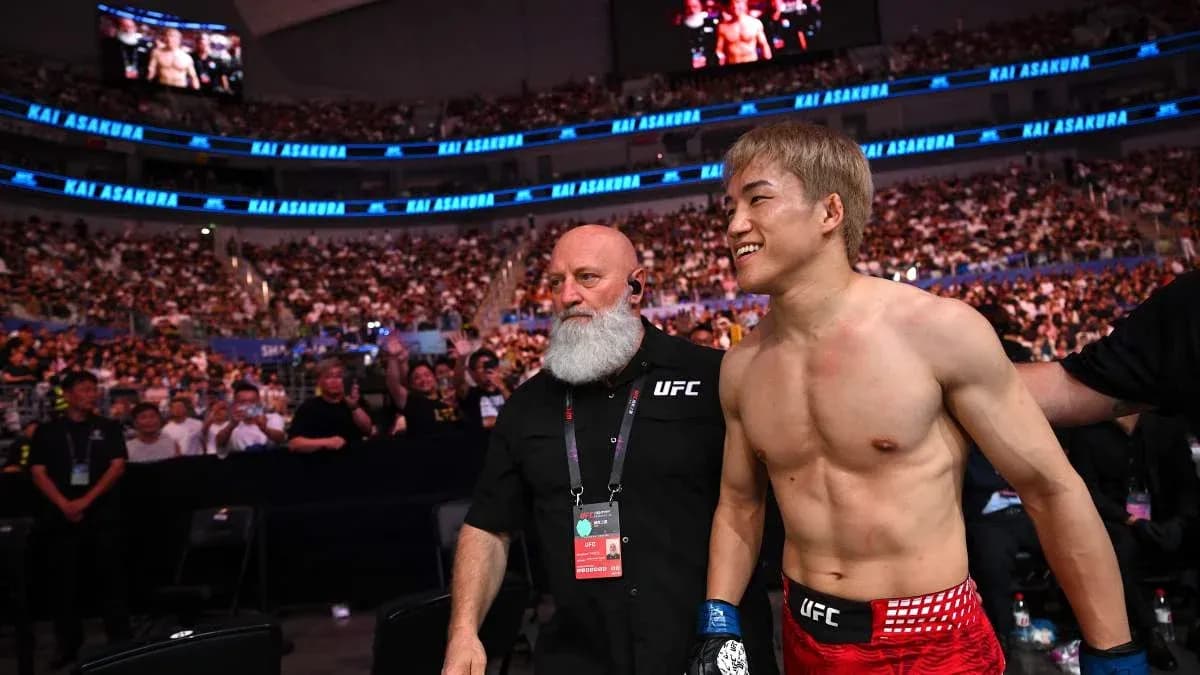
Kai Asakura detonated his arrival as a real bantamweight threat in Shanghai, and he did it with cold, clinical violence.
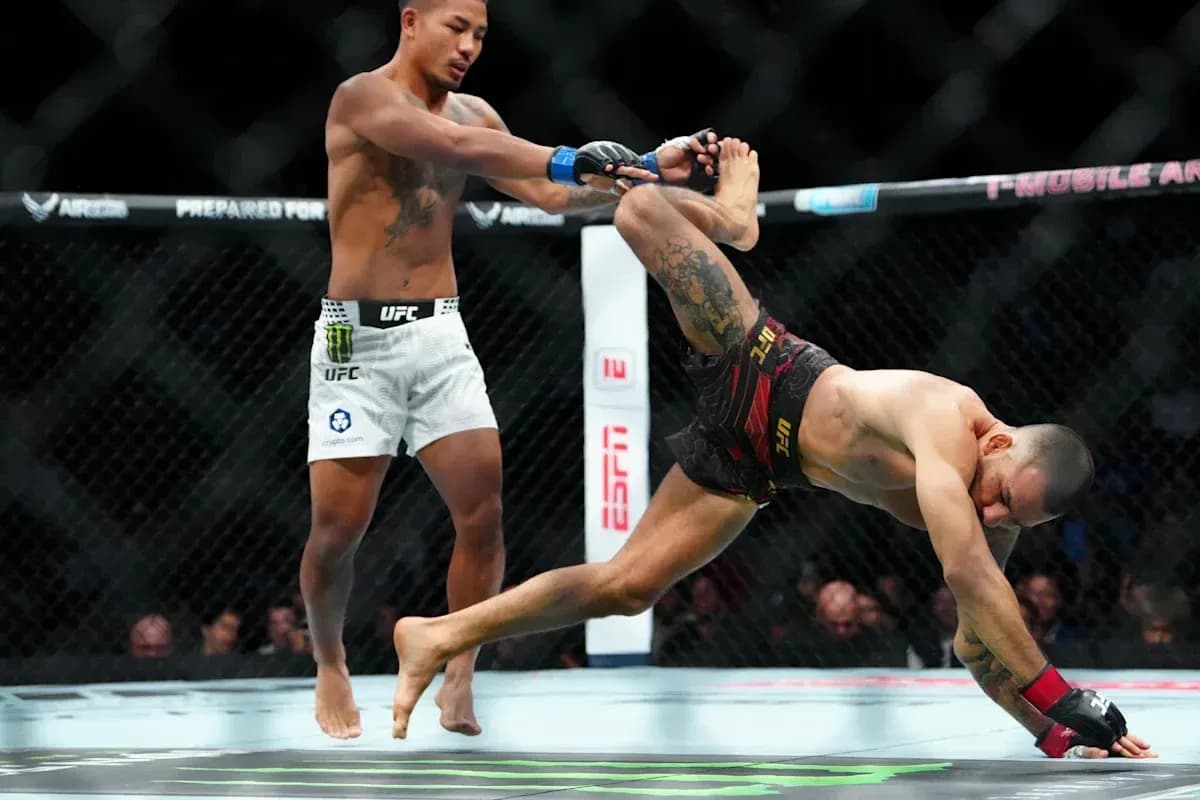
The Japanese standout flattened hometown favorite Aoriqileng with a ruthless second-round finish at UFC Shanghai, a head-kick-to-knees sequence that felt less like a combination and more like a verdict.
One clean strike changed everything.
Asakura’s left leg whipped up and crashed into Aoriqileng’s head, rocking the Chinese fighter and sending the crowd into a stunned hush. Sensing the moment, Asakura didn’t admire his work. He swarmed. Punches followed, sharp and direct, driving Aoriqileng to the canvas. With his opponent hurt and folded, Asakura dropped in vicious knees to the body until the referee had no choice but to step in.
No controversy. No debate. Just a violent stoppage on enemy soil.
Later, the 30-year-old kept his reaction short and sharp on social media, matching the efficiency of his performance. “Won by KO! Thank you for your support!” he wrote on Instagram — a simple message from a man who knows the pictures and the replay will do most of the talking for him.
From fast-tracked hype to hard lessons
This win does more than extend a streak. It repositions a career.
When the UFC signed Asakura from RIZIN, the expectation was not a slow burn. He arrived with star power, highlight reels, and the kind of following that makes matchmakers move quickly. They did more than that: they hurled him straight into the deep end with an immediate flyweight title shot against then-champion Alexandre Pantoja at UFC 310.
That night showed the gap at the very top of the division.
Pantoja, in his prime and ruthless on the mat, dragged Asakura into his world and closed the show with a rear-naked choke in the second round of the main event. No shame in losing to the best, but the aura of inevitability around Asakura dimmed.
His return at UFC 319 in August 2025 turned into an even harsher reality check. Matched with veteran spoiler Tim Elliott, Asakura again found himself trapped in a grappling web, this time caught in a tight guillotine choke in the second round. On paper, it was an upset. In practice, it was a warning.
Two UFC fights. Two submissions. Two second-round losses.
For a fighter who made his name as a finisher, the story had flipped. The cut to 125 pounds was brutal, the performances flat, and the promise of a flyweight title run was slipping away.
Reinvention at 135 lbs
That’s when Asakura made the call that often separates careers that fade from those that flourish: he moved up.
Done with the grind to 125 lbs, he stepped into the bantamweight division at 135 lbs, and the difference has been stark. The speed remained. The power, if anything, looks sharper. The results speak louder than any narrative.
He’s now 2-0 at bantamweight, with back-to-back knockouts over Cameron Smotherman and Aoriqileng. No judges. No doubt.
The Shanghai finish, in particular, felt like a statement aimed directly at the matchmakers’ board. On foreign soil, against a local favorite, under pressure to prove he’s more than a failed flyweight experiment, Asakura didn’t just win. He imposed himself.
A star the UFC can’t ignore
There’s also the business side. Asakura isn’t just another name in the rankings queue. He’s a major figure in Japan, a market the UFC has long tried to crack and stabilize. When a fighter brings both knockouts and eyeballs, the promotion usually responds the same way: it accelerates the climb.
With two violent wins at 135 and momentum finally behind him, a step up in competition feels inevitable. A top-15 opponent makes sense next — a ranked bantamweight who can test whether this reinvention is real or just a short surge.
Asakura has already tasted a title shot once, perhaps too soon and at the wrong weight. Now he’s carving a second path, this time at bantamweight, with his confidence rebuilt and his power translating perfectly.
The first run ended on the mat with a choke. This one is being written with his shins and his fists.
If the knockouts keep coming at 135, the question won’t be whether Kai Asakura can fight for a UFC belt again. It will be how quickly the division can brace itself for him.