Jack Grealish's Crossroads at Everton: A Homecoming in Jeopardy
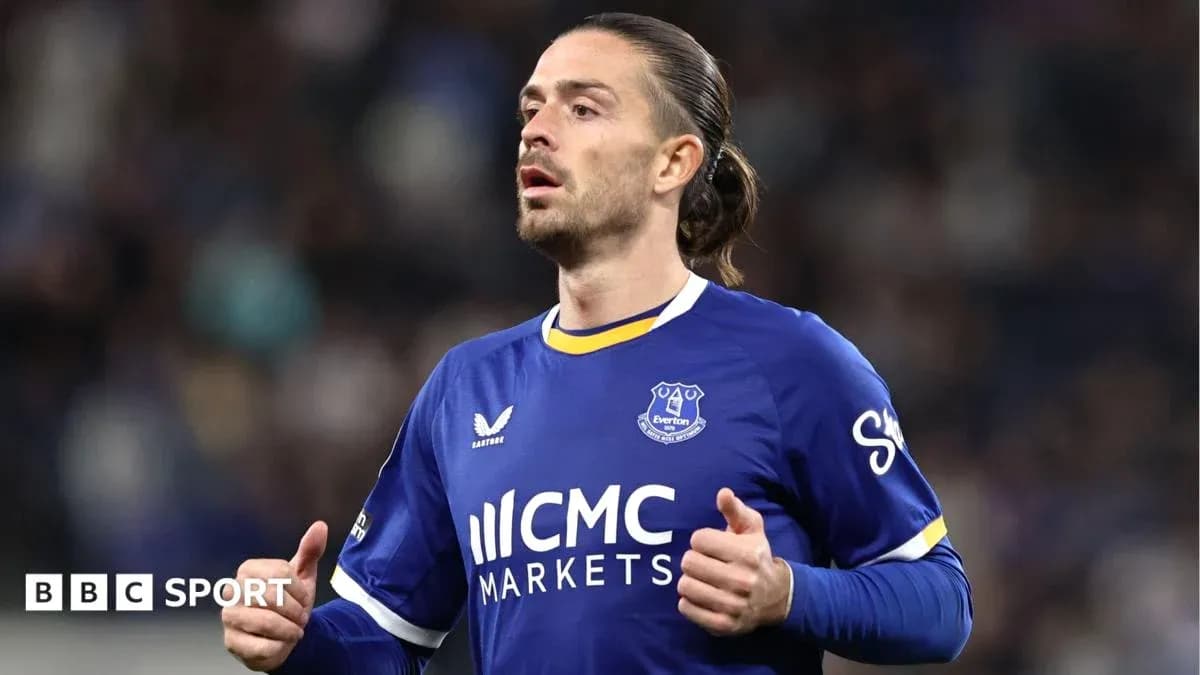
Jack Grealish eased his white Lamborghini through the gates at Finch Farm an hour before the transfer window shut and the mood around Everton changed in an instant.
Supporters flocked to the car park. Grealish signed everything, posed with everyone, and stayed until the early hours to make sure of it. For a fanbase numbed by a grim summer, this was a jolt of pure adrenaline. Their favourite loanee was back. It felt less like a transaction and more like a homecoming.
This was supposed to be the restart. For David Moyes, left with just 18 senior players after a botched window. For Grealish, frozen out at Manchester City in the final year of his contract and effectively told his time at the champions was over. Everton offered him relevance, responsibility, and a crowd that treated him as one of their own.
Now, barely weeks later, it already feels like a crossroads.
A public rebuke and a private reckoning
When Everton named their squad for the Carabao Cup tie against Newcastle United, Grealish’s absence stood out. The club did not hide behind vague talk of “knocks” or “illness”. They called it what it was: “a breach of club discipline”.
Specifically, he had failed to report for training on Monday.
For a player who once became Britain’s first £100m footballer when he left Aston Villa for Manchester City in 2021, it was a jarring, self-inflicted blow. A 31-year-old forward, already fighting to rebuild a career that has drifted from the top tier’s sharpest edge, had handed his critics more ammunition.
Everton’s decision to go public underlined the seriousness of the offence. This was not a quiet internal fine and a line drawn under it. It was a message – to the dressing room, to the supporters, and to Grealish himself.
The timing could hardly be more brutal for him. Failure at Everton, in this context, would not just be another misstep. It would look like the start of a slide away from the Premier League elite.
Inside the club, no one is quite calling it “Last Chance Saloon”. Moyes cannot afford that luxury. His squad is too thin, his season too demanding, to cast out a player of Grealish’s talent. But the pressure has ratcheted up. The goodwill that followed that deadline-day return has been dented, and the onus is now squarely on Grealish to repair it.
Wembley on the horizon, trust on the line
If this was meant to be a night that exposed Everton’s reliance on Grealish, it did the opposite.
Without him, Moyes watched his side deliver arguably their best performance of the season, beating Newcastle 3-1 and booking a quarter-final at League Two Fleetwood Town – the same Fleetwood who dumped out Premier League champions Arsenal in the previous round.
On the left flank, the space many assumed Grealish would occupy, 20-year-old Tyrique George brought a different energy: direct, dynamic, quick. Exactly the tempo Moyes demands, and exactly the rhythm Grealish has struggled to match in an underwhelming campaign in which he has yet to score or assist in eight appearances, two of those for City.
The contrast will not have been lost on anyone.
Moyes chose his words carefully afterwards. He backed the club’s stance but refused to be drawn into detail.
“You probably know I'm not going to give any details. It's a club decision and I support it. It's something I don't want to speak too much about,” he said.
Then came the line that hung over everything.
“The one thing about Everton is that they have got real good values. All the players stand behind it and accept the values, on the pitch and off the pitch, and I think the players did a good job.”
He praised the humility of his squad, their refusal to search for excuses, their togetherness in adversity. None of it was aimed directly at Grealish. All of it might as well have been.
Behind closed doors, the conversation has already taken place. Grealish has met with senior figures at the club. The message, under a disciplinarian like Moyes, will have been blunt: this cannot happen again.
The decision to leave him out, signed off at the highest level with Moyes’ full support, leaves him at a clear junction. One path leads back into the fold, into the side, and into the affection of a fanbase that has been quick to embrace him. The other is far less forgiving.
A bond at risk
What makes this episode so jarring is the relationship that had been built.
From the moment Grealish first walked into Finch Farm on loan in August 2025, he and Moyes clicked. Grealish said then: “As soon as I spoke to the manager, I knew there was only one place that I wanted to go and that was Everton.” It sounded like a line. It wasn’t. He backed it with his actions.
He played a full part in Everton’s season until a foot fracture in a 1-0 win at former club Aston Villa in January cut his campaign short. Rather than head back to Manchester City for his rehabilitation, he stayed on Merseyside, working at Finch Farm, around Everton staff, in Everton’s world. It spoke of a player who felt at home.
When the second loan was discussed this summer, the club hesitated. His fitness, the finances, and yes, his character, were all weighed up. With owners The Friedkin Group stepping back from serious squad investment as they prepared to sell, Moyes had to be sure. In the end, he went for it. Grealish, for his part, made it clear he only wanted Everton.
That is what makes this breach sting. Moyes has built his career on trust and standards. He also knows he cannot carry passengers. This is a paper-thin squad that had already lost Grealish to “illness” for the defeat at Arsenal. To then see him rule himself out again, this time through ill-discipline, will have infuriated him.
The contradiction at the heart of Jack Grealish
Inside Everton, Grealish is not viewed as a disruptive presence. Quite the opposite. BBC Sport understands there have been minor time-keeping issues in the past, but nothing close to this. Day to day, he is seen as a hard trainer who keeps himself in good shape.
He is popular in the dressing room. Staff across the club talk about him warmly. “A lad with a heart of gold, kind and charming, who actually loves being here,” is how one description runs.
The evidence is not hard to find.
Recently, Grealish quietly donated £10,000 to a GoFundMe page for Everton supporter Leon Skapars, a 36-year-old father of three diagnosed with cancer. Skapars’ wife, Crystal, spoke of the impact: “In that moment, Jack gave our whole family something we desperately needed, hope. What he has done for our family is something we will never forget. It makes us feel incredibly emotional.”
He appeared at the Daily Mirror’s ‘Pride Of Britain’ awards, presenting honours and saying: “Footballers are classed as heroes - but these are the real heroes.”
In April, he extended his role as principal ambassador for Special Olympics Great Britain for another three years, having first taken it on in 2022. To mark it, he hosted five of the 10 Special Olympics GB athletes who completed the London Marathon at Everton’s Hill Dickinson Stadium, surprising them with a VIP day, a stadium tour and time on the pitch.
At Finch Farm, he is often among the first to engage with Everton’s community programmes, including sessions with the Everton in the Community Down Syndrome team. He frequently speaks about the inspiration he draws from his sister Hollie, who has cerebral palsy.
This is one side of Jack Grealish: the community figure, the generous teammate, the player whose off-field gestures leave lasting marks on people’s lives.
The other side has never been far away.
In April, he was photographed asleep at a Manchester rooftop bar, drinks scattered around him. Nothing illegal, but an image that jarred with his rehabilitation from injury and the ever-present reality of camera phones.
Back in March 2020, he was fined by Aston Villa and forced to apologise after breaking lockdown rules during the pandemic to visit a friend. Later that year, in November, he admitted two counts of careless driving after incidents in which a Citroen van and a Mercedes were damaged.
The pattern is familiar: a likeable, generous character who occasionally makes poor decisions that drag him into unwanted headlines.
Now or never
Speak to people around Everton and the affection for Grealish remains genuine. They see the good in him. They have experienced it first-hand. That is why this episode hurts, and why the stakes feel so high.
Because the reality is stark. He is 31. His form this season has been flat. He has not scored or assisted in eight outings. His tendency to slow the game clashes with the vertical, urgent football Moyes wants. Younger, hungrier players like Tyrique George are already showing they can bring something different.
Everton, against Newcastle, proved they can win – and play well – without him. They now stand two wins from Wembley in the Carabao Cup, with a winnable tie at Fleetwood next. Momentum is building, even as his own trajectory stutters.
Grealish has been given clarity by his club, and a warning by his manager without a single direct rebuke in public. The affection is still there. So is the frustration.
He has survived injuries, criticism, and the fierce glare of life at Manchester City. He has lifted a Treble. He has rebuilt once. He may not get many more chances to do it again at this level.
At Everton, the door is not closed. But it will not stay open forever.