.svg&w=384&q=75 "logo")
Duel Arena 1: Chaos and Controversy in Orlando
Duel Arena 1 promised disruption. It delivered something closer to a car crash you couldn’t quite look away from.
Backed by an online sportsbook and staged at the Kia Center in Orlando, the hybrid show – part MMA, part boxing, part kickboxing, all inside a ring – leaned hard into shock value, online beef and “anti-woke” posturing. By the end of the night, the promotion had trolled one of its would‑be headliners with his own mother, platformed several of combat sports’ most polarizing figures, and watched its marquee star crumble in front of his home crowd.
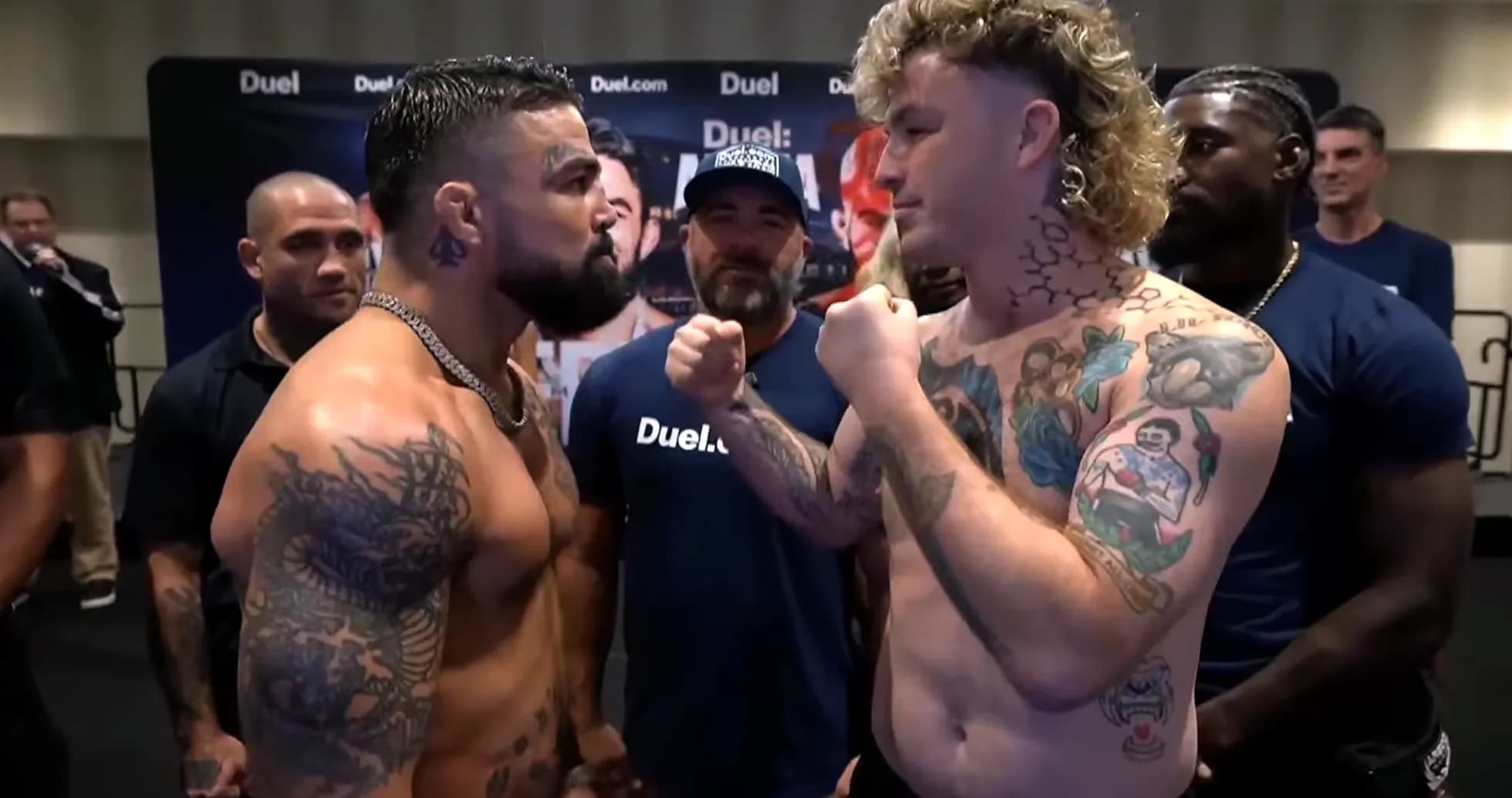
On paper, this was meant to be Mike Perry vs. Dillon Danis. In reality, it became something very different.
Perry’s nightmare: a dislocated shoulder and a short‑notice beatdown
When Danis pulled out on the eve of the event, Mike Perry framed Brandon Jenkins as a dead man walking. Taking a fight on a day’s notice against the self‑styled BKFC “King of Violence,” in Perry’s backyard, sounded like a suicide mission.
Jenkins never got the memo.
From the opening bell of their welterweight MMA main event, he stepped straight into the fire. He didn’t wait for Perry to warm up, didn’t play for time, didn’t show the deference a late replacement is supposed to show. He went at him.
Then came the turning point. Perry appeared to dislocate his left shoulder. The broadcast team immediately latched onto the injury, almost treating the contest as if it had never really started. Jenkins refused to do the same. He pressed forward, poured on pressure and, with Perry badly compromised, tore through the hometown favorite for a brutal finish.
The commentary booth kept circling back to Perry’s bravery for taking the fight. Jenkins’ courage – stepping in on a day’s notice and then dismantling a star in hostile territory – barely got a nod. But the result was inescapable: Perry’s big showcase in Orlando ended with him injured, beaten by a replacement, and helped off the canvas as Jenkins walked away with the statement win of his career.
Manuwa turns back the clock against Sherman
The night’s other ex‑UFC showcase had its own twist.
Chase Sherman, the former UFC heavyweight, looked like he might bully the smaller man when he dropped Jimi Manuwa in the first round of their heavyweight boxing bout. The size, the youth, the activity – it all seemed to tilt his way.
Then the 46‑year‑old Brit woke up.
In the second round, Manuwa started to find his rhythm and his timing, snapping Sherman’s head back and piling on clean shots. The momentum flipped hard. Sherman, who had done the early damage, suddenly looked lost under fire. Manuwa closed the show with a second‑round stoppage, a violent reminder in his first combat sports appearance in seven years that his power has not gone anywhere.
A promotion that weaponized outrage
Duel Arena 1 never tried to hide what it was selling.
When Dillon Danis withdrew, the promotion didn’t just move on. Its official social media accounts hurled abuse his way, including a slur, and then doubled down by hiring his mother, Nikki Carpiniello, as a ring card girl. A provocative image of her was pushed out specifically to needle Danis.
The event leaned into the same tone throughout fight week: an “anti‑woke” edge, a controversial special guest teased as an openly racist figure, and a broadcast that veered into conspiracy chatter and sideshow acts. At one point, viewers were taken into the ring so the backstage interviewer could explain what a boxing ring looks like, complete with a proud reveal of the Duel Arena logo.
The card was originally slated as a pay‑per‑view. It ended up streaming for free on YouTube.
Rowe grinds out a win and calls for a UFC return
In the midst of the circus, Phil Rowe tried to turn the night into a career reset.
The former UFC welterweight outworked Javanis Ross in a four‑round super welterweight boxing match, doing enough to sweep one judge’s card and take two rounds on the other two. It wasn’t spectacular, but it was solid, controlled work.
Rowe used his moment on the mic to angle for another shot in the UFC. His history there is complicated: a three‑fight winning streak that was overshadowed by two missed weights, then a slide of four losses in five that ended with his release. Since then, he’s picked up one MMA win and now this boxing victory. It’s not the most obvious résumé for a recall, but the sport has seen stranger comebacks.
Clark implodes, Pownall takes the DQ
If the promotion wanted controversy, it got it in the cruiserweight boxing bout between Ryan Pownall and Patrick Clark Jr.
Clark, once known in WWE as Velveteen Dream, arrived carrying heavy baggage: accusations of sending lewd images to minors, grooming allegations from another wrestler, an internal WWE investigation, a brief return, and then his release. A couple of years ago, he publicly apologized for people he said he’d hurt with his past behavior.
Pownall, a podcast host turned fighter, hammered that history at the press conference, repeatedly branding Clark a “pedophile” and triggering a meltdown. On fight night, Clark’s performance matched the chaos of the build. He unraveled in the ring, turning the contest into a farce and ultimately getting himself disqualified after making a mockery of the bout on repeat.
Pownall left with the win. Clark left with even more damage to a reputation already in tatters.
Cunningham’s violent highlight – and toxic baggage
Earlier on the card, AJ Cunningham delivered one of the most spectacular finishes of the night – and one of the most uncomfortable.
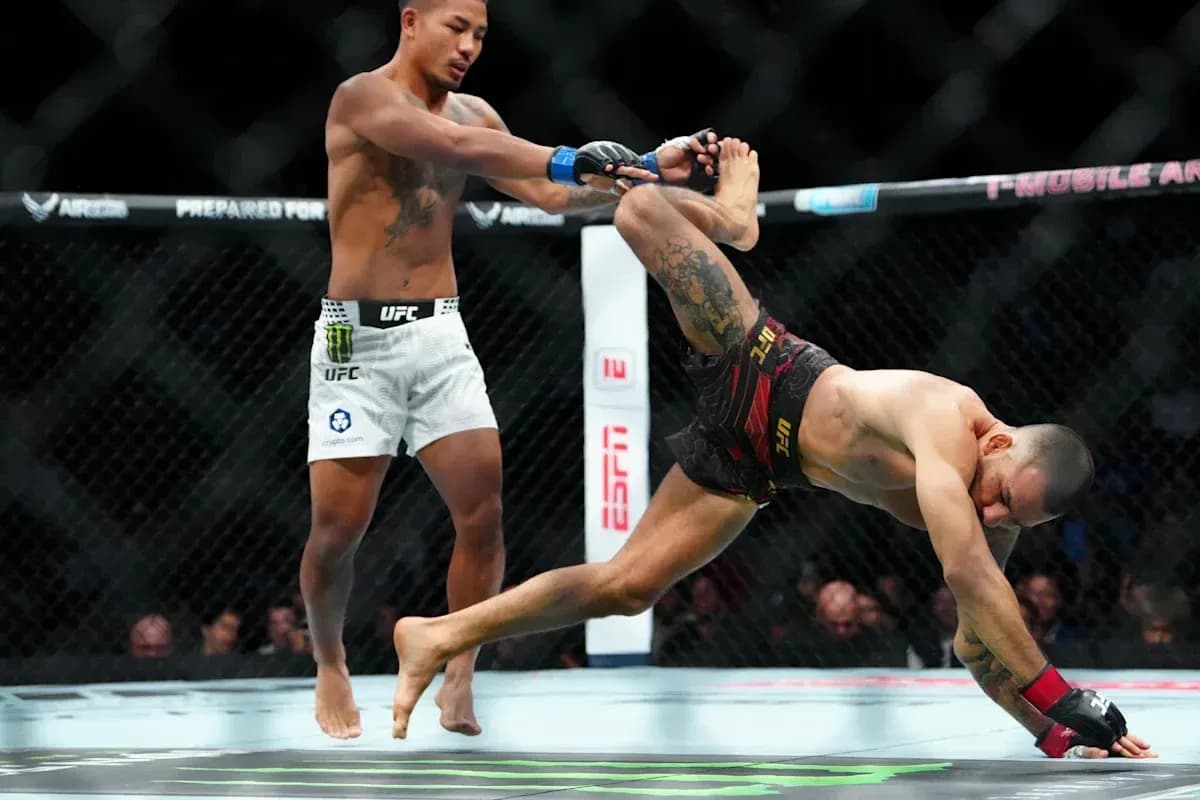
The lightweight, cornered by Jake Shields, uncorked a spinning back elbow that flattened Joe Penafiel. Technically, it was flawless. As a highlight, it was undeniable.
The problem is everything around it. Cunningham is widely regarded in combat sports circles as a notorious figure, labeled a Nazi sympathizer and derided as one of the sport’s most prominent villains. He arrived in the UFC years ago after a DWCS loss, then went 0‑2 and was cut. He hadn’t won a fight in nearly three years before this knockout.
Here, he produced a viral finish on a card where he was followed, incredibly, by a magician vs. a juggler. It was a reminder that, on this night, even genuine sporting moments came wrapped in layers of absurdity.
Sideshow overload: magicians, jugglers and “Ass Magic”
If Duel Arena 1 had a theme, it was that nothing was too ridiculous.
A 4‑foot‑6 influencer fought the 5‑foot‑6 owner of Duel.com in the opener. The owner lost a decision after a walkout delay that saw several minutes of dead air between the promo and the actual fight.
Later, the broadcast descended into a segment involving the so‑called “King of Ass Magic” facing a juggler. The bout appeared to be a boxing match, but the spectacle around it – from the gimmick to the commentary – pushed the event deep into parody. To cap it off, the production team couldn’t even get the “Ass Magic” performer’s name right on the on‑screen graphics.
Somewhere between the conspiracy‑theory banter, the ring walk tours, and the novelty acts, the line between combat sports event and late‑night internet sketch blurred almost completely.
Duel Arena’s gamble
By the end of the night, Duel Arena 1 had produced a genuine upset in Mike Perry’s crushing loss to Brandon Jenkins, a nostalgic knockout from Jimi Manuwa, a workmanlike win and plea for redemption from Phil Rowe, and a string of viral‑bait moments that had little to do with sport.
The promotion’s strategy was clear: weaponize outrage, court controversy, and hope the chaos sticks.
The question now is just as clear: in a combat sports landscape already overflowing with circus acts and crossover curiosities, does a brand built on this level of shock and toxicity have any real staying power, or will Duel Arena 1 be remembered as a one‑night experiment that burned out as loudly as it arrived?