Chelsea's Defensive Woes Exposed in Brentford Defeat
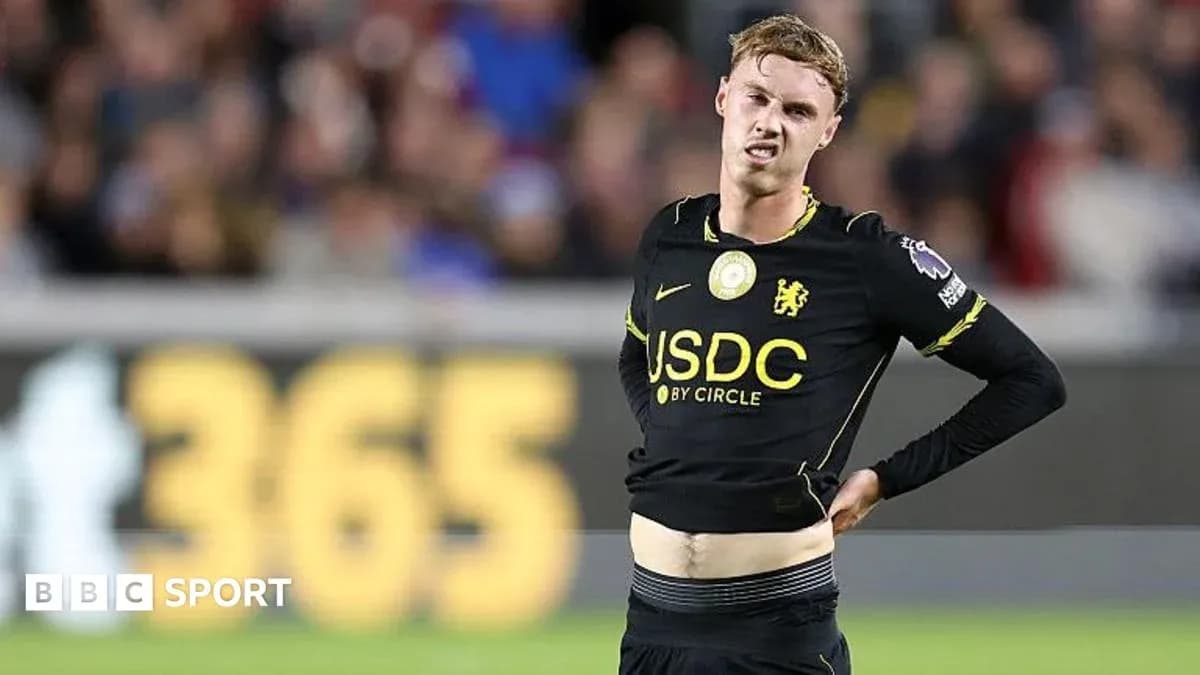
Chelsea arrived at Brentford knowing exactly what their problem was. They left with another one.
The familiar flaw was there for all to see: a defence that cannot keep the door shut. But without injured striker Joao Pedro, the free-flowing attack that had been masking those cracks suddenly lost its edge. When the Brazilian was ruled out with a knee injury, Xabi Alonso’s side lost their focal point, their creator and their finisher in one hit.
What followed was a 3-0 defeat that felt as much like a warning as a bad night.
From tight contest to brutal collapse
For an hour, this was a game on a knife-edge. Chelsea traded punches with Brentford, moved the ball reasonably well and, for long stretches, looked as though a single moment might swing it their way.
Instead, it broke the other way.
On 61 minutes, Jaidon Anthony stole in to head Brentford in front from a corner. A simple goal. Too simple. Chelsea’s response was alarming: structure gone, belief draining, the collective shape disintegrating as Brentford sensed weakness. Two more goals followed late on, and what had been an even contest turned into a rout on the scoreboard.
The pattern is becoming painfully familiar. Chelsea have now conceded 12 goals in the Premier League this season, more than any other side, albeit having played a game more. Alonso is only the sixth manager in the competition’s history to see his team concede two or more in each of his first five league matches in charge. That is not a quirk. It is a crisis in slow motion.
The conclusion writes itself: unless Alonso finds a way to stop the bleeding, the rest of his work will barely matter.
Life without Joao Pedro
The absence of Joao Pedro exposed just how much Chelsea’s early-season attacking fluency has revolved around him. He came into the weekend with three goals and three assists in four league games, the most goal involvements in the division. But those numbers only tell part of the story.
He links. He drifts. He creates his own chances when nothing is on. He stitches together Cole Palmer and Morgan Rogers, turning good positions into real danger.
Without him, the attack looked blunt.
Chelsea had again dipped into Brighton’s forward line in the summer, signing Danny Welbeck to reunite him with Joao Pedro and add experience up front. Here, the 35-year-old led the line but never managed to lead the game. He was neat enough with his back to goal, but with so little service he mustered only 17 touches before being substituted in the 71st minute.
Welbeck does not carry the same individual threat as Joao Pedro. He cannot conjure a shooting chance from a half-space or beat two men to change the tempo of a move. When Chelsea needed someone to bend the game their way, the Brazilian was sitting in the stands and nobody in blue looked capable of taking his place.
Rogers, the £117m record signing, produced perhaps his quietest display since arriving from Aston Villa. Later in the game he was pushed into a central role with Emmanuel Emegha still sidelined and waiting for his debut, but the spark never really came.
Once Brentford struck, Chelsea’s attack vanished altogether.
Set-pieces: the old wound still open
If Alonso inherited some issues, set-piece defending sits at the top of that list. He has not solved it. Not even close.
Anthony’s opener came from a straightforward corner, nodded in with minimal resistance. It was the fifth set-piece goal Chelsea have conceded already this season and the 23rd since the start of last campaign – no Premier League side has shipped more in that period.
This is not an area the club has ignored. Two years ago, Chelsea brought in Bernardo Cueva from Brentford specifically to improve set-piece work. This summer, they replaced him with Austin MacPhee, another specialist with a strong reputation. The numbers, though, remain damning.
Stand-in captain Levi Colwill did not sugar-coat it when he spoke to Sky Sports. “Not good enough. At times we have been bullied in the box and we definitely need to improve,” he said. He backed the new set-piece coach and spoke of the squad still adjusting to fresh ideas, but the blunt admission was the key line: they are being bullied.
That is a mentality problem as much as a tactical one.
Alonso’s search for control
Alonso has spent his first weeks in charge trying to harden Chelsea’s competitive edge and lift the team’s mentality. This has often been framed as a by-product of a young squad, but at Brentford he named Chelsea’s oldest starting XI since May 2023.
Jordan Henderson, making his debut at 36, joined Welbeck and goalkeeper Emiliano Martinez as over-30s in the line-up. Experience, on paper at least, was not in short supply.
Yet the same fragilities surfaced.
Alonso has chopped and changed systems, handed out 11 debuts already, and on Friday introduced both Henderson and 16-year-old Mahdi Nicoll-Jazuli, who became the youngest player ever to appear for Chelsea in the Premier League. The experimentation is understandable for a new manager. The lack of tactical coherence is not.
Chelsea do not yet look like a team that knows exactly how it wants to control a match. They can dazzle in spells, but when the game tilts against them, they sway with it rather than stand firm.
“I would say that we have dropped our consistency and our competitive mentality in the second half. We know that small details can be decisive,” Alonso admitted after Brentford’s late goals sealed the scoreline. He rejected the idea of excuses, insisting the squad must look inward and work. The message is right; the evidence on the pitch still isn’t.
Three weeks to stew – and to decide what they are
The international break now stretches in front of Chelsea: three weeks without a league game, three weeks to replay this defeat in their heads.
The initial surge under Alonso, powered by attacking verve and early wins, has given way to harder realities. The defence leaks, the set-pieces creak, and when Joao Pedro is missing, the cutting edge fades fast.
This pause in the schedule hands Alonso time on the training ground and a chance to settle on a system, a core XI, an identity that can withstand pressure. The question is no longer whether Chelsea can thrill going forward.
It is whether they can grow into a team that stops collapsing the moment someone lands the first punch.