.svg&w=384&q=75 "logo")
Champions League Draw and the Media's Overreaction
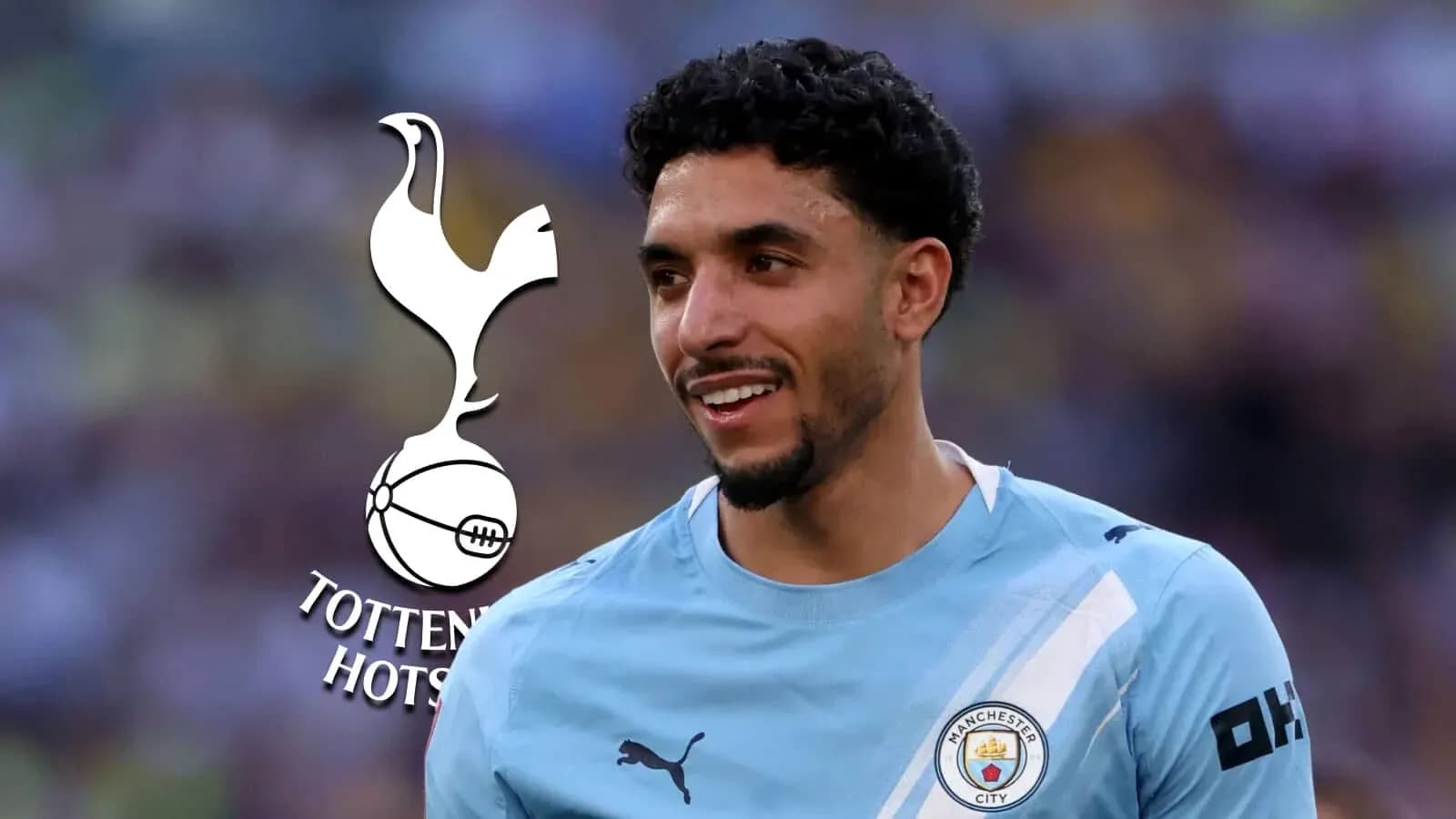
Omar Marmoush has apparently walked into an “immediate Tottenham blow”. The kind of catastrophe, we’re told, that Carlos Baleba somehow stared down before joining Manchester United.
It’s nonsense. All of it.
Nightmare fuel that isn’t
The Champions League draw dropped, and the usual hysteria followed.
- “Arsenal’s Champions League draw in full as Gunners handed nightmare fixtures.”
- “Man City handed nightmare Champions League draw with Arsenal also given tricky fixtures as Man United face old foes on return to competition – and Jose’s back at the Bridge!”
- “Champions League group phase predicted by supercomputer with Man Utd having a nightmare after horror draw.”
You’d think UEFA had unleashed some sadistic new format where only one team survives and the rest are fed to the wolves. The reality? Europe’s elite competition now has a lot of elite teams. Everyone gets hard games. That’s the point.
When everyone’s draw is a “nightmare”, the word stops meaning anything.
The “horror” of finishing ninth
Take Manchester United’s supposed “nightmare after horror draw”.
The claim: United have been “tipped to agonisingly miss out on the top eight of the Champions League league phase”, with the “boffins and brainiacs” at Football Ranked predicting Michael Carrick’s side will finish ninth.
Strip away the drama and what are you left with? United, in this scenario, would be the highest-ranked seeded team in the knockout phase play-offs, facing the weakest unseeded opponent.
So the horror, the nightmare, the stuff of fevered headlines, is… being in the strongest possible position among the teams that don’t quite crack the top eight.
Terrifying.
Liverpool, stealth and selective memory
On to Liverpool and Manchester United, and Jeremy Cross’s piece in the Daily Mirror. The central argument holds water: Liverpool once out-thought United in the transfer market and now look just as chaotic. That’s a fair charge.
The problem comes with the romanticised version of Liverpool’s “ruthless stealth”.
“In that same period, Liverpool conducted their own business with ruthless stealth. Big targets were kept under the radar, until a deal was so close to being completed it would be made public.
This happened with the likes of Virgil Van Dijk, Alexis Mac Allister, Alisson and Luis Diaz, to name but a few.”
That all sounds very sleek, very modern, very “Liverpool know what they’re doing”. Except one of those names blows the whole theory apart.
Liverpool’s pursuit of Virgil van Dijk was so under the radar that Southampton reported them to the Premier League for an illegal approach. Liverpool then had to issue a public apology. That’s not stealth. That’s a botched job that spilled into the open and forced a climbdown.
You can’t rewrite that as some masterclass in secrecy.
Barcola, desperation and reality
Then comes the Bradley Barcola section, where the narrative swerves from shaky to bizarre.
“Negotiations are taking place with PSG about a deal for Bradley Barcola, with a deal likely to come close to the fee paid to Newcastle for Isak.
“Under normal circumstances, such a move would leave supporters feeling overwhelmed excitement.
The problem is, Liverpool have turned to Barcola in desperation less than a week before the transfer window closes, having pulled out of the bidding for Brighton’s Yankuba Minteh.”
This isn’t what has actually happened. Liverpool haven’t suddenly “turned to” Barcola in a late-window panic. They’ve been trying to sign him all summer. Negotiating a £120m transfer with PSG is not like grabbing a reduced loaf of bread before the supermarket shuts. These deals drag. They stall. They restart.
Cross should know the terrain. His own coverage of Elliot Anderson’s move ended up tangled in its own contradictions. When you’ve already tied yourself in knots once, you’d think you’d be wary of declaring “desperation” where there’s only the usual high-end brinkmanship.
Shirt numbers: crisis, apparently
Then we arrive at the Omar Marmoush “immediate Tottenham blow”.
“Moving to Tottenham will give Marmoush the opportunity to play more regularly, having only made eight Premier League starts for City last season. However, he won’t have everything his own way when he arrives in the capital.
“That’s because he will need to pick a different shirt number, with his preferred No 7 already occupied by Xavi Simons.”
This is the catastrophe. Not game time. Not system. Not competition for places. A number on a shirt.
Marmoush, we’re told, must now come to terms with the dreadful reality that he cannot wear No 7 at Tottenham. The same “immediate blow” framing was previously wheeled out for Carlos Baleba’s move to Manchester United. Adults, making life-changing career moves, reduced to victims of squad-number admin.
The suggestion might as well be: check the small print and see if you can crawl back to Manchester City. You won’t play much, but at least you’ll keep the No 7.
One man’s “bizarre” is another man’s “dream”
The obsession with numbers doesn’t end there.
- “Bradley Barcola set to wear bizarre unused shirt number at Liverpool.”
- “Bradley Barcola can wear dream shirt number at Liverpool after PSG transfer agreement reached.”
Same situation. Same player. Same shirt. Somehow both “bizarre” and “dreamlike” depending on which outlet you click.
It’s a reminder that a lot of this isn’t analysis. It’s packaging. The number itself hasn’t changed. Only the need for a headline has.
Ronaldo, United and a stall no one visited
Samuel Luckhurst, for his part, hits on a genuine issue at Manchester United: they still haven’t sold a single first-team player this summer. In an era where elite clubs move on fringe players with ruthless efficiency, United remain sluggish.
The closing flourish, though, jars.
“Even one of the greatest, Cristiano Ronaldo, was burnt by his association with United.
“When Ronaldo effectively filed for divorce with his November 2022 interview with the sycophantic Piers Morgan, Morgan said: ‘If it was just about money, you’d be in Saudi Arabia.’
“Saudi was the only place to offer Ronaldo a home. Even he did not have shoppers flocking to United’s stall.”
The implication is that United’s inability to sell Ronaldo reflects the wider failure of their sales department. It doesn’t. Ronaldo didn’t lack suitors because the club couldn’t market him. He lacked suitors because he had turned himself into an impossible luxury.
By the time he forced his way out with that interview, he was 37, on absurd wages and behaving like a petulant, self-absorbed star who still demanded to be the centre of everything. That combination doesn’t entice Europe’s elite; it repels them.
Of course United couldn’t shift him. That doesn’t automatically explain why they now struggle to find buyers for the likes of Joshua Zirkzee. Different player, different profile, different market.
The common thread in all of this isn’t some grand conspiracy against certain clubs. It’s something far simpler: a football media ecosystem that needs drama where there is none, nightmares where there are fixtures, and “immediate blows” where there is only a new name on a new shirt.
The football is chaotic enough on its own. The stories don’t need to be.