.svg&w=384&q=75 "logo")
Celtic and Rangers Face Closed-Door Sanctions in Scottish Cup
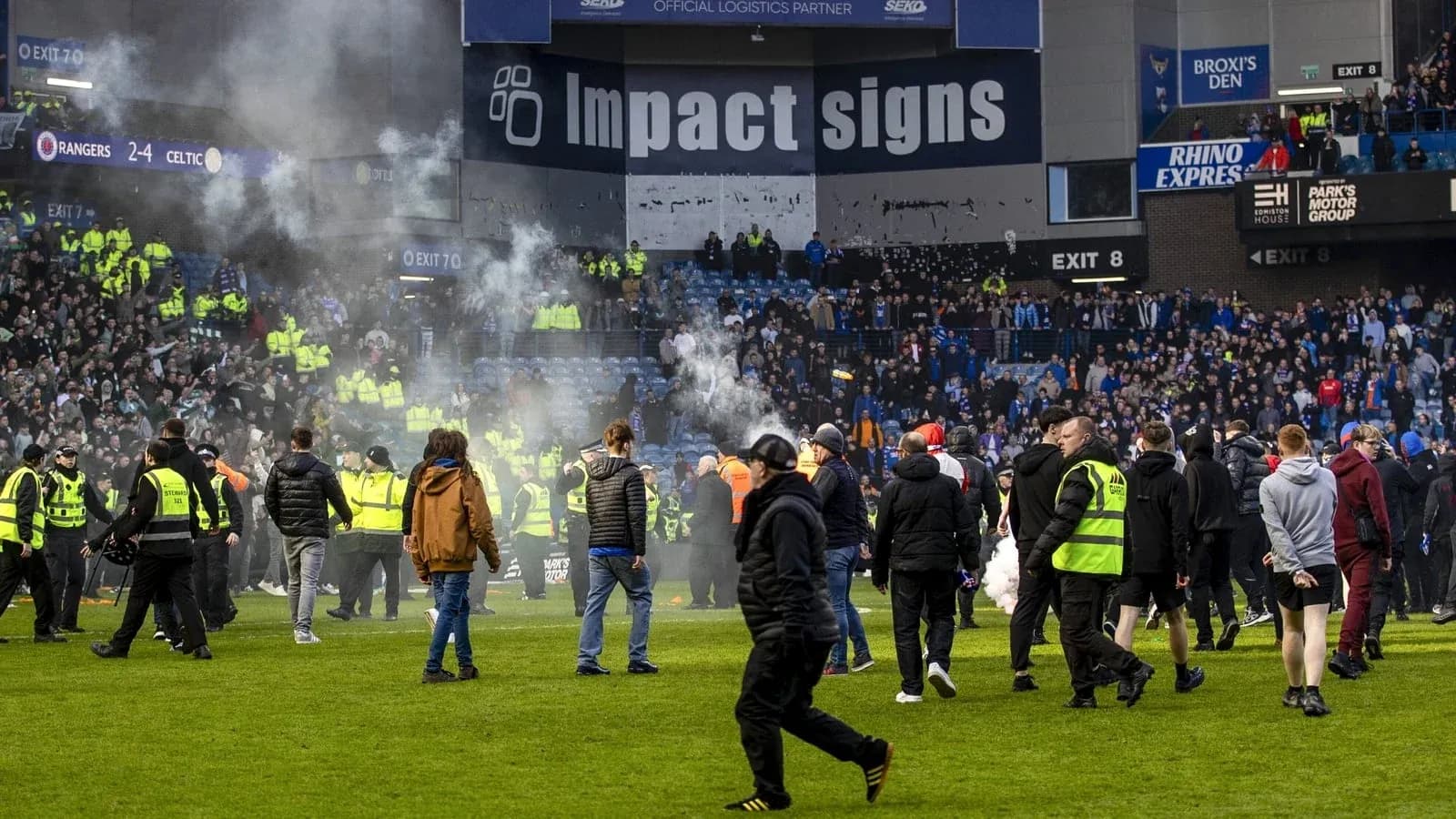
Scottish football’s fiercest rivalry will fall silent for at least one cup night. Celtic and Rangers have both been ordered to play their next home Scottish Cup tie behind closed doors after the Scottish Football Association delivered a hard-line verdict on the violent scenes at Ibrox in March.
The decision follows a disciplinary hearing into the chaos that erupted after Celtic’s quarter-final penalty shoot-out win at the home of their Glasgow rivals. What began as a moment of celebration spilled into confrontation. Celtic supporters surged on to the pitch to mark their side’s victory; Rangers fans then charged from the stands towards them, sparking clashes on the playing surface and triggering a heavy police response.
Dozens of arrests were made as order broke down in the aftermath of the shoot-out. An independent review later painted an even darker picture, concluding that “crushing” and “life-threatening violence” were narrowly avoided.
The SFA has now moved decisively. Both clubs have admitted charges relating to unacceptable conduct from their supporters. Both will be punished in the same way.
Their next home fixture in the Scottish Cup will be played in an empty stadium. No fans. No atmosphere. No gate money to share either. Each club must pay their opponents £100,000 in compensation to cover the loss of shared receipts that would normally come from a cup crowd.
The warning is clear. Any repeat of serious crowd trouble at Scottish Cup ties involving either side in the next two seasons will trigger another closed-door sanction.
Celtic, though, have reacted angrily to being hit with the same punishment as Rangers, stressing that they were the away side at Ibrox and not in charge of stadium safety on the day.
In a strongly worded statement, the club said it was “shocked” by what it called a “disproportionate punishment for a relatively small incursion by Celtic supporters at a moment of emotion and celebration”.
Celtic underlined that they have “never defended supporters entering the field of play” and pointed to previous occasions where they have acted against those who do. But the club argued that the panel should have taken more account of the “context and distinction in behaviours” between the sets of fans and the fact that Rangers, as hosts, were responsible for the matchday safety operation.
The Parkhead board now want to see the full written reasons from the SFA panel before deciding how to respond. They have made it clear they will “study the panel’s report and reasoning” and then “consider our next steps”.
For now, the verdict stands. The next time the Scottish Cup brings either of Glasgow’s giants back to their own ground, the stands will be empty and every shout from the pitch will echo. In a rivalry built on noise, colour and intensity, that silence will speak loudly about where the line now sits on fan behaviour – and what it will cost if it is crossed again.