.svg&w=384&q=75 "logo")
Borussia Dortmund vs Hoffenheim: Tactical Showdown in Bundesliga
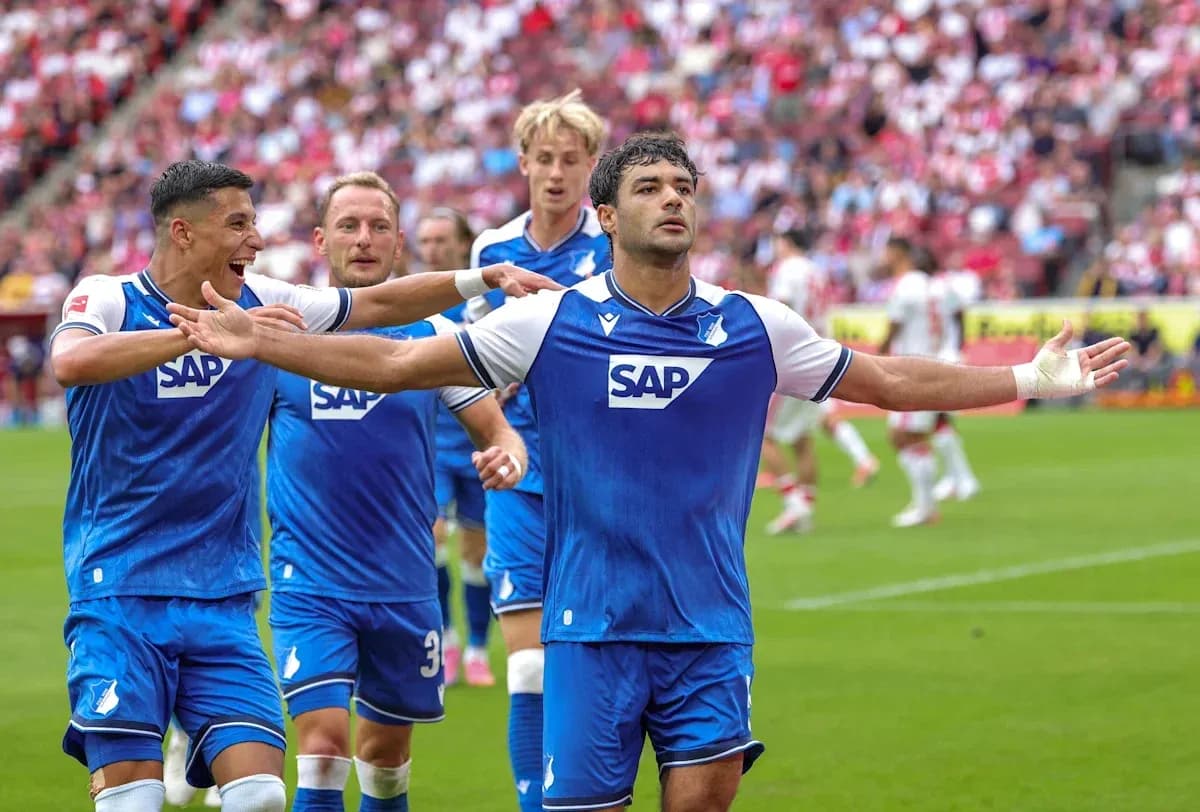
Borussia Dortmund’s real season starts now. The window is shut, the noise has died down, and what’s left is the one thing that always tells the truth: the pitch.
After easing past Hamburg on the opening Bundesliga weekend and brushing aside HEBC in the cup, Niko Kovac’s side walk into something very different this time. Hoffenheim away. A side that spent last season punching above their weight and came within a single point of the Champions League. A side that no longer fights for survival, but for status.
Hoffenheim’s New Edge
Christian Ilzer has quietly built one of the league’s more intriguing projects. When he arrived in Sinsheim during the 24/25 season, Hoffenheim were staring down relegation. He dragged them to safety, then doubled their points tally the following year. That kind of leap does not happen by accident.
This summer threatened to break the rhythm. Bazoumana Toure, the winger who stretched games and terrified full-backs, left the club. A deal for Fisnik Asllani to RB Leipzig collapsed at the medical stage, and the forward remains sidelined through injury. Plans had to be rewritten.
So Hoffenheim went hunting for solutions, not stars. Patrick Wimmer came in from Wolfsburg to bring direct running and aggression out wide. Two of the more memorable names in the Bundesliga followed: Mats Rots and Nathan De Cat, both young, both hungry. De Cat, in particular, offers the kind of two-way energy coaches crave, and is expected to slot into midfield alongside the industrious Wouter Burger.
Only Wimmer started in the 2–3 defeat to Köln on the opening day, a game that exposed some rust but underlined a familiar theme: Hoffenheim want the ball. They had 59% possession, tried to dictate, and paid for defensive lapses. Ilzer will not want a repeat. Nor will he want to face Dortmund with the same starting XI.
You can expect changes. You can also expect Hoffenheim to double down on their identity rather than retreat from it.
Dortmund’s First Real Examination
For Dortmund, the questions pile up quickly.
The first is simple: who plays? With Konstantelias sidelined by an ACL injury and Samuele Inacio suspended, Kovac must reshuffle the line behind Serhou Guirassy. That line is crucial to how Dortmund attack. It knits midfield to the penalty area, turns sterile possession into threat.
Candidates are obvious. Marcel Sabitzer brings control, experience and a reliable right foot. Carney Chukwuemeka offers power between the lines. Ethan Nwaneri, freshly signed and highly rated, is the wildcard. The expectation is that Kovac leans on Sabitzer, the safe pair of hands in a match where mistakes will be punished.
Then comes the bigger issue: how do Dortmund play when they no longer own the ball?
Against both Hamburg clubs, they dictated. They out-shot their opponents 35–9 across the two games, launching 20 efforts in the Bundesliga opener alone. They pressed high, recycled possession, and pinned teams back. It looked comfortable.
Hoffenheim will not allow that. Last season they finished fourth in the league for possession, with Dortmund sixth. Ilzer’s team enjoy building from the back, drawing opponents in, then slicing through the gaps. If Köln allowed them to play and then punished them, Dortmund must walk a tighter line: disrupt Hoffenheim’s rhythm without losing their own.
Kovac’s side now face their sternest examination of the young season. Either they win the midfield battle, or they learn to turn fewer touches into cleaner chances. There is no third option.
The Kramaric Problem
One name hangs over this fixture: Andrej Kramaric.
At 35, he is no longer the guaranteed starter, more the veteran weapon lurking on the bench. That label does not make him any less dangerous. Especially not against Dortmund.
The numbers are brutal. In the entire history of Borussia Dortmund, only five players have scored more goals against them than Kramaric. Four of those sit in the Bundesliga’s all-time top ten scorers. The other is 15th. That is the company he keeps when he sees black and yellow shirts.
In 18 matches against Dortmund, Kramaric has found the net 11 times. Two of those came in this very fixture last season. He knows the spaces to attack, the angles to finish from, the moments when Dortmund’s back line loses concentration.
It would be no surprise to see him introduced in the second half, when legs tire and structure loosens, with one clear mission: hurt them again.
Kovac’s Hand: Shape and Selection
Tactical clues arrived in midweek. Kovac experimented with a 4-3-3 against HEBC in the cup, but the expectation is that he reverts to his trusted 3-4-2-1 for a game of this magnitude.
Gregor Kobel returns in goal after Alexander Meyer’s cup outing. In front of him, a back three of Gadou, Anton, and Ryerson offers a blend of physicality and mobility, tasked with dealing both with Hoffenheim’s movement between the lines and their threat in transition.
Out wide, Svensson and Beier are set to operate as wing-backs, asked to provide width without leaving the back three exposed. It is a demanding role against a side that likes to overload flanks and pull defenders out of position.
In midfield, Nmecha and Bellingham remain the core pairing. They carry the burden of this match. Win their duels, and Dortmund can tilt the game. Lose them, and Hoffenheim’s possession game will suffocate any attacking plan.
Ahead of them, Sabitzer is expected to step into the injured Konstantelias’s role alongside Karetsas, linking play and supporting Guirassy. The striker, fresh from scoring last week, leads the line again. His job is simple on paper and brutal in reality: finish the few clear chances that might come his way if Dortmund spend long spells without the ball.
A Narrow Path in Sinsheim
The margins feel tight. Hoffenheim at home, with a point to prove after the Köln defeat, will not sit back. Dortmund arrive with momentum but also with absences in key creative areas.
It looks like the kind of match decided by one loose pass in midfield, one mistimed tackle on the edge of the box, or one veteran striker stepping off the bench with old habits on his mind.
A narrow 2–1 either way would not surprise anyone. The real question is whose identity holds firmer when the game starts to fray: Ilzer’s possession machine, or Kovac’s evolving, more ruthless Dortmund.