Bonucci: Choosing Juventus Over Guardiola's Premier League Dream
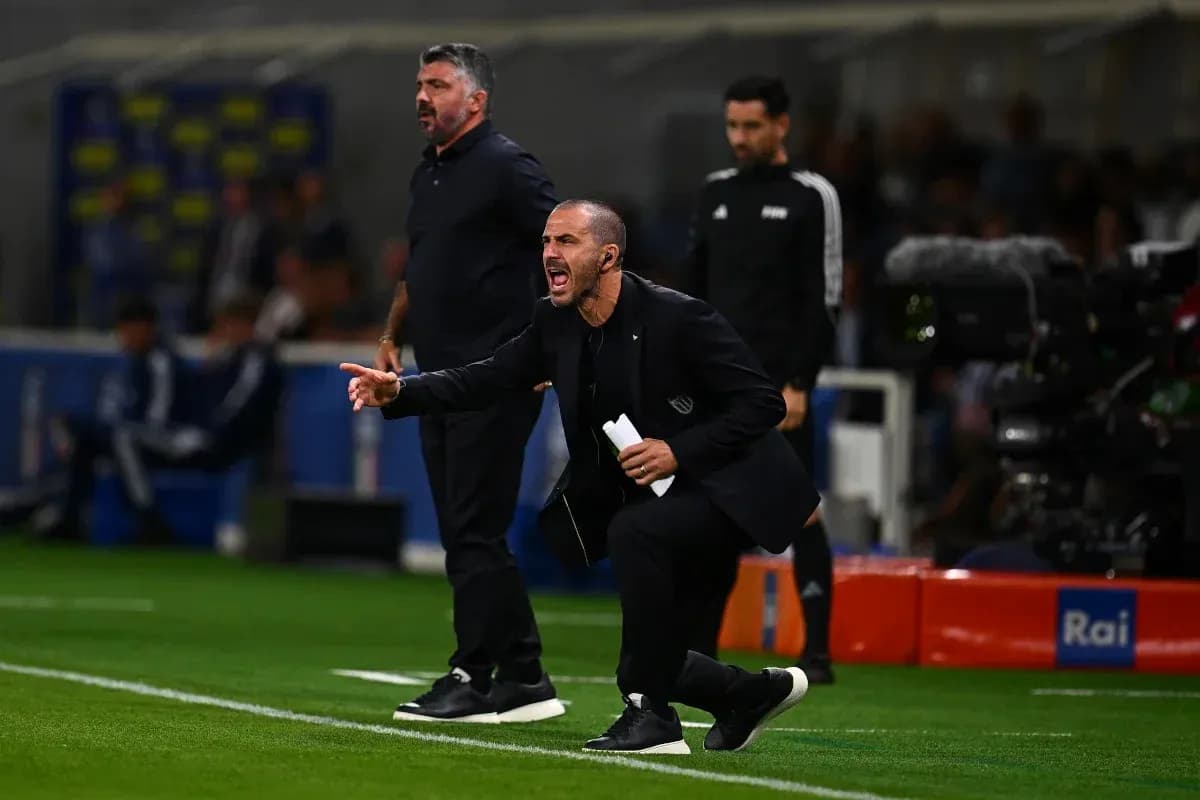
Leonardo Bonucci has spent a career playing on the edge of history, but one of his biggest decisions was made far from the pitch. It came not under the lights of a Champions League night or in the chaos of a penalty shootout, but in the quiet moments between phone calls, hospital visits and an increasingly insistent courtship from Pep Guardiola.
The former Juventus defender, now part of Roberto Mancini’s Italy staff as they prepare for Nations League games against Belgium, Turkiye and France, has lifted trophies, scored on the biggest stages and stood alongside some of the greatest defenders of his generation. Yet he admits there was a moment when he almost walked away from it all in Turin.
Guardiola’s Call
"For my style of football, the coach who is best suited and most appreciates playing out from the back is Guardiola," Bonucci said in an interview with World Soccer Agency, relayed by Sport Mediaset. The admiration was mutual. Guardiola had long viewed Bonucci as the ideal modern centre-back: a defender with the passing range of a deep-lying playmaker.
So Manchester City came calling. Not once. Not casually. Intensely.
"He courted me for many weeks, and let me tell you, being courted by Guardiola is not like any other experience," Bonucci admitted. "You really do start to wobble."
The timing could hardly have been more delicate. The pursuit unfolded during Euro 2016, when Bonucci was at the heart of an Italy side that pushed Germany to penalties in the quarter-final. He had scored past Manuel Neuer in that match, the kind of cold-blooded penalty that only increases a player’s value and aura.
On one side, the Premier League and Guardiola. On the other, Juventus and everything he had built in black and white.
Peak Years in Black and White
Bonucci describes 2014/15 and 2015/16 as the stretch that changed his life. "The 2014/15 and 2015/16 seasons allowed me to achieve incredible heights in my career," he said. He played in the 2015 Champions League final against Barcelona, then went to the Euros a year later as one of Italy’s leaders.
"It was the start of my career truly taking off," he reflected.
By then he was already embedded in the Juventus dynasty. Signed in 2010, he had grown into a central piece of a side that dominated Serie A and regularly went deep in Europe. Alongside Giorgio Chiellini and Andrea Barzagli, he formed the famed BBC back line, a defensive unit that combined grit, experience and, in Bonucci’s case, elegance on the ball.
This was not a player looking for a way out. This was a player being offered an escape into a different kind of greatness.
Torn Between a Dream and a Destiny
The offers from Manchester City were not just flattering. They were enormous. A lucrative contract, a central role in a Guardiola project, the chance to test himself in a league that had long seduced continental stars.
And yet something pulled him back.
"As far as I was concerned, the idea of leaving Juventus made my heart ache," Bonucci said. One day he would catch himself thinking, "oh wonderful, the Premier League and Guardiola," imagining himself in sky blue, building attacks from the back at the Etihad. The next day, another voice cut through the fantasy.
He remembered the boyhood dream. "I had always dreamed of Juventus."
The club’s stance only strengthened his doubts about leaving. Juventus made it clear: he would not be sold, even if an "incredible offer" arrived. They saw him as non-negotiable, a pillar of the present and the future.
Family, Fear and a Clear Answer
Football decisions are rarely just about football. In Bonucci’s case, life intervened in the most brutal way. His son Matteo was diagnosed with a serious illness at the age of two, a crisis that shook the defender and his family.
"After the Euros, I spoke to Juve," he recalled. "Matteo's illness and the fact I didn't feel 100 per cent about leaving Juve, especially as the club told me that I would not be sold even if an incredible offer came in, made it a normal decision to stay."
The glamour of the Premier League, the tactical promise of working with Guardiola, the financial package on the table – all of it suddenly felt less urgent. The priority became stability, familiarity, the environment he trusted.
"Working with Guardiola would've allowed me to have even greater experience, technically and tactically," Bonucci admitted. There is no bitterness in that line, only a clear recognition of what might have been. But by then, the answer was obvious. Family and Juventus came first.
The Detour to Milan
Ironically, Bonucci did end up leaving Juventus – just not for Manchester City. In 2017, after a notorious fallout with coach Max Allegri, he moved to Milan. It was a shock transfer, less about ambition abroad and more about a fracture at home.
"I had lost my focus with what happened in 2017," he said. He had been on track, in his own words, "to become a pillar of Juventus," a status that seemed inevitable after years of consistency and leadership.
The Milan spell lasted only a season. Allegri remained, but the dynamics shifted, and Bonucci eventually returned to Turin, drawn back to the club that had defined him. The grand adventure with Guardiola never materialised. The Premier League remained an untraveled road.
A Career Defined by Loyalty and What-Ifs
From Euro 2016 to Euro 2020, where he lifted the Henri Delaunay Trophy at Wembley after scoring in the final against England, Bonucci’s story has been written in decisive moments. Some came with the ball at his feet. Others came with a phone in his hand, a contract on the table and a family in the balance.
He chose Juventus over Manchester City. Stability over a new frontier. A dream already lived over a dream still forming.
Now, as he steps into coaching with Italy, preparing for Nations League clashes against some of Europe’s elite, that choice hangs over his legacy in a different way. Not as a regret, but as a reminder.
In an era when stars chase new leagues and new paydays, Bonucci turned down Guardiola at the height of his powers. The question that lingers is not whether he made the right call – only he can answer that – but how different the modern game might look if one of its most complete defenders had swapped black and white for sky blue.